

Commentary
Judy Dempsey
{
  "authors": [
    "Judy Dempsey"
  ],
  "type": "commentary",
  "blog": "Strategic Europe",
  "centerAffiliationAll": "",
  "centers": [
    "Carnegie Endowment for International Peace",
    "Carnegie Europe"
  ],
  "collections": [],
  "englishNewsletterAll": "",
  "nonEnglishNewsletterAll": "",
  "primaryCenter": "Carnegie Europe",
  "programAffiliation": "",
  "programs": [],
  "projects": [],
  "regions": [
    "Europe"
  ],
  "topics": [
    "EU"
  ]
}

Source: Getty
As Herman Van Rompuy and Catherine Ashton announce they will not seek reappointment, France and Germany have a big opportunity when they choose the EU’s new leaders.
It’s official!
Herman Van Rompuy, president of the European Council, and Catherine Ashton, the EU’s foreign policy chief, will not run again when their mandates expire next year.
Both officials said at the weekend that they had had enough. It’s not clear whether European Commission President José Manuel Barroso will follow suit.
The speculation about who will succeed Van Rompuy and Ashton has already begun. It will, no doubt, be an unseemly affair, with the political groupings in the European Parliament and the member states pushing hard for their own candidates.
But the final say will go to two countries: France and Germany. That is exactly what happened in December 2009.
The then French president Nicolas Sarkozy and German chancellor Angela Merkel stitched together an agreement to select Van Rompuy and Ashton and to reappoint Barroso for a second term.
The way Berlin and Paris acted was shameful for two reasons. First, Merkel did not want the European institutions to have strong leaders. Second, it undermined Europe’s credibility.
The last thing Merkel wanted was charismatic personalities in Brussels who would tell Germany and the other member states what to do. She opted for Barroso to serve a second term as Commission president because she believed he was no threat to German interests or her own authority.
During the euro crisis, Barroso has been repeatedly criticized by some member states—and by economists—for a lack of leadership and for being too slow to realize the enormity of the crisis.
When he did try to take the initiative by securing more powers for the Commission over fiscal matters, Merkel was always in the background, ensuring that the Commission’s powers would be kept in check.
That suited Sarkozy, who was much more interested in protecting the powers of the member states against encroachment by the Commission.
Merkel also supported the appointment of Van Rompuy, an astute Belgian politician but unknown outside his own country. EU diplomats praise his ability to steer Council meetings and cut through red tape. But is that what a Council president is supposed to do? Clearly it was enough for Merkel, who again did not want a strong personality who would eclipse national leaders.
As for Ashton, Sarkozy and Merkel conceded to the UK’s demands to have a Briton appointed to one of the EU’s most high-profile posts.
Like Van Rompuy, Ashton was unknown and had no experience in foreign policy. Yet never had there been a time when Europe needed foreign policy chief who was strong, creative, and persuasive—qualities that Ashton has not displayed, at least not publicly.
The Lisbon Treaty hardly made her job any easier. The treaty was supposed to streamline EU decisionmaking but, in the case of Ashton’s job, it had the contrary result.
From the day of her appointment, Ashton had to deal with a can of worms. That meant tolerating or circumventing egos in the European Commission, the Parliament, the Council, and the member states. At the same time, besides negotiating with Iran, which has been one of her biggest policy briefs, she has had to establish the EU’s first ever diplomatic service.
To get an understanding of the institutional juggling and pressures Ashton has faced, it is worth reading the transcript of the interview she gave at last weekend’s Brussels Forum, organized by the German Marshall Fund of the United States.
Of course, Merkel and François Hollande, the French president, cannot resolve the conflict and competition between the Commission, the Council, and the Parliament.
But they can make a big difference when they choose the EU’s top leaders next year. They can nominate candidates who are not afraid of speaking their minds about Europe and who will have the confidence not to be intimidated by the member states.
That is a tall order. But if Merkel and Hollande seriously want Europe to have ambitions and a strong voice, it is time to put aside their own short-term interests.

Nonresident Senior Fellow, Carnegie Europe
Dempsey is a nonresident senior fellow at Carnegie Europe
Recent Work
Judy Dempsey
Judy Dempsey
European reactions to the war in Iran have lost sight of wider political dynamics. The EU must position itself for the next phase of the crisis without giving up on its principles.

Richard Youngs
Europe isn’t as weak in the new geopolitics of power as many would believe. But to leverage its assets and claim a sphere of influence, Brussels must stop undercutting itself.

Dimitar Bechev
Europe’s reaction to the war in Iran has been disunited and meek, a far cry from its previously leading role in diplomacy with Tehran. To avoid being condemned to the sidelines while escalation continues, Brussels needs to stand up for international law.

Pierre Vimont
France and Germany’s failure to agree on the Future Combat Air System (FCAS) raises questions about European defense. Amid industrial rivalries and competing strategic cultures, what does the future of European military industrial projects look like?

Rym Momtaz, ed.
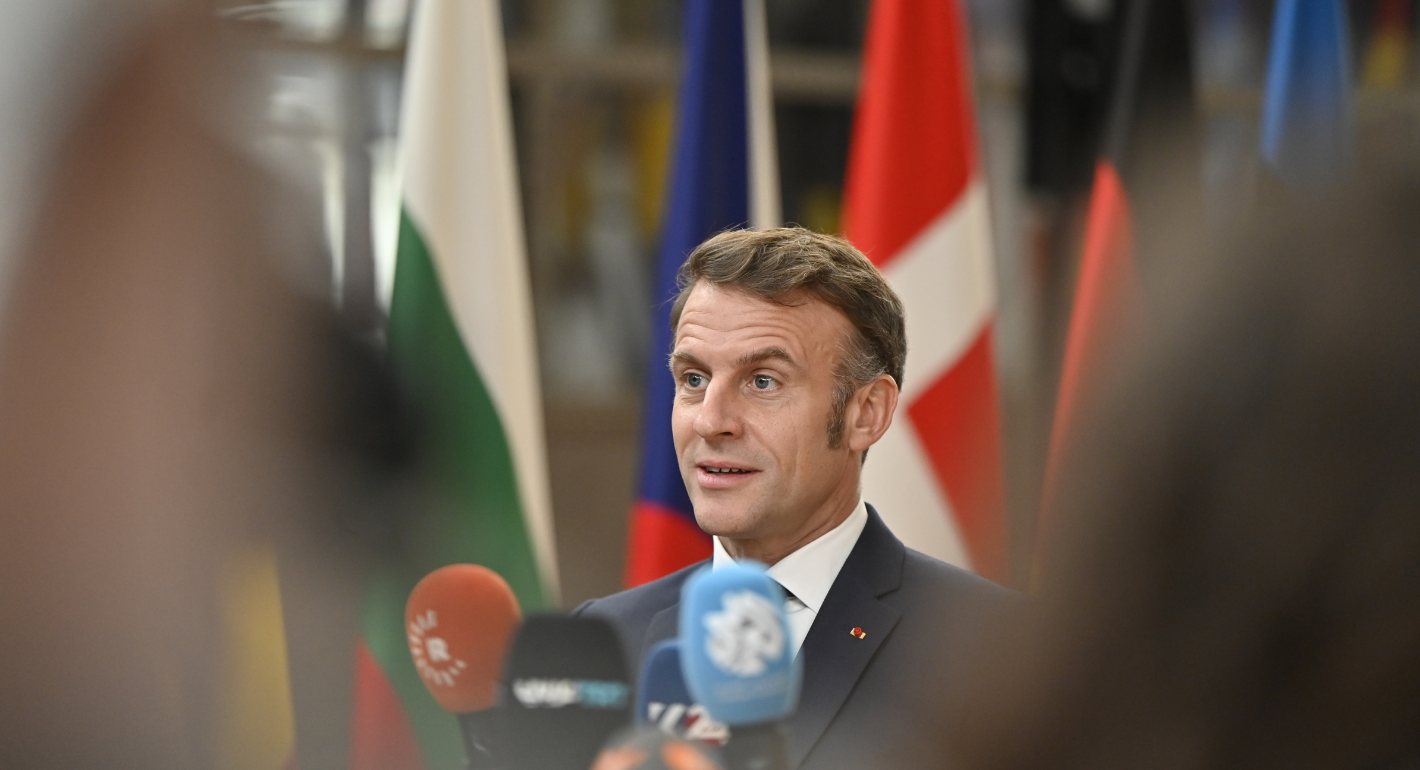
France has stopped clinging to notions of being a great power and is embracing the middle power moment. But Emmanuel Macron has his work cut out if he is to secure his country’s global standing before his term in office ends.
Rym Momtaz