

Commentary
As European leadership prepares for the sixteenth EU-India Summit, both sides must reckon with trade-offs in order to secure a mutually beneficial Free Trade Agreement.
Dinakar Peri
{
  "authors": [
    "Judy Dempsey"
  ],
  "type": "commentary",
  "blog": "Strategic Europe",
  "centerAffiliationAll": "",
  "centers": [
    "Carnegie Endowment for International Peace",
    "Carnegie Europe"
  ],
  "collections": [
    "EU Integration and Enlargement"
  ],
  "englishNewsletterAll": "",
  "nonEnglishNewsletterAll": "",
  "primaryCenter": "Carnegie Europe",
  "programAffiliation": "",
  "programs": [],
  "projects": [],
  "regions": [
    "Europe",
    "Eastern Europe",
    "Western Europe"
  ],
  "topics": [
    "EU",
    "Democracy"
  ]
}
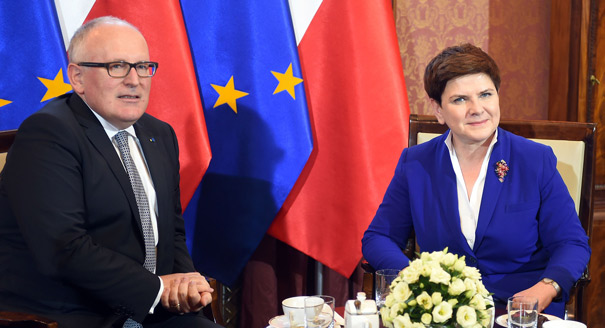
The Polish government should not underestimate one of the EU’s top officials when it comes to upholding the rule of law.
Don’t be deceived by Frans Timmermans. His soft-spoken voice gives the impression that this former Dutch politician and diplomat is a pushover for any EU member state that flouts the rule of law.
This assumption is a mistake, as Poland is finding out. Timmermans, since 2014 vice president of the European Commission, the EU’s executive, is responsible among other things for the rule of law and the EU Charter of Fundamental Rights.
He is well-suited to this job. For one thing, he has a wealth of experience under his belt—from serving in the Dutch Embassy in Moscow in the early 1990s to working as senior adviser to the High Commission on National Minorities of the Organization for Security and Cooperation in Europe (OSCE). He knows what freedom, the rule of law, and human rights mean in practice.
For another, Timmermans cares passionately about the need for the EU to defend its common set of values, as Poland and other member states are beginning to find out. Indeed, when it comes to explaining what Europe is about and why it matters, Timmermans has become one of the most articulate members of the commission headed by Jean-Claude Juncker.
And precisely because he makes the rule of law the issue that gives Europe a special identity as well as an attractiveness to those outside the bloc pushing for democracy, Timmermans has decided not to turn a blind eye to the policy of Poland’s conservative Law and Justice government on the rule of law.
Ever since the party’s landslide victory in Poland’s October 2015 parliamentary election, its leader, Jarosław Kaczyński, has moved with lightning speed to change the way in which judges to the Constitutional Tribunal, the country’s highest court, are appointed, for how long they can serve, and how they work.
There have also been changes to the organization and functioning of Polish state television and radio. But it is the rule of law and transparency that have especially exercised Timmermans—so much so that he has gone public to explain why the Polish government must address these fundamental issues.
“The European Union is built on a common set of values, enshrined in the [EU] Treaty,” Timmermans said at a press conference on June 1 in Brussels. “These values include respect for the rule of law. . . . Making sure the rule of law is preserved is a collective responsibility of the EU institutions and of all Member States. And it is part of the Commission’s role as guardian of the Treaty.”
In practice, the commission has now adopted an opinion on the rule of law in Poland. Timmermans has every intention of continuing the dialogue with Polish Prime Minister Beata Szydło to resolve the issue. And if Poland doesn’t comply with the EU’s fundamental values, the EU could invoke Article 7 of the Treaty on European Union, which can trigger sanctions in the event of a serious breach of core EU values. Penalties include suspending the voting rights of the country in question in the EU Council, which represents the governments of the 28 member states.
Szydło brushed aside Timmermans’s decision. “An opinion is an opinion, and it doesn’t have any influence on decision being taken in Warsaw,” she told Polish media.
For his part, Timmermans said he didn’t want the commission to involve itself “in a political debate in Poland. Political issues are the business of politicians in Poland, not of the European Commission,” he said. “Our business is preserving the rule of law, in line with our responsibilities under the Treaties.”
But despite his and Szydło’s comments, neither side is under any illusion that politics and the rule of law are inextricably linked.
Timmermans is not going to relent, and nor, for the moment, will Kaczyński. Indeed, Kaczyński seems determined to claw back from the EU aspects of sovereignty that Poland agreed to cede to Brussels when it joined the EU in 2004. And, no doubt, to play the populist and nationalist card, he will accuse the EU of meddling and of imposing its agenda on the Polish government.
At a time when Europe’s institutions are being challenged by Euroskeptic parties and movements across the continent, Poland has become an immensely important test for the EU, and just as importantly, for the country’s own future status in the EU. Timmermans knows what’s at stake.
Carnegie does not take institutional positions on public policy issues; the views represented herein are those of the author(s) and do not necessarily reflect the views of Carnegie, its staff, or its trustees.
As European leadership prepares for the sixteenth EU-India Summit, both sides must reckon with trade-offs in order to secure a mutually beneficial Free Trade Agreement.

Dinakar Peri
The hyper-personalized new version of global sphere-of-influence politics that Donald Trump wants will fail, as it did for Russia. In the meantime, Europe must still deal with a disruptive former ally determined to break the rules.

Thomas de Waal
2026 has started in crisis, as the actions of unpredictable leaders shape an increasingly volatile global environment. To shift from crisis response to strategic foresight, what under-the-radar issues should the EU prepare for in the coming year?
Thomas de Waal
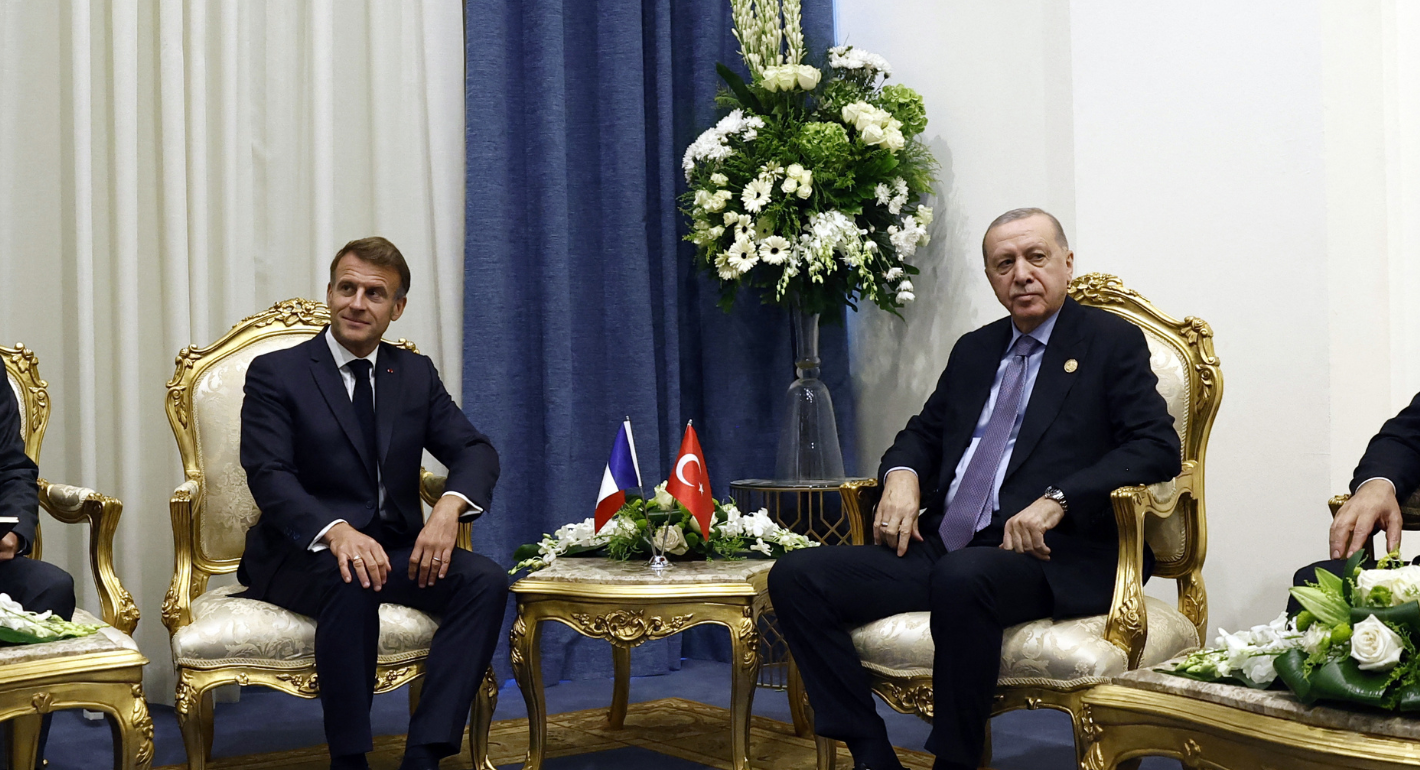
A renewal of relations between France and Turkey is vital to strengthen European strategic autonomy. To make this détente a reality, Paris and Ankara should move beyond personal friction and jointly engage with questions of Black Sea security.
Romain Le Quiniou
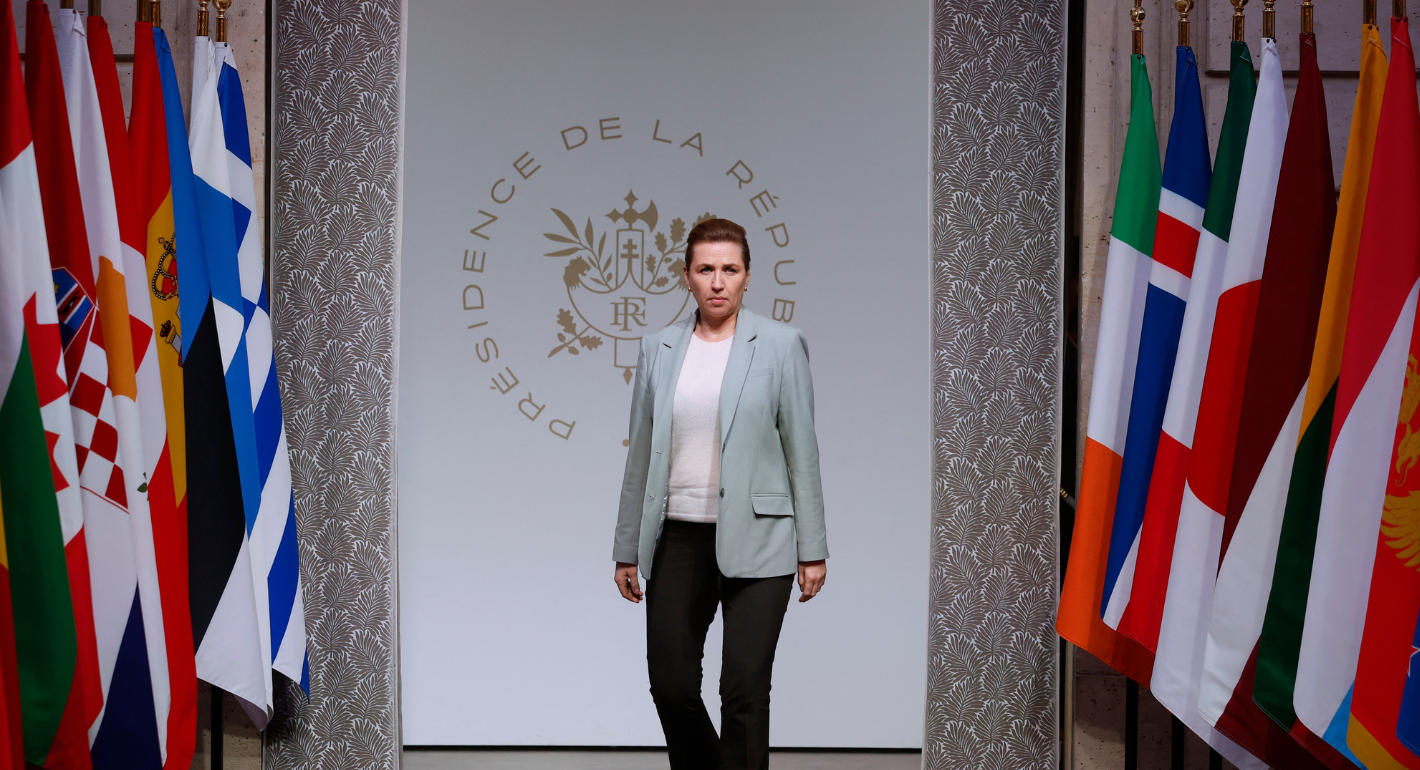
Europe is designing a new model of collective security that no longer relies on the United States. For this effort to succeed, solidarity between member states that have different threat perceptions is vital.

Erik Jones