Romania’s political turmoil just escalated and it perfectly exemplifies how Russia can rely on domestic actors to do much of its bidding to weaken the EU and NATO.
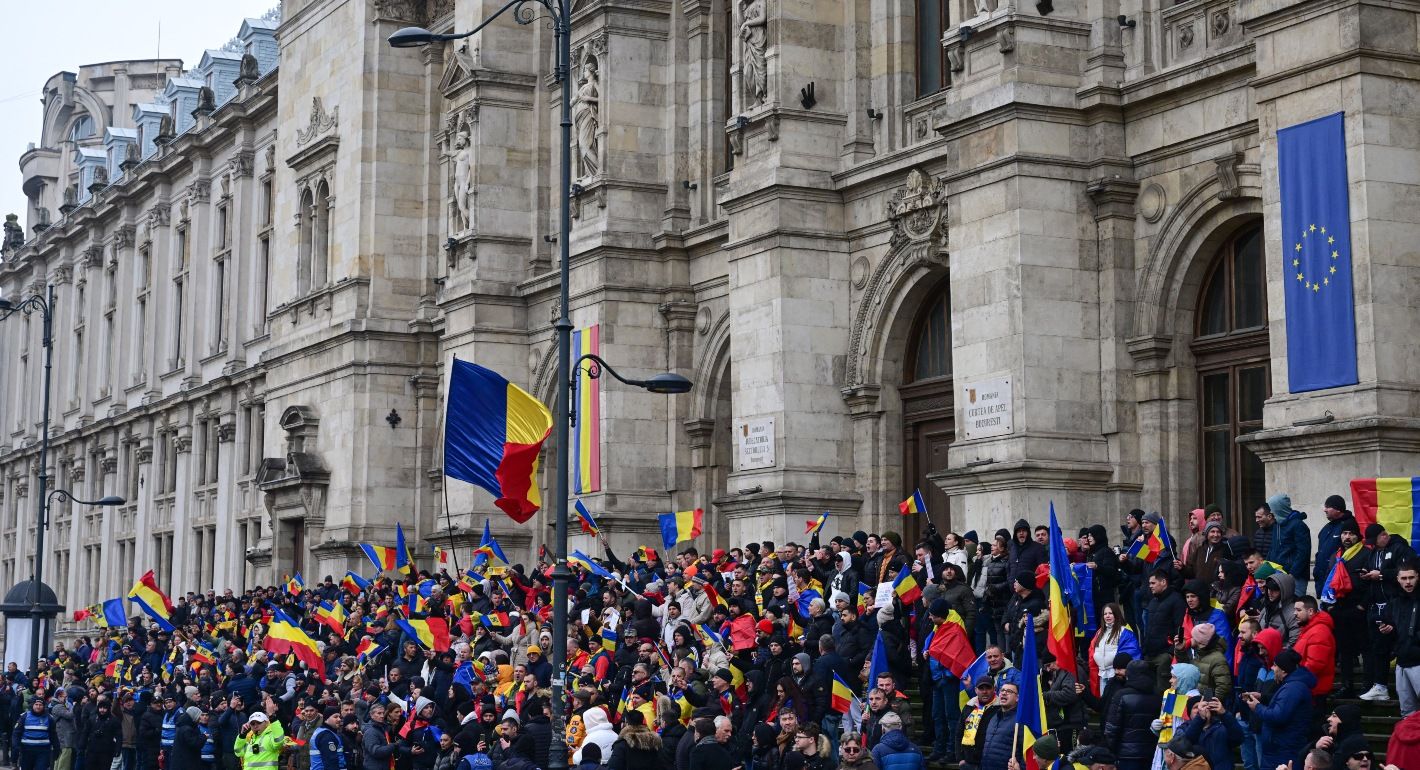
The Romanian Constitutional Court’s annulmentof the first round of the November presidential election on grounds of Russian interference, illicit campaign funding and manipulation of TikTok algorithms underscores the vulnerabilities at play. While Europeans may have made some progress in building up resilience to foreign malign interference, they remain unprepared to confront a complex ecosystem of cross-border networks of Russian interests and Russian-aligned domestic actors, which have been cultivated over time.
Sometimes Russian interference is visible and, where it encounters resistance from a pro-democratic government, its perpetrators can be investigated and prosecuted.
Such was the case of Moldova, which had to fight massive Russian interference in its presidential election, held in November 2024 alongside a referendum to inscribe EU accession in the country’s constitution. Fugitive Moldovan oligarch Ilan Shor organized an ample vote-buying scheme on behalf of his Moscow patrons against president Maia Sandu and her pro-European agenda. The Kremlin threw in €100 million ($104 million) and every subversive method in its toolkit, but failed to overturn the results.
In other instances, such as in Georgia or Romania, Russian meddling is far harder to isolate from organic political dynamics.
As it becomes clear that Russia will continue to launch similar attacks in as many EU and NATO countries as possible—and in their immediate neighborhood, building resilience against foreign interference should become the highest priority.
A good place to start is recognizing that Russia no longer just poses a foreign interference threat; it has become a menace from within.
In Tbilisi, at the end of 2024, Moscow worked through the Georgian oligarch Bidzina Ivanishvili, who had already handed over the country’s strategic infrastructure to China and its political direction to Russia. His ruling Georgian Dream party won the election, installed a loyal president, and suspended the nation’s EU accession.
Around the same time, Romania, a viscerally Euro-Atlanticist, anti-Russian country, was blindsided by insidious and successful Russian election meddling. Despite the expected win of the grand coalition of the Social Democrats (PSD) and the National Liberals Party (PNL), which has governed since 2021, a far-right, pro-Russian, anti-NATO challenger surged unexpectedly and took first place in the first round of voting. Calin Georgescu pushed his radical anti-establishment platform in a social media only campaign centered on Chinese-owned platform TikTok and with opaque financing.
The European Commission is investigating TikTok’s role. Meanwhile, the failure of Romanian authorities to disclose more details of Georgescu’s wrongdoing has led to significant political instability, and this week, President Klaus Iohannis had to resign while the government faces a no-confidence vote.
But Romania has long carried within its body politic the seeds of this destabilization and should serve as a clarion call for other EU members about their own vulnerabilities. Bucharest’s post-communist transition was largely managed by the same middle management from the former Soviet state apparatus. Some of these people had close ties with Moscow. As the country turned West, those individuals and networks were marginalized for over two decades, yet they remained pervasive within both political parties and state institutions.
They were not pro-Russian but sovereigntist and resented the transparency and accountability that Western integration brought, which restricted their privileges and control. Links to Russia were indirect, going through third countries like Moldova or Ukraine, and served to facilitate corrupt business and political interests of influential politicians.
These networks have recently become strategic to Moscow once again as it has taken to corruption, economic pressure, interference in democratic processes, propaganda, and cyber attacks as its tools of choice to sway public opinion abroad. The networks also gained strategic importance for Romanian politicians, when the EU-supported anticorruption campaign became an existential threat and they risked lengthy prison sentences and the loss of their fortunes.
Such complex networks of malign influence are not only present in the former communist bloc. Economic dependencies and pro-Russian business connections in Germany, which is about to hold a federal election, have raised concerns about Berlin’s ability to undercut the Kremlin’s influence over its policy decisions. London’s capture by Russian money and Brexit reveal the vulnerabilities of one of the main NATO powers. Historic anti-Americanism and romanticism toward Russia in the ranks of some of the French cultural and political elite makes France vulnerable beyond the Russian funding of the far-right National Party.
Without powerful tools to counter the in-built vulnerabilities of the open informational environment of liberal democracies, all Russia needs to do to “install” a friendly government in any of these countries and thereby to shift the voting balance in the European Council is to activate this pre-established ecosystem of sympathetic domestic actors. Throw in some extra money and social media strategists able to play the algorithms of non-transparent platforms such as TikTok, Telegram, X, or Meta, and you get the mix needed to shift public opinion in already polarized societies.
Attribution is often difficult and has to rely on the principle that “if it walks like a duck and it quacks like a duck, it’s probably a [Russian] duck.”
As things stand, both the federal election in Germany at the end of February and Romania’s presidential rerun in May remain highly vulnerable.