Global uncertainty is pushing the EU and India closer together. The two sides are “on the cusp of a historic trade agreement,” European Commission President Ursula von der Leyen told the 2026 World Economic Forum in Davos.
Many divergences between their interests—predicted by experts—that might have slowed this huge trade agreement have been overcome, as both sides face unprecedented geopolitical headwinds from the United States and China.
This partnership looks to be a response to the new frictions in the transatlantic relationship. Between a U.S. retreat and China’s growing assertiveness, India can represent the middle ground for Europe thanks to its size, like-mindedness on many issues, trustworthiness, and the fact it is a democracy.
Europe’s biggest challenge—Russia’s war in Ukraine—remains the most significant divergence, as New Delhi’s long-standing partnership with Moscow continues. Yet the economic rewards of an EU-India agreement are potentially enormous. “Some call it the mother of all deals,” said von der Leyen, one that will cover a market of two billion people, accounting for almost a quarter of global GDP.
The trade deal will give Europe a first mover advantage with, as the commission president put it, one of the world's “fastest-growing and most dynamic continents.”
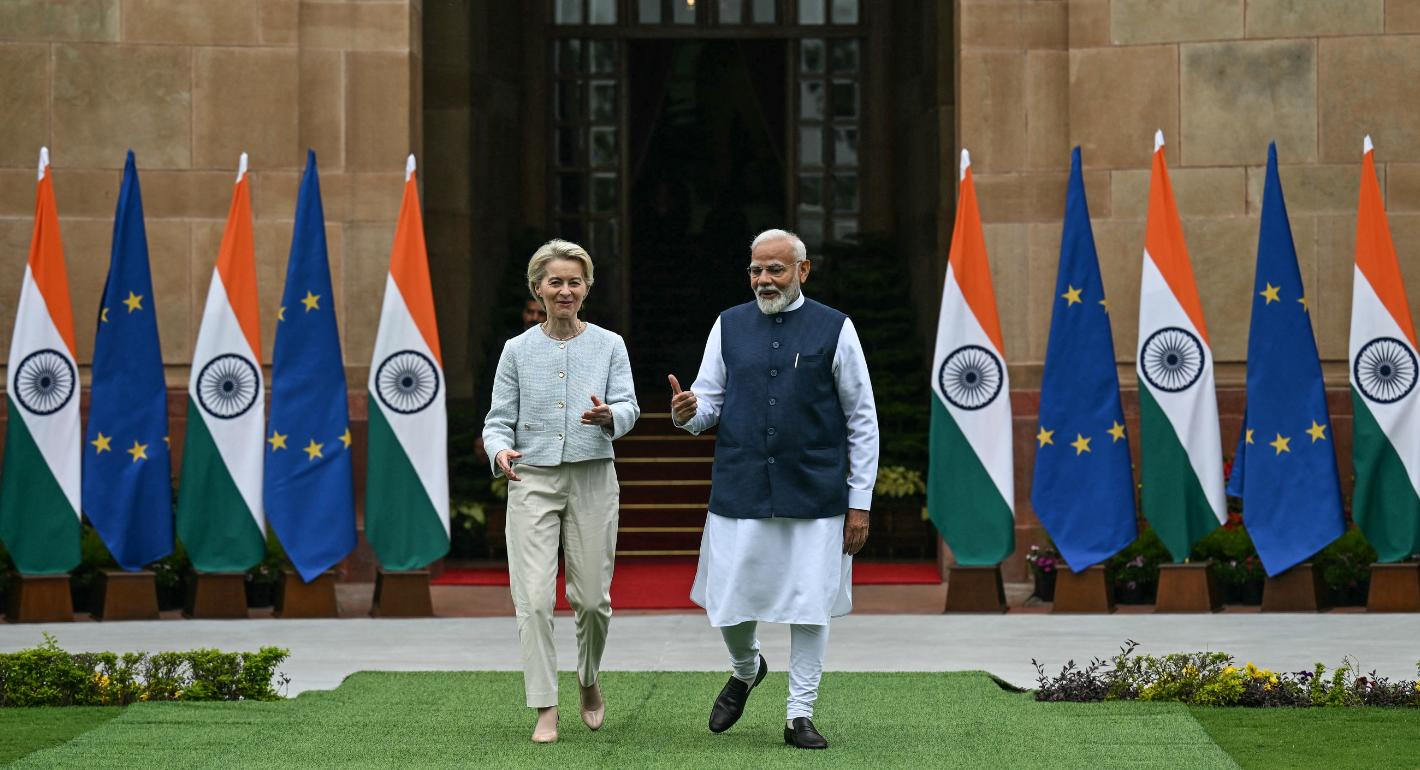
Von der Leyen and António Costa, the president of the European Council, are due to be in India on January 25–27. This is the second visit in less than a year, following a historic visit to New Delhi by the commission president and her college of commissioners in February 2025.
The EU delegation will be feted as guests of honor at India’s seventy-seventh Republic Day celebrations, which will see a grand ceremonial military-cultural parade high on symbolism. They will cochair the sixteenth EU-India Summit during which a Free Trade Agreement (FTA) is expected to be concluded.
India has signed several FTAs in the last five years, including one with the United Kingdom and another with the four countries of the European Free Trade Agreement: Iceland, Liechtenstein, Norway, and Switzerland.
The EU-India FTA will potentially create one of the world’s biggest free trade areas, while also addressing structural issues related to the environment, intellectual property, and human rights among others.
Negotiations have been through several iterations since 2007, initially under the “broad based trade and investment agreement” moniker, and were renewed in 2021, getting a further boost in reaction to ruptures in the multilateral order. For India, it is significant in the sheer level of access the country would be granted to the European market, and especially because a prospective trade deal with the United States remains stuck and New Delhi decided not to join fifteen Asia-Pacific countries in the 2019 Regional Comprehensive Economic Partnership.
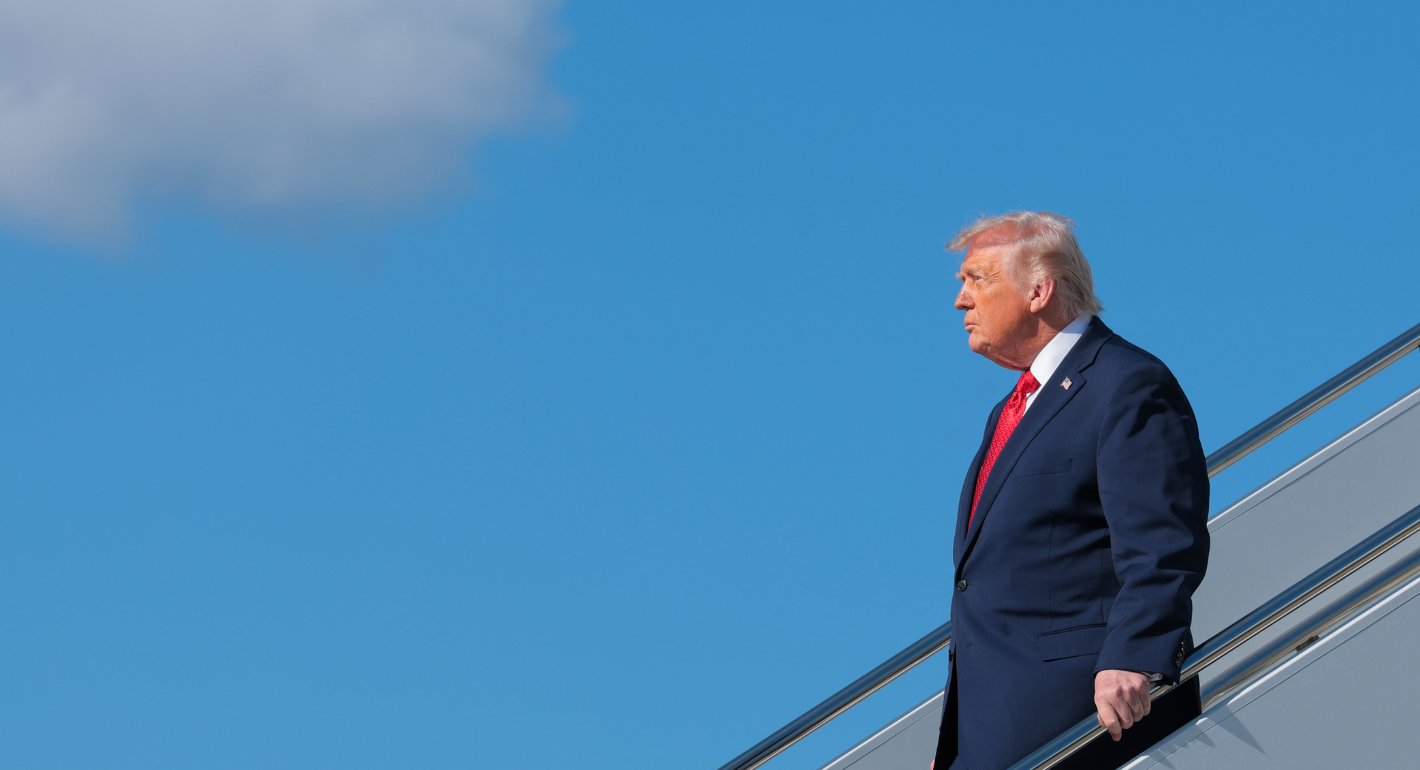
Several issues are not fully resolved. There has been disagreement over trade in agricultural goods, which may be left out of the deal. It has further been reported that India is wary of the EU’s heavy regulatory environment, in particular its new Carbon Border Adjustment Mechanism, which would impose costs on Indian imports to Europe. Meanwhile, the EU is worried about questions of intellectual property law. It remains to be seen whether the deal satisfactorily addresses these issues. Agreement in these areas would need a political push from both sides, and the impact of Donald Trump’s United States may well be the decisive factor.
The bigger context is geopolitical. Common priorities are defense and security, securing supply chains, critical minerals, and tackling climate change. The last year of global upheaval is a validation of India’s multi-alignment policy that searches for a strategic autonomy of its own. New Delhi’s relationship with Washington, which has been championed across administrations since 2000 faces a reality check, with one-sided U.S. tariffs over trade imbalances and divergences over India’s ties with Russia.
For New Delhi, Moscow will remain an important partner for a long time, and for a variety of reasons: military dependence, long-term trust, and geopolitical realities including China’s position in the region. India’s military cooperation with Russia has been of particular concern for many European countries. That cooperation is historical and will continue given India’s large Soviet and Russian-origin military hardware, as well as Moscow’s willingness to share sensitive military technologies—such as nuclear attack submarines—that others do not. Some European countries have expressed concern over potential leakage of high-end technologies, which India also sources from the West, to Russia. Despite this, both France and the United States have significantly deepened high-tech defence cooperation with India during this time.
Kaja Kallas, the EU’s foreign policy chief, has also announced that the two sides will sign a new security and defense partnership agreement which will expand cooperation in areas such as maritime security, counterterrorism, and cyber defense. India, Kallas said, was “indispensable” for European economic resilience. So far, the country’s defense cooperation with Europe has been largely bilateral. Brussels has now identified it as a priority.
New Delhi can potentially play a defining role in Europe’s rearmament plans. India has built a robust defense industrial base that the bloc can tap into. Many American, French, and Israeli contractors have already integrated Indian vendors into their global supply chains. Significant portions of the design of high-end systems is now undertaken in India by American and European companies. Taking a cue from this, the union can make India its sourcing hub for a range of items. As the United States becomes unreliable, both sides share an interest in preserving the rules-based order in the Indo-Pacific, which is vital for economic growth and stability.
The commission’s joint communication to the European Parliament and Council of the EU on a new strategic EU-India agenda noted that while the two powers may not align on every issue, their partnership is “underpinned by converging interests, complementary strengths, and shared political will, and can deliver real impact for people in both regions and beyond.”
The hope is that other divisive issues, such as visa policies, may be nearer to resolution following the January summit. A memorandum of understanding on a comprehensive mobility framework to facilitate the movement of students, seasonal workers, researchers, and highly skilled professionals, will also be concluded in New Delhi, advancing the process significantly.
The EU-India relationship can lead to mutually beneficial outcomes, not just for both sides, but also because it could become an anchor for a world in free fall.