

Commentary
Israeli-Lebanese talks have stalled, and the reason is that the United States and Israel want to impose normalization.
Michael Young
{
  "authors": [
    "Ashley J. Tellis"
  ],
  "type": "other",
  "centerAffiliationAll": "",
  "centers": [
    "Carnegie Endowment for International Peace"
  ],
  "collections": [
    "Iranian Proliferation",
    "Japan's Nuclear Crisis"
  ],
  "englishNewsletterAll": "",
  "nonEnglishNewsletterAll": "",
  "primaryCenter": "Carnegie Endowment for International Peace",
  "programAffiliation": "",
  "programs": [
    "South Asia"
  ],
  "projects": [],
  "regions": [
    "North America",
    "United States",
    "Middle East",
    "South Asia",
    "India",
    "Pakistan",
    "East Asia",
    "South Korea",
    "China",
    "Russia",
    "North Korea"
  ],
  "topics": [
    "Security",
    "Military",
    "Foreign Policy",
    "Nuclear Policy",
    "Arms Control",
    "Nuclear Energy"
  ]
}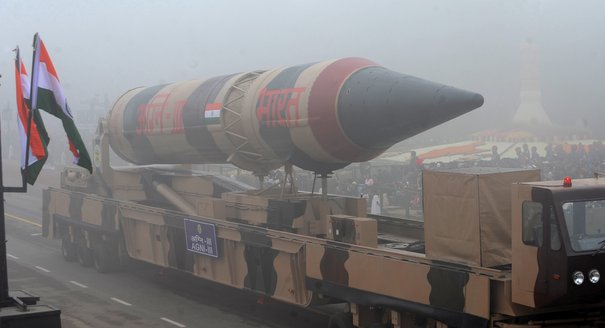
Although the emergence of new nuclear powers in the post–Cold War era has triggered fears of widespread nuclear proliferation and renewed calls for nuclear abolition, the pursuit and development of nuclear weapons in Asia are likely to only increase in the years ahead.
Source: National Bureau of Asian Research
This chapter examines the logic of nuclear weapons abolitionism, surveys the contemporary nuclear developments in Asia that are described in this volume, and highlights implications for the U.S. and its ambitions regarding comprehensive nuclear disarmament.Although the emergence of new nuclear powers in the post–Cold War era has triggered fears of widespread nuclear proliferation and renewed calls for nuclear abolition, the pursuit and development of nuclear weapons in Asia are likely to only increase in the years ahead. Continuing interstate competition, along with the expectations of many states that nuclear weapons will enhance their security and offer deterrence value, ensures that regional arsenals will grow. The U.S., therefore, must prepare for a reality that is quite different from the vision offered by nuclear abolitionism: an Asia that hosts many nuclear powers whose arsenals vary in capacity, architecture, and doctrine.
This chapter is the introduction to Strategic Asia 2013-14: Asia in the Second Nuclear Age. Read more about Strategic Asia, including information on how to order the complete book, here.
Carnegie does not take institutional positions on public policy issues; the views represented herein are those of the author(s) and do not necessarily reflect the views of Carnegie, its staff, or its trustees.

Israeli-Lebanese talks have stalled, and the reason is that the United States and Israel want to impose normalization.

Michael Young

Baku may allow radical nationalists to publicly discuss “reunification” with Azeri Iranians, but the president and key officials prefer not to comment publicly on the protests in Iran.

Bashir Kitachaev

The country’s leadership is increasingly uneasy about multiple challenges from the Levant to the South Caucasus.

Armenak Tokmajyan
The U.S. is trying to force Lebanon and Syria to normalize with Israel, but neither country sees an advantage in this.
Michael Young

In an interview, Shahla al-Kli discusses the country’s parliamentary elections and what they reveal.
Rayyan Al-Shawaf