

Other
Fiona Hill, Anatol Lieven, Thomas de Waal
{
  "authors": [
    "Anatol Lieven"
  ],
  "type": "legacyinthemedia",
  "centerAffiliationAll": "dc",
  "centers": [
    "Carnegie Endowment for International Peace"
  ],
  "collections": [],
  "englishNewsletterAll": "ctw",
  "nonEnglishNewsletterAll": "",
  "primaryCenter": "Carnegie Endowment for International Peace",
  "programAffiliation": "russia",
  "programs": [
    "Russia and Eurasia"
  ],
  "projects": [],
  "regions": [
    "Caucasus",
    "Russia"
  ],
  "topics": [
    "Military",
    "Foreign Policy"
  ]
}
REQUIRED IMAGE
Source: Carnegie
The Tablet, August 26, 2000
The loss of the Kursk was a tragedy; the handling of the rescue operation by the Russian government and Navy was a disgrace; and the West too needs to ask itself one or two questions about how its actions over the past decade have contributed to the disaster and may contribute to further disasters in future.
The exact cause of the wreck is still not known, but it is overwhelmingly probable that poor equipment, poor maintenance and poor training played a key part. The collapse in funding for the Russian fleet over the past decade clearly means that even its most modern and best-maintained ships, like the Kursk, are in extremely poor shape. The desperately underpaid officer corps is demoralised and often corrupt. The same lack of funds led to the effective dismantlement of the Navy's undersea rescue unit, whose divers abandoned it years ago to work in the commercial sector.
As Captain Richard Sharpe RN has pointed out in The Times, the Russian Navy's initial unwillingness to ask for Western help is not perhaps as uniquely Russian or Soviet as has been made out: the USA in the past also failed to ask for help when its submarines sank. A US admiral has told the Wall Street Journal that even today, it would take "enormous intestinal fortitude" - i.e. guts - to admit that a US submarine was in trouble off the shores of an adversarial state.
But even so, the response of the Russian admirals has been an appalling mixture of callousness, mendacity, incompetence, and disorganisation. Senior officers who can behave in this way to the men under their command, and to their families, are not fit to wear an officer's uniform. In their statements on the disaster, they displayed a bizarre mixture of concealment, contradictory lies, and wild, unsupported speculation, more appropriate to a gaggle of half-witted gossip columnists than members of a disciplined military service. They also appear to have dealt both incompetently and suspiciously with the British and Norwegian rescue teams, which is grotesque under the circumstances.
The fact that Russian public opinion has been deeply concerned by the fate of the Kursk's crew is an encouraging sign of humanity to set against the indifference of the military to the lives of its servicemen. The Russian media has performed well. The only sour note is that the campaign of criticism of Putin has been carried out by papers and TV stations belonging to Russian magnates. These men are using the disaster to try to weaken the President and protect their power and their stolen property. The President does indeed deserve criticism - but it was the magnates' own looting of Russia over the past decade which contributed greatly to the shortage of military funds, and in the end, helped lay the basis for the Kursk disaster.
On the other hand, Putin set himself up for criticism in a way that raises questions about his character and ethics. The decision to continue his holiday in Sochi is bitterly reminiscent of Boris Yeltsin's attitude to his responsibilities. The failure to call for Western help immediately was a clear failure of moral courage on his part. The betrayal of the men of the Kursk is all the worse because Putin - whose origins in St Petersburg give him a strong feeling for Russia's naval tradition - bears a major share of responsibility for the train of events leading to the disaster. Last autumn, in the wake of the Kosovo War, he ordered the fleet to carry out a programme of major exercises so as to make clear to NATO that Russia was still a formidable naval power. It is now clear - as it should have been at the time - that after years of decay, the navy was horribly unprepared for such a course.
But in this context, we in the West need to ask ourselves the following questions: how far have our policies towards Russia - notably NATO expansion, the nature of the Kosovo intervention, and the threat of US missile defence - contributed to stoking Russian strategic fears, and in particular Russia's desire for a strong navy with a strong nuclear component? Is it really necessary, ten years after the end of the Cold War and after the Russian navy has lost the vast majority of its effective combat ships (44 submarines remain out of 228, ten frigates out of 148), to have NATO submarines continually prowling the Barents Sea, repeatedly going right up to the edge of Russia's territorial waters (and even perhaps beyond)?
The suggestion by some Russian admirals that the Kursk disaster was the result of a collision with a NATO submarine is by far the least likely of all the theories that have been put forward - but NATO submarines and a spy ship were nearby, and have collided with Soviet and Russian submarines before while monitoring exercises. It is a great pity that they should have given any encouragement to such paranoia. In order to dispel these accusations, the US and British admiralties have a duty to declare publicly which of our submarines were in the area, precisely how far they were from the site of the accident, and what they may have learned about its cause. We can't damn the Russian admirals for paranoid secrecy and then cite security concerns to withhold possibly important information ourselves.
NATO's operations in the Barents Sea derive in the end from the idea, assiduously stoked by Western navies and naval analysts, that the Russian navy remains a major potential threat to the West (against which we need to be defended by large numbers of well-paid naval officers). If there is one thing that the wreck of the Kursk should make clear to everyone, it is that the real threat of the Russian navy to the outside world comes not from its strength, but its weakness - with the nuclear parts of the fleet providing by far the greatest danger. Russia needs to draw the obvious conclusion from this, abandon its hopes of renewed naval might, and decommission most of its remaining major warships.
It is very much in our interest to help Russia to do this - but we need to recognise that this must involve not just carefully-directed financial aid, but also trying very much harder to convince Russians that we do not see them as enemies. The only really positive thing to emerge from the loss of the Kursk is that the prompt help from Britain and Norway may have done something at least to help restore the spirit of friendship which appeared at the end of the Cold War, and which the years since have so sorely tested.
Some Russophobes in the West by contrast appear to be using the disaster to whip up more hostility to Russia. Such dishonourable sentiments do not exist among the crews and veterans of Western submarine fleets, who bravely face the same perils as the men of the Kursk whenever they go to sea - though thank heaven, our sailors do so in sounder ships, with higher morale, and under better and more responsible commanders.

Former Senior Associate
Recent Work

Fiona Hill, Anatol Lieven, Thomas de Waal
Carnegie does not take institutional positions on public policy issues; the views represented herein are those of the author(s) and do not necessarily reflect the views of Carnegie, its staff, or its trustees.

Trump is distracted and Ukraine wants Europe to step up. The continent’s leaders must find their voice and assert it in talks with Russia.

Alissa de Carbonnel

Mounting economic strain and battlefield losses will not necessarily make the Kremlin less dangerous. They could instead push Moscow toward a more aggressive hybrid campaign designed to test NATO’s Eastern flank, exploit allied hesitation, and fracture European resolve.

Maksym Beznosiuk

Over the past ten years, NATO has held almost as many summits as it did during the entirety of the Cold War. Are they still useful, or is it time to stop holding annual meetings?

Rym Momtaz, ed.
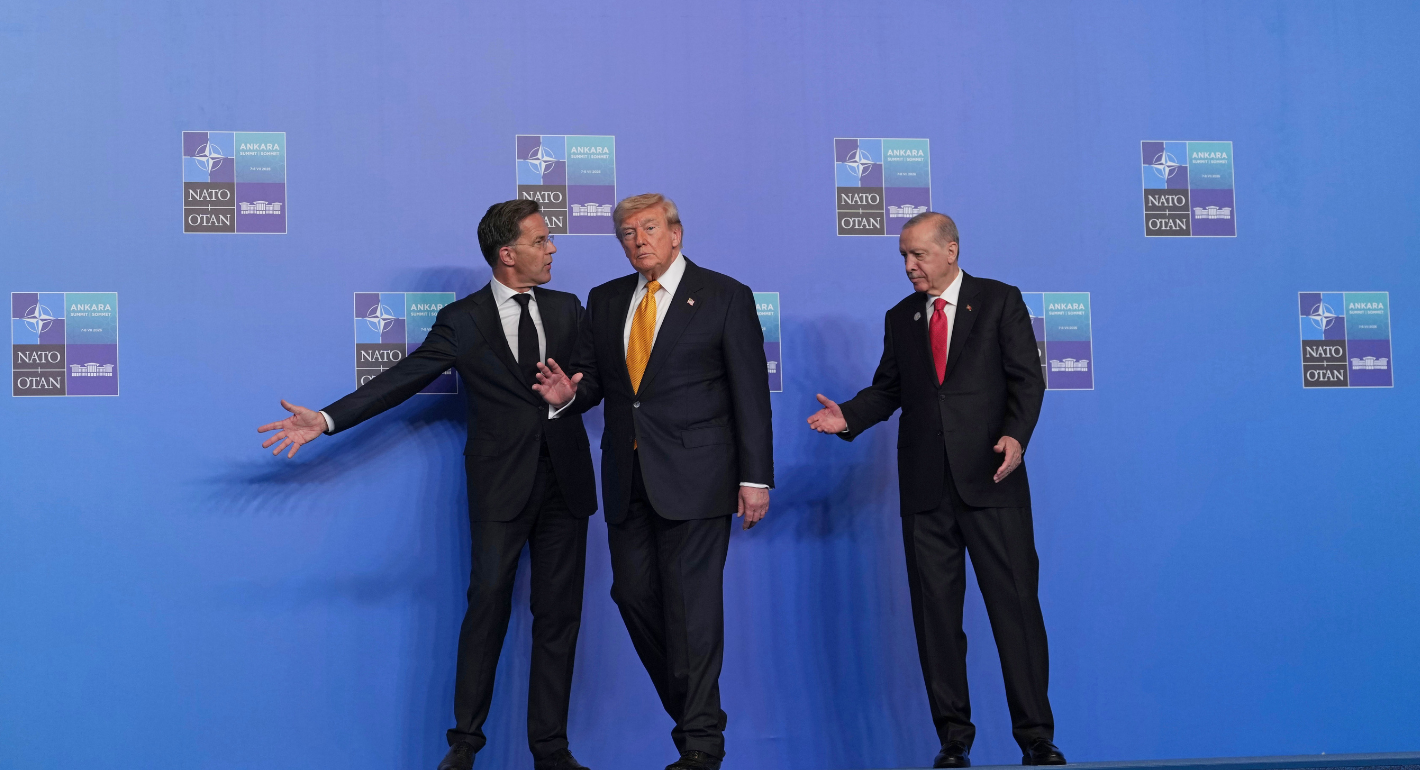
Nearly a year and a half after Europeans leaned into sucking up to Trump, the strategy has produced some benefits when it comes to Ukraine.
Rym Momtaz
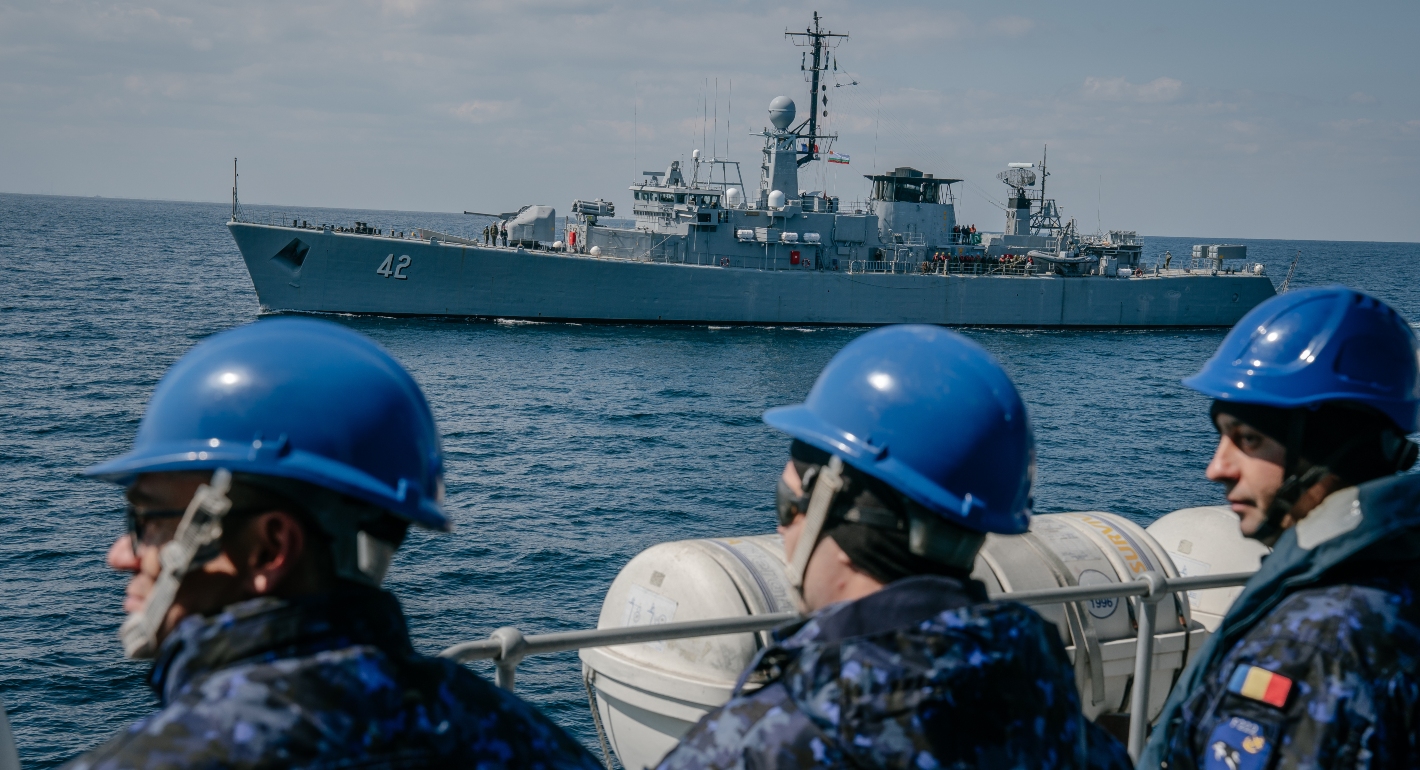
As Russia's war on Ukraine drags on, NATO is expanding its footprint in the Black Sea. Turkey, Romania, and Bulgaria are upgrading their fleets and deepening trilateral cooperation.

Dimitar Bechev