

In The Media
Michele Dunne, Robert Kagan
{
  "authors": [
    "Robert Kagan"
  ],
  "type": "legacyinthemedia",
  "centerAffiliationAll": "",
  "centers": [
    "Carnegie Endowment for International Peace"
  ],
  "collections": [],
  "englishNewsletterAll": "",
  "nonEnglishNewsletterAll": "",
  "primaryCenter": "Carnegie Endowment for International Peace",
  "programAffiliation": "",
  "programs": [],
  "projects": [],
  "regions": [
    "United States",
    "Iraq"
  ],
  "topics": [
    "Security",
    "Military",
    "Foreign Policy"
  ]
}
REQUIRED IMAGE
Powell, the famously moderate multilateralist, may be the only one who can turn back this assault and protect the president's flank. In fact, the secretary of state may prove indispensable to the success of the Bush Doctrine. He will have some credibility when he makes the case for "regime change" in Iraq.
Source: Carnegie
Reprinted with the permission of the Washington Post, February 10, 2002
The most imposing secretary of state of recent memory, George P. Shultz, was known in respectable circles as the reasonable moderate in an otherwise hawkish Reagan administration. Liberal columnist Tom Wicker called him the "steady man" on a ship of conservative loonies. So when Shultz, at a congressional hearing in February 1985, suddenly came out swinging for Reagan's controversial Central America policies, literally pounding the table and lecturing committee members about the Communist threat in Nicaragua and El Salvador, the effect was electric. Reagan's stunned opponents were knocked back on their heels. That year and the next Congress voted more than $100 million in aid to anti-Sandinista rebels in Nicaragua. Five years later the Sandinistas were out of power. Did Shultz act out of conviction or out of loyalty to his president? No one knew, and it didn't matter. Shultz threw his prestige and his lineman's body into the pile and pushed it over the goal line. He made the Reagan Doctrine respectable.
Is history repeating itself? This past week another imposing secretary of state, hero to dovish sensibilities on both sides of the Atlantic, veered sharply to the hard line. In testimony before Congress, Secretary of State Colin Powell went out of his way to show no space between himself and President Bush in the war on terrorism. Articulately defending the new Bush Doctrine, Powell declared his support for "regime change" in Iraq and said the administration is engaged in "the most serious assessment of options that one might imagine." He even warned that the United States would deal with Iraq "alone" if it had to. Powell accused Iranian leaders of "meddling" against the U.S.-backed government in Afghanistan and called on the Iranian people to "make a choice": "stop being a state sponsor of terrorism, get out of the axis of evil column." He criticized North Korea for continuing "to develop and sell missiles that can carry weapons of mass destruction at the same time their people are starving to death." And when asked to dissent from, or at least to qualify, President Bush's "Axis of Evil" doctrine, Powell stood with his president: "We will not shrink back from that clarity of purpose."
Powell's testimony comes at a critical moment for Bush. A motley alliance of former Clinton administration officials, Republicans such as Sen. Chuck Hagel and Rep. Doug Bereuter, and even Papa Bush's foreign policy guru, Brent Scowcroft, have already begun attacking the younger Bush for what French Foreign Minister Hubert Vedrine calls a "simplistic" approach to the world. Like Reagan 20 years ago, Bush is being set up by elite opinion at home and abroad as a dangerous fellow who doesn't understand the world's complexities. At Powell's hearing last week, Hagel suggested that Bush and his advisers have a "cavalier attitude" about war. Hagel even obliquely compared Bush's new global doctrine to Lyndon Johnson's disastrous policy in Vietnam. Johnson, the senator noted archly, "got us onto a course" and "didn't know how to get us out."
Powell, the famously moderate multilateralist, may be the only one who can turn back this assault and protect the president's flank. In fact, the secretary of state may prove indispensable to the success of the Bush Doctrine. The driving forces behind Bush's revolutionary global strategy within the administration -- Donald Rumsfeld and Paul Wolfowitz -- are not always its most effective salesmen on the outside. Their evident disdain for the NATO allies, and for world opinion in general, has unnecessarily hurt Bush's cause abroad, which may in turn strengthen Bush's opponents in Washington.
Powell has the stature, the skill and the understanding to bend international opinion in Bush's direction. He actually cares about the allies and has experience working with them, both as a diplomat and, a decade ago, as a commanding general. He will have some credibility when he makes the case for "regime change" in Iraq.
And Powell has another thing going for him: his moderate reputation. The secretary of state may be a late convert to the Bush Doctrine, but ironically that's why he could become its most effective proponent. When Powell tells the allies that it's time to pull the plug on Saddam Hussein -- and that they can either help the United States or be left behind -- they may just listen. Once deployed, Powell could be America's most formidable nonexploding weapon.
Will Powell assume the role for which he may be uniquely qualified? Bush's State of the Union message left him three choices: He could let the president and his more hawkish advisers take on the world while he conspicuously demurs, thus preserving his moderate reputation at home and abroad. He could mouth support for the president's strategy while quietly looking for ways to derail it. Or he could throw his considerable prestige behind the president's vision.
A lot is riding on his decision. Right now, it looks as though Powell has decided to put his shoulder down and push the pile forward.
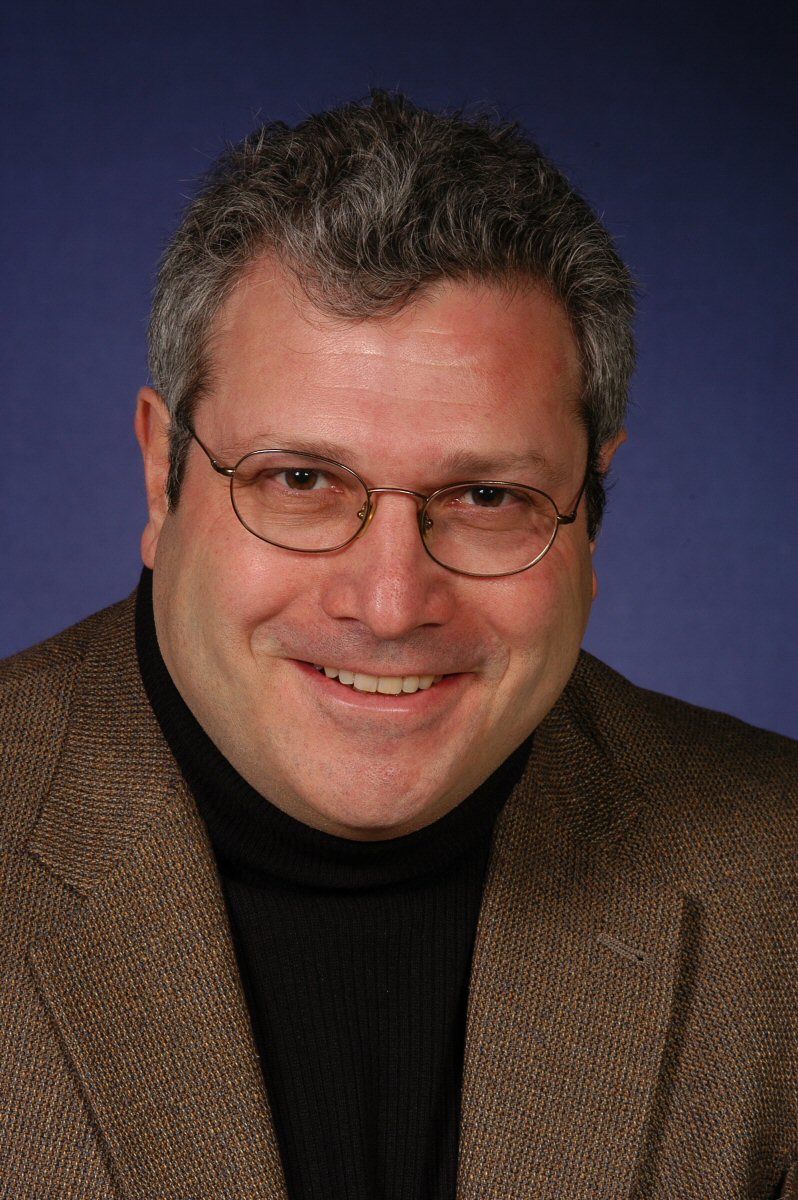
Former Senior Associate
Kagan, author of the recent book, The Return of History and the End of Dreams (Knopf 2008), writes a monthly column on world affairs for the Washington Post and is a contributing editor at both the Weekly Standard and the New Republic.
Recent Work

Michele Dunne, Robert Kagan
Robert Kagan, Michele Dunne
Carnegie does not take institutional positions on public policy issues; the views represented herein are those of the author(s) and do not necessarily reflect the views of Carnegie, its staff, or its trustees.

European Commission President Ursula von der Leyen is about to give her annual address on the state of the EU. Here’s what she won’t—but should—say.

Rym Momtaz

Radical-right parties are expected to do well in upcoming elections in four of the EU's biggest member states. If successful, they could prevent the union from addressing key challenges ahead.

Stefan Lehne

The aftermath of the Ceuta crisis shows Europe has drawn the wrong lessons. Rather than doubling down on failed migration policies, the EU needs to address the underlying roots of such episodes.

Richard Youngs

Canadian Prime Minister Mark Carney has twice inspired praise for standing up to U.S. President Donald Trump: at the 2026 World Economic Forum in Davos and on Canada-U.S. trade negotiations. Is Carney showing a third way better than the EU has in dealing with the Trump administration?
Rym Momtaz, ed.

The EU’s responses to two recent incidents expose the gulf between European perceptions and capabilities. Unless the union can bridge that gap, it will never become a real geostrategic power.
Rym Momtaz