

Report
Mr. Husain Haqqani, Ashley J. Tellis
{
  "authors": [
    "Husain Haqqani"
  ],
  "type": "legacyinthemedia",
  "centerAffiliationAll": "dc",
  "centers": [
    "Carnegie Endowment for International Peace"
  ],
  "collections": [],
  "englishNewsletterAll": "ctw",
  "nonEnglishNewsletterAll": "",
  "primaryCenter": "Carnegie Endowment for International Peace",
  "programAffiliation": "russia",
  "programs": [
    "Russia and Eurasia"
  ],
  "projects": [],
  "regions": [
    "South Asia",
    "Pakistan"
  ],
  "topics": [
    "Political Reform",
    "Democracy"
  ]
}
REQUIRED IMAGE
Source: Carnegie
Originally appeared in the Asian Wall Street Journal, September 4, 2002
Even as it promises to topple the dictatorship of Iraq's Saddam Hussein, the Bush administration curiously appears to have decided not to press Pakistan on democratic reforms. The day after Gen. Pervez Musharraf announced 29 amendments to the country's constitution, in effect giving him absolute power, the U.S. State Department only expressed muted concern. Yet those amendments amount to a virtual re-writing of Pakistan's constitution by one man; in contrast, the American constitution has accumulated just 27 amendments in over two centuries.
That Washington should implicitly condone the disregard for democracy in Pakistan has implications for the Muslim world. While recent pronouncements by American leaders raised expectations among Muslim intellectuals of American action against the authoritarianism that marks political life in many Islamic countries, the U.S. refusal to speak out against Gen. Musharraf now dashes those hopes. Monarchs and dictators have been encouraged to believe that the U.S. does not mind their autocratic ways, so long as they fulfill specific American strategic goals.
Indeed, the prospect of an attack on Iraq, widely opposed in Arab and Muslim countries, makes it important for the U.S. to be clear and consistent about the values it claims to promote. Unlike other Islamic countries, Pakistan has a tradition of parliamentary democracy, however flawed. If the U.S. won't bother nudging a nation with some history of representative government toward reinstating full democracy, how can it succeed in its democracy project in countries like Iraq? The promise to bring democracy to Baghdad rings hollow when the U.S. eschews even reproaching Pakistan.
According to U.S. President George W. Bush, Gen. Musharraf deserves praise for cooperating with the U.S. But identifying Gen. Musharraf, the man, rather than the Pakistani nation as America's ally may prove a blunder. In the past, the U.S. has suffered whenever it reduced its ties with a nation to a personal relationship with its authoritarian ruler.
While such ties may advance an immediate strategic objective, they create greater problems down the road. Washington gave tacit support to Saddam when he fought Iran from 1980 to 1988. Saddam consolidated his position as Iraq's ruler during those years. Similarly, U.S. support for Gen. Zia ul-Haq during the anti-Soviet resistance in Afghanistan led to the rise of Islamic militancy in Afghanistan and Pakistan. Now, the U.S. is trying to undo through Gen. Musharraf what it inadvertently started under Gen. Zia.
Pakistan's military leaders have used Islamists to weaken liberal politicians as well as to advocate a militarist foreign policy. Gen. Musharraf is no exception. He, too, is seeking the support of Islamist leaders to block the path of mainstream politicians ahead of October's parliamentary elections. Recently, he met the head of Pakistan's largest Islamic party and sought his support. Gen. Musharraf realizes the weakness of the alliance of minor ethnic and regional parties he is propping up against the major players led by former Prime Ministers Benazir Bhutto and Nawaz Sharif. He would rather cut a deal with the Islamists than with the secular opposition. Yet such deals have backfired elsewhere, notably in Egypt where Islamists once were cultivated by the late President Anwar Sadat to contain the influence of leftists.
Military dictators have ruled Pakistan for over half its life. But with its tradition of at least some semblance of democracy going back to British colonial rule, it offers the best possibility of becoming a model democratic state in the Muslim world. Unfortunately, the U.S. has done little to encourage this possibility. Each period of military rule has been accompanied by a warming of relations with the U.S., creating the impression in Pakistan that America prefers military dictators as Pakistan's rulers.
Although Gen. Musharraf has decreed that Ms. Bhutto and Mr. Sharif will not be allowed to return, their parties are widely expected to win in a fair election. Pakistanis appear inclined to forgive charges of patronage and accusations of kickbacks when faced with graver allegations against their current leadership and the present vacuum in the rule of law. Moreover, despite any weaknesses they may have, mainstream political parties in Pakistan reflect moderate and modernizing views. Thus, an elected civilian leader can be expected to oppose Islamic extremists out of a deep conviction rather than through expediency. This can only be good for U.S. interests in the region. On the other hand, the perception of U.S. support for a military-controlled polity could turn Pakistan's civilian leaders against America. Anti-Musharraf politicians would be tempted to cooperate with his Islamic critics in protests that would likely be fueled by more than a dollop of anti-Americanism.
Conceivably, a case may be made for support of pro-American dictators in countries where the opposition is anti-American. But there is no excuse for Washington to prefer pro-American dictators over pro-American democrats. Instead of appearing to condone Gen. Musharraf's disregard for democracy, the U.S. should be pressuring him to reconsider his arbitrary constitutional plans. Indeed, doing so would serve to advance the cause of democracy throughout the Islamic world. And that is no bad thing.
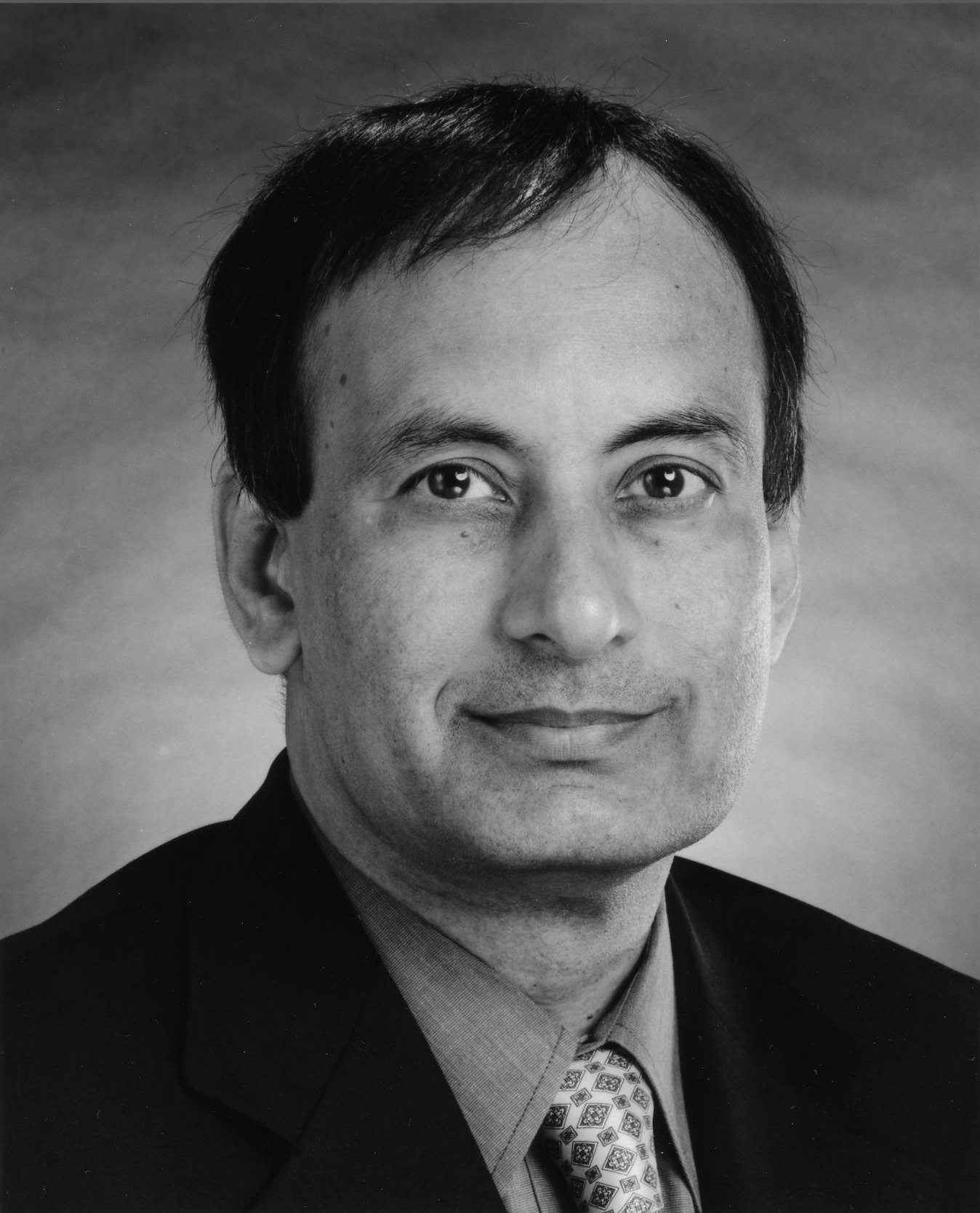
Former Visiting Scholar
Recent Work
Mr. Husain Haqqani, Ashley J. Tellis
Mr. Husain Haqqani
Carnegie does not take institutional positions on public policy issues; the views represented herein are those of the author(s) and do not necessarily reflect the views of Carnegie, its staff, or its trustees.

The domestic impacts of how long it is taking to end the war in Ukraine have pushed the French electorate to the political extremes and compromised the country’s diplomatic capacity.

Rym Momtaz

Before the next wave of EU enlargement takes place, the union needs to grapple with thorny questions of how power is distributed among its members.


Emil Sondaj Hansen, Ditte Brasso Sørensen

Radical-right parties are expected to do well in upcoming elections in four of the EU's biggest member states. If successful, they could prevent the union from addressing key challenges ahead.

Stefan Lehne

An overwhelming victory by a far-right-wing party in a small state in eastern Germany will have major repercussions for Chancellor Friedrich Merz’s coalition.

Judy Dempsey

In supporting Europe’s far-right, MAGA and Russia both want the same thing: a weaker EU. Europe must defend itself without abandoning the openness these forces exploit.

Armida van Rij