

Research
- +10
Rosa Balfour, Frances Z. Brown, Yasmine Farouk, …
{
  "authors": [
    "Moisés Naím"
  ],
  "type": "legacyinthemedia",
  "centerAffiliationAll": "",
  "centers": [
    "Carnegie Endowment for International Peace"
  ],
  "collections": [],
  "englishNewsletterAll": "",
  "nonEnglishNewsletterAll": "",
  "primaryCenter": "Carnegie Endowment for International Peace",
  "programAffiliation": "",
  "programs": [],
  "projects": [],
  "regions": [],
  "topics": [
    "Political Reform",
    "Economy",
    "Trade"
  ]
}
REQUIRED IMAGE
Source: Carnegie
The Roots of Corporate Scandals
By Moisés Naím
originally published in the Financial Times, on Monday, September 30th, 2002
What led American executives to think they could get away with hiding billions of dollars in corporate losses or invent staggering amounts of non-existent revenues? Greed, arrogance, dishonesty and other human frailties are obvious answers. But they are not the most interesting. After all, hubris and corruption among the powerful are as old as the Bible.
The 1990s excesses are another popular explanation. The economic bonanza and the ease with which new capital was raised even for the most unjustified ventures contributed to the recent wave of corporate frauds, as did the extravagant compensation schemes that became fashionable.
Yet, while important, none of these factors can fully account for the unprecedented nature, scope and scale of the financial manipulation that took place. Other less visible but powerful business trends were also at work.
In the past decade, brand names, patents, software and other intangible assets became important determinants of a company's value. Meanwhile, complicated derivative financial instruments were almost universally adopted and globalisation fuelled rapid and complex corporate growth. These three business trends, while positive in many ways, also muddied balance sheets, wrought havoc in accounting standards and created the possibilities for managers to use the intellectual confusion of the time to rig the books and cash in their big bonuses. The line between excess and illegality became too easy and too tempting to cross.
Originally, the importance of intangible assets in defining a company's value applied mostly to technology companies. But soon they became important for "old economy" companies, too. Thus Enron operated in areas in which it neither produced goods nor owned tangible assets.
If intangible assets blurred the true nature of a company, financial derivatives often made its books indecipherable. These useful instruments, which allow companies to manage risk more effectively, can bewilder even the most mathematically inclined. In the 1990s the popularity and complexity of derivatives grew at a much faster pace than the understanding of shareholders, regulators, analysts and even chief executives about their effects on balance sheets. Overwhelmed boards of directors often had no option but to believe at face value what chief finance officers and their whiz-kids said.
Globalisation also added complexity. The political liberalisation of the 1990s allowed companies to operate in countries that were once forbidden territory. Information technology also greatly facilitated the co-ordination of geographically diversified operations, thus making it easier to become a multinational corporation. In less than a decade, Enron went from just doing business in the US to operating in 30 countries; Cisco Systems went from almost no international involvement to operating in 127 countries, which generate 65 per cent of its revenues. If rapid growth adds complexity, rapid international growth does so more intensely.
Aware of the complexity of their operations, rogue managers assumed - often correctly - that even the most probing outsiders would have a hard time detecting the manipulation of financial statements. The pressure to meet or exceed Wall Street's earnings expectations, plus the culture of "everybody is getting rich doing it", often made book-cooking too tempting to resist. Thus in the 1990s, opportunity, impunity and motive converged in the corporate suites to induce a wave of financial malfeasance.
Such large-scale fraud was also facilitated by the corrosive effect of these new business trends on the institutions created to protect shareholders. For more than a century, as salaried managers displaced owner-managers, a new category of practices and institutions emerged to safeguard the interests of owners who no longer ran the show. Boards of directors nominally independent from management, audit and compensation committees, external auditors, disclosure rules and stock market researchers were some of the tools used to ensure that top managers' behaviour was aligned to shareholders' interests. Recent trends undermined the efficacy of all these institutions.
Now that the economic boom is over and the tolerance for excesses has turned into indignation, the search is on, not just for rogues but also for stiff penalties that may prevent new bouts of corporate greed. It is worth remembering that while greed is inevitable, intellectual confusion is not. Better regulations are needed but, without better ideas about the origins of the recent scandals, new rules will be irrelevant or even harmful.

Distinguished Fellow
Moisés Naím is a distinguished fellow at the Carnegie Endowment for International Peace, a best-selling author, and an internationally syndicated columnist.
Recent Work



Rosa Balfour, Frances Z. Brown, Yasmine Farouk, …
Moisés Naím
Carnegie does not take institutional positions on public policy issues; the views represented herein are those of the author(s) and do not necessarily reflect the views of Carnegie, its staff, or its trustees.

Canadian Prime Minister Mark Carney has twice inspired praise for standing up to U.S. President Donald Trump: at the 2026 World Economic Forum in Davos and on Canada-U.S. trade negotiations. Is Carney showing a third way better than the EU has in dealing with the Trump administration?

Rym Momtaz, ed.

As the EU confronts profound challenges, several leaders have called for fundamental reform to the union’s model—but only modest, superficial changes have resulted. What if Europe really could be reimagined from zero today: What should such a redesigned European order look like?

Richard Youngs, ed.

Europe’s industrial supply chains leave it vulnerable to global shocks. The EU needs a pragmatic green industrial strategy that balances durable partnerships and bolsters homegrown clean tech without sacrificing low-carbon ambition.


Milo McBride, Pauline Gerard
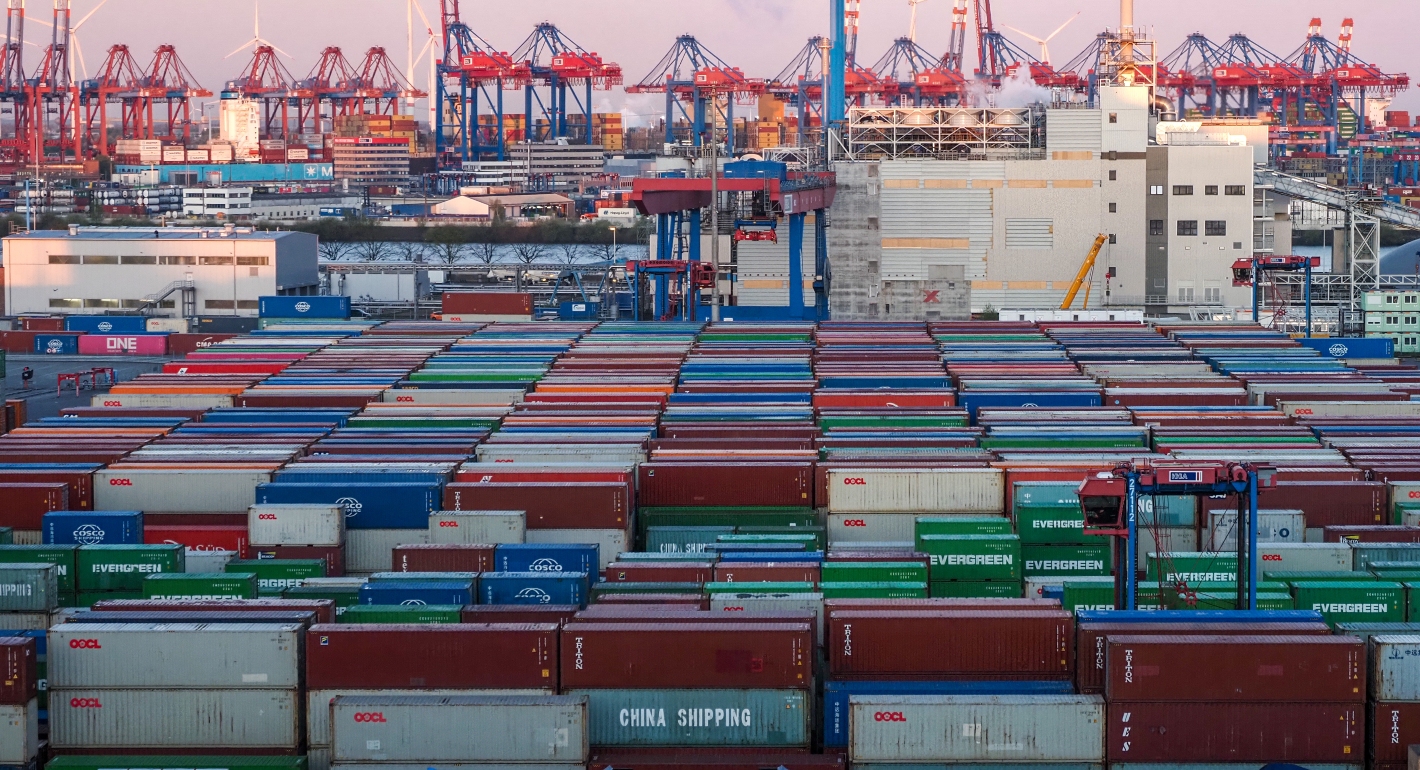
As geopolitical rivalry weaponizes global supply chains, the EU’s true vulnerability lies in emerging-risk imports. For these goods, suppliers are growing more concentrated, substitution more difficult, and political risk is looming.

Sinan Ülgen

The EU is putting together a new security strategy to meet today’s myriad challenges. But for any proposal to be effective, the union needs to grapple with its identity and ambitions.

Pierre Vimont