

Article
Andrew Kuchins
{
  "authors": [
    "Andrew Kuchins"
  ],
  "type": "legacyinthemedia",
  "centerAffiliationAll": "dc",
  "centers": [
    "Carnegie Endowment for International Peace"
  ],
  "collections": [],
  "englishNewsletterAll": "ctw",
  "nonEnglishNewsletterAll": "",
  "primaryCenter": "Carnegie Endowment for International Peace",
  "programAffiliation": "russia",
  "programs": [
    "Russia and Eurasia"
  ],
  "projects": [],
  "regions": [
    "North America",
    "United States",
    "Caucasus",
    "Russia"
  ],
  "topics": [
    "Economy",
    "Trade",
    "Security",
    "Military",
    "Foreign Policy",
    "Nuclear Policy"
  ]
}
REQUIRED IMAGE
The whole world is closely paying attention to what the US is doing in Afghanistan, because this is the first experience of a war on terrorism. When the military presence will end is difficult to say. But whatever happens, if we cannot demonstrate to other countries that we are able to finish what we started, than the other countries will think that the US is lacking in diligence and resolve.
Source: Carnegie
Andrew Kuchins is the director of the Russian and Eurasian Program at the Carnegie Endowment for International Peace.
Q: Despite better relations between Russia and the US since September 11, the US has taken a number of steps toward Russia that appear unfriendly, such as the doctrine of using nuclear weapons, which lists Russia as one of the potential targets. Care to comment?
First of all, I think that Russian-American relations are much better now than they were a year ago. Of course, I realize that America's decision to withdraw from the ABM treaty was seen in Moscow as an anti-Russian move. But I also think that Putin's administration realized that even if Americans create an anti-missile defense system at some point in the future, this system will not pose a threat to the Russian nuclear arsenal for a quarter of a century or more. Therefore this move should not be seen as a threat to Russia from the US.
Regarding the new doctrine of using nuclear weapons - undoubtedly, the US is not planning to attack Russia or carry out preventive nuclear strikes. To say that is just silly. But from the point of view of public opinion, I think it's very unfortunate that Russia and China fell into the same group of countries as Iraq, Iran, and North Korea. This is very unfortunate and, personally, I think it's a mistake.
Q. What is the status of the doctrine? What power does it yield, and how often is it created?
It's more than a simple declaration. I think the last time such a document was prepared was in 1993. We organize our armed forces on the basis of these doctrines, but they are not necessarily clear indicators of intention.
Q. Do politics affect the economy - are the steel or chicken trade scandals part of a negative trend in relations between Russia and the US, or is it just a common misunderstanding?
A. I don't think these events mean there's a negative trend in relations between the two countries. I would say just the opposite is true - it's signaling a normalization of relations. The US has similar trade disputes with many countries, even with its closest allies.
As I said, Russian-American relations are better now than they were a year ago. There are talks between Russia and NATO, a new structure of relations is being discussed. I think these negotiations will be successful in the end. Russian and American armed forces are cooperating in Central Asia, and I think there's a real possibility of cooperating in Georgia.
In my opinion, all these facts show the huge changes in the relationship. Both Russia and the US are gradually shifting their mentality - we could not imagine, even two years ago, that American armed forces could cooperate with Russians on the territories of former Soviet republics. It's a colossal change, and a huge step forward.
There are now negotiations for Russia to enter the WTO. And Russia will become a member - perhaps in a year or two or three, but it will undoubtedly be a member. This is another important step. Of course, there will periodically be quarrels between us. This is a completely normal thing in international relations. But in my opinion, it does not signal, at least at this point, an appearance of negative tendencies in relations.
Q: There is an idea that the US emphasis on creating a Missile Defense System is designed to ensure US dominance over Russia. Do you agree?
The main goal of the US military doctrine is to guarantee the country's safety, not to outdo Russia. Of course, we must acknowledge the reality of our current superiority over Russia. In terms of GDP, Russia is number 15 in the world. At this level, Russian GDP comprises only 5% of American GDP. This means that Russia simply cannot compete with the United States in this field, and must turn to internal, economic development.
But we also have many things in common. Of course, the US pursues global interests. But Russia, as a result of its geographic position, has its own interests in Europe, the Near East, Central Asia, and South Asia - that is, many points of interest that are important to the Americans as well. And I must note that in the majority of cases, the interests of Russia and the US coincide.
Of course they do not agree on everything all the time, but keep in mind that US interests sometimes diverge with those of its closest allies. A recent example is the situation in Iraq. Turkey and the UAE said that they are against a US action against Saddam without UN approval, and suggest diplomatic methods instead. America's European and allies, as well as Russia, agree with that.
Q: How much does the US foreign policy depend on the wishes of its allies. How are US President's choices affected by the wishes of the UK, Turkey, Jordan, Russia?
That's a very complex question. In short, I'll say this: America is the world's only superpower. Does this mean that we can do whatever we want, without taking into account the interests of the world community? Absolutely not.
Each situation is different, and we must take the interests of others into account. I could not say, for instance, that a decision is 30% based on the President's rating, 15% on the President's advisors, 50% on the views of other countries and so on. Each political situation is absolutely unique, and its resolution depends on many factors. I understand that my answer my not be totally satisfying, but there is no way to answer otherwise.
Q: What is happening in Afghanistan? There are news of more al-Qaeda bases, and before the Northern Alliance came to power, which was formerly known as
a large drug manufacturer.
The situation in Afghanistan is very difficult, and people in the former Soviet republics probably know what's really happening better than anyone else in the world. It's difficult to say how long the American troops will continue their actions.
But I think that the Bush Administration understands that our actions in Afghanistan are important from many points of view. The whole world is closely paying attention to what the US is doing there, because this is the first experience of a war on terrorism. When the military presence will end is difficult to say. But whatever happens, if we cannot demonstrate to other countries that we are able to finish what we started, than the other countries will think that the US is lacking in diligence and resolve.
Q: What can you expect from Central Asia? What effect are the military bases having?
The presence of international anti-terrorist forces will increase regional stability. But the biggest influence on the region will be the development of the states, especially Uzbekistan. If President Islam Karimov will not seriously attend to economic reforms, than what sort of long-term stability could be attained?
American armed forces can lend a hand in resolving security issues, but the countries' internal development is the most important thing. It seems there is good opportunity here for cooperation between American and Russian forces, especially in Tadjikistan. And this can play a major role in the field of drug trafficking.
Q: There is a theory that unstable regions can cause wars. For instance, instability in the Balkans resulted in the First World War. Instability in Afghanistan led first to the entrance of Soviet troops, and later to the September 11 terrorist acts. How long can Central Asia remain unstable?
It's a difficult question. The answer depends on a number of factors. I already named the first - the political and economic development of the countries. This development will lead to the decline in drug production and trafficking.
The second factor is international cooperation, especially by bordering countries - I mean Russia, Iran, China, India, Pakistan.Unfortunately, in the past ten years we have not seen adequate cooperation among these countries, but if such partnerships don't exist, this will reflect negatively on Central Asian stability.
The members of the Shangai Cooperation Organization include China, Russia, and the 4 "stans" excluding Turkmenistan. This organization is designed to combat separatism, extremism, and terrorism. I think the Shanghai cooperation organization can be a positive example of how a regional multilateral forum can enhance security.
Q: This region borders on China, India, Iran, Rusia, Arabic and Turkic governments. In your view, which of these civilizations can be the biggest influence - economically, politically, culturally - on Central Asia in the future?
Much depends on the development of China. If China can demonstrate stable economic growth for the next 30-40 years, it will undoubtedly play a major role in the region.
Yet, in my opinion, no single civilization will completely dominate in the region. From a cultural point of view, Islamic culture will dominate. In the area of politics and international security Russia will play an important role, although its influence is diminishing. India, Pakistan, and the US will maintain its influence, and possibly increase it.

Former Senior Associate and Director, Russian & Eurasian Program
Recent Work
Andrew Kuchins
Andrew Kuchins
Carnegie does not take institutional positions on public policy issues; the views represented herein are those of the author(s) and do not necessarily reflect the views of Carnegie, its staff, or its trustees.

Trump is distracted and Ukraine wants Europe to step up. The continent’s leaders must find their voice and assert it in talks with Russia.

Alissa de Carbonnel

Mounting economic strain and battlefield losses will not necessarily make the Kremlin less dangerous. They could instead push Moscow toward a more aggressive hybrid campaign designed to test NATO’s Eastern flank, exploit allied hesitation, and fracture European resolve.

Maksym Beznosiuk

Over the past ten years, NATO has held almost as many summits as it did during the entirety of the Cold War. Are they still useful, or is it time to stop holding annual meetings?

Rym Momtaz, ed.
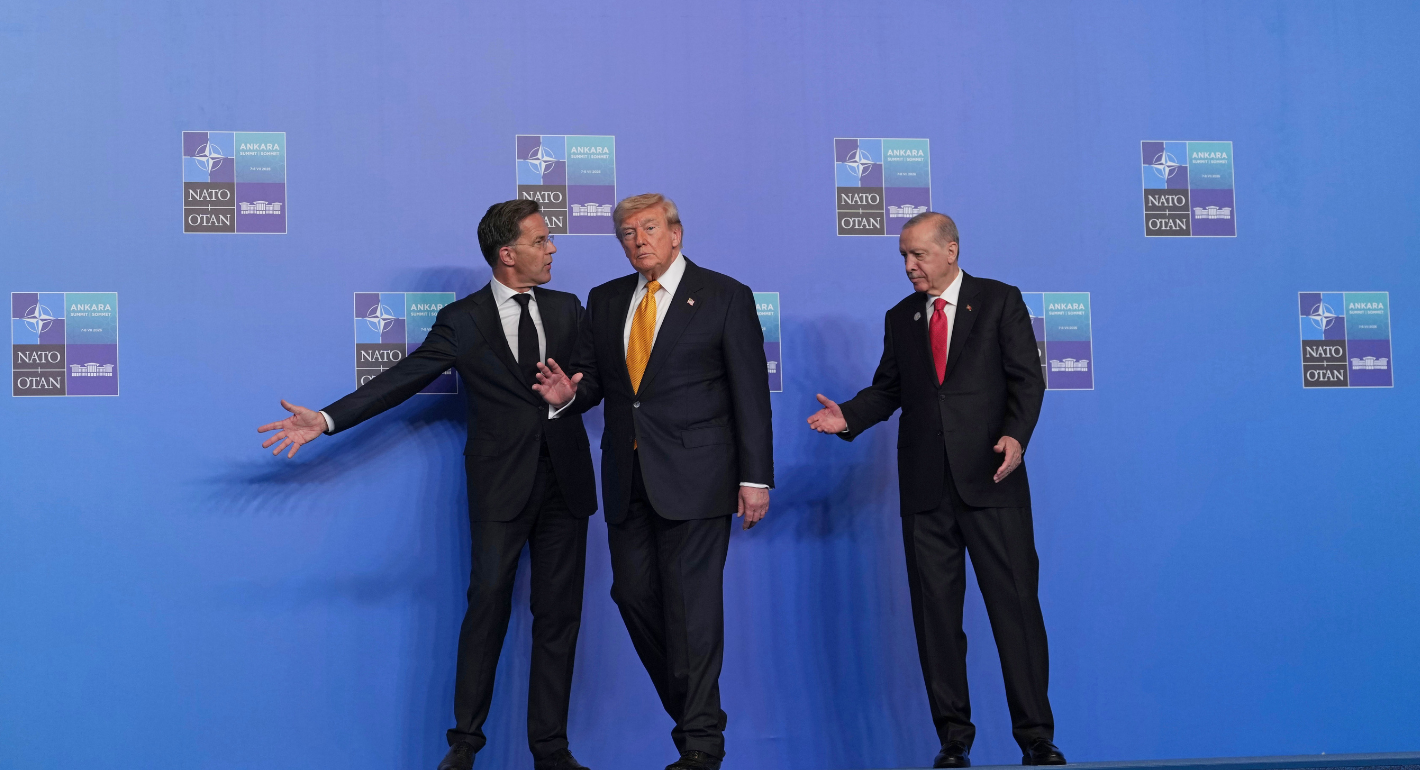
Nearly a year and a half after Europeans leaned into sucking up to Trump, the strategy has produced some benefits when it comes to Ukraine.
Rym Momtaz
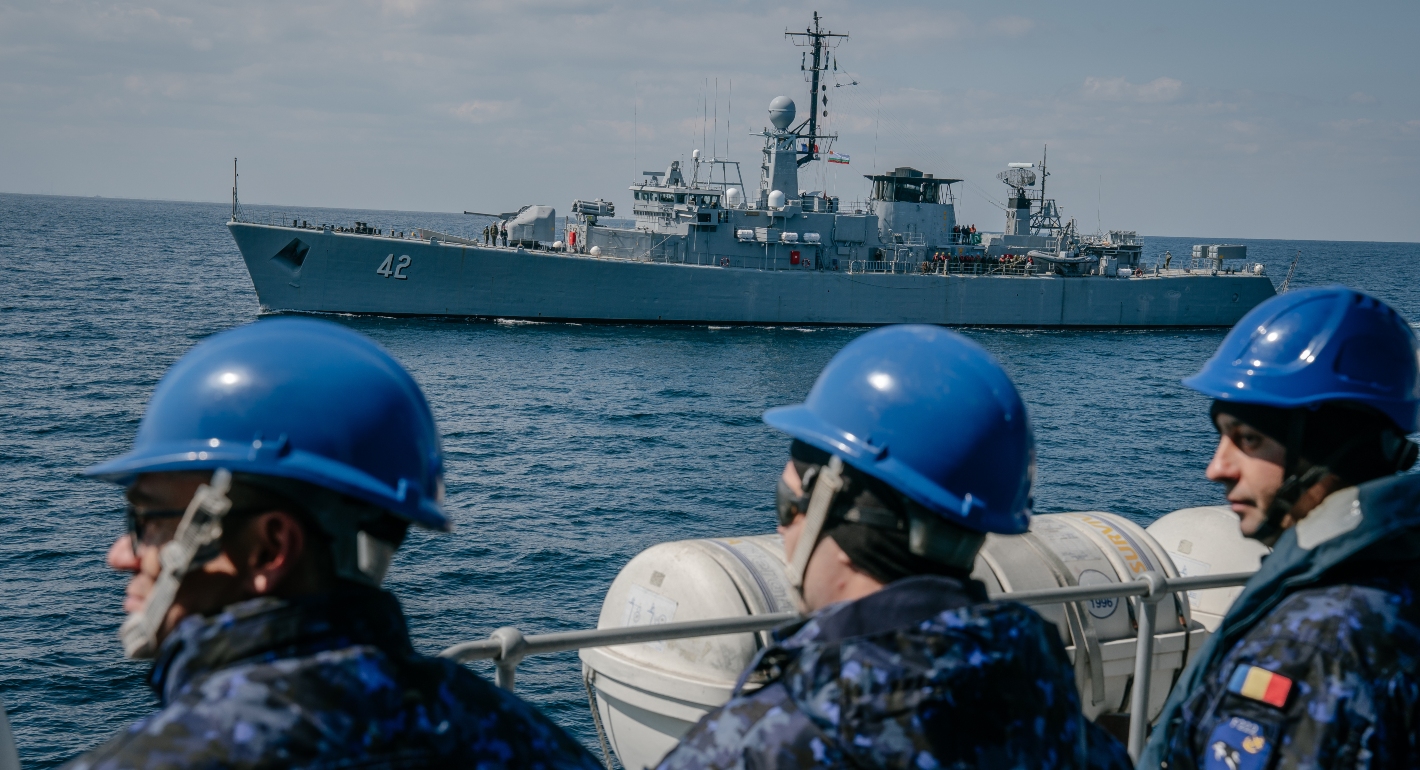
As Russia's war on Ukraine drags on, NATO is expanding its footprint in the Black Sea. Turkey, Romania, and Bulgaria are upgrading their fleets and deepening trilateral cooperation.

Dimitar Bechev