

Article
Marina Ottaway, Omar Hossino
{
  "authors": [
    "Marina Ottaway"
  ],
  "type": "legacyinthemedia",
  "centerAffiliationAll": "dc",
  "centers": [
    "Carnegie Endowment for International Peace"
  ],
  "collections": [],
  "englishNewsletterAll": "democracy",
  "nonEnglishNewsletterAll": "",
  "primaryCenter": "Carnegie Endowment for International Peace",
  "programAffiliation": "DCG",
  "programs": [
    "Democracy, Conflict, and Governance"
  ],
  "projects": [],
  "regions": [
    "United States",
    "Middle East",
    "Israel",
    "Egypt"
  ],
  "topics": [
    "Political Reform",
    "Democracy",
    "Foreign Policy"
  ]
}
REQUIRED IMAGE
Source: Carnegie
Originally published January 5, 2003 in the Boston Globe.
For more than a year, the Bush administration has mounted a strong rhetorical offensive against the lack of democracy in Middle East countries. As a policy toward democracy in the Middle East finally starts being defined, however, the old caution that has kept the United States from pushing for political change in the area in the past is reasserting itself.
The evidence that most of the Sept. 11 hijackers came from Egypt and Saudi Arabia, the two countries which the United States long considered its best allies in the Arab world, led the Bush administration to question the long-standing assumption that US interests would be best protected by the stability of friendly autocratic regimes. Such regimes, the new argument went, were actually dangerous to the United States because lack of democracy and the poverty induced by state control of the economy and the weakness of private enterprise bred frustration and terrorism.
President Bush and National Security Adviser Condoleezza Rice have repeatedly stated that US interests, as well as those of the people of the Middle East, would be best protected by vigorous steps to bring liberty and democracy to the region.
In the more extreme statements emanating from conservative analysts close to the administration, the idea of democracy promotion was conflated with that of regime change. A US invasion of Iraq would trigger a wave of democratization throughout the Arab world, leaving in its wake a much transformed region.
After decades of utmost caution in dealing with the flammable Middle East, the United States appeared determined to promote quick and radical change, no matter the price.
This seemed a radical departure from the bland and cautious approach to democracy promotion in the Middle East during the 1990s. While investing about $250 million in democratization projects in the region, with the bulk of it going to Egypt and the West Bank and Gaza, the United States had been very cautious not to challenge incumbent regimes. Money went primarily to institutional reform efforts in Egypt - mostly failed attempts to strengthen the parliament, make the courts more efficient, or decentralize the ponderous administration - and to promote non governmental organizations advocating for human rights and women's rights or carrying out civic education.
In a decade during which the United States did not hesitate to impose democratic
changes in other parts of the world, it defined its role in the Middle East
as that of helping to prepare the countries for the day when political change
would become possible, rather than making the change happen.
In Africa, the United States was threatening reluctant leaders with the suspension
of foreign assistance unless they held elections. In Slovakia and Serbia, it
was openly financing and training large coalitions of NGOs with the express
purpose of bringing down dictators. But in the Middle East, particularly in
politically sensitive countries like Egypt, the United States was resting its
hopes for democratization on the good will of "the next generation,"
the sons of strongmen anointed by the fathers to succeed them.
Not surprisingly, the Bush administration's new tough stance on democracy and
regime change created a strong negative reaction in Arab countries. The governments
of Egypt and Saudi Arabia felt that they were being unjustly singled out. The
strongest reaction, however, came from the Arab press.
For months, newspapers throughout the Arab world unleashed a barrage of angry
articles that denounced the Bush administration's stance on democracy, calling
into question its sincerity, and attacking it as a smoke screen designed to
distract attention from Bush's real agenda: to grab Iraq's oil and give Israeli
Prime Minister Ariel Sharon a free hand in dealing with the Palestinians.
The concerns of Arab governments and the anger of the Arab press were understandable
but, it turns out, probably premature. As the outlines of a policy toward Middle
East democracy are finally emerging from the haze of rhetorical statements,
it is becoming clear that nothing much is going to change in practice. The new
policy resembles a lot more the cautious policy of old than the ideas put forth
in the last year. The constant imperatives that have guided US policy in the
region - to maintain access to an uninterrupted, abundant supply of reasonably
priced oil and to maintain good relations with countries willing to remain at
peace with Israel - are once again pushing democracy to the far back of the
agenda. The US current quest for military facilities it can use in a possible
attack against Iraq has the same effect.
In a speech delivered on Dec. 12, Secretary of State Colin Powell announced
the launching of the administration's new Middle East Policy Initiative, stating
that it "places the United States firmly on the side of change, of reform,
and of a modern future for the Middle East."
Funded at a minuscule $29 million for 2003, to be divided among projects to
promote economic reform, educational reform, women's rights, and the formation
of civic organizations, the initiative is a continuation of the bland policy
of the 1990s, signaling that life is returning to normal where democracy promotion
in the Middle East is concerned.
And this is unfortunate. US policy in the 1990s made no real contribution to
the badly needed transformation of the area. While the sanguine vision promoted
by the Bush administration earlier - of a US-induced democratic revolution engulfing
the Middle East as a result of US intervention - is simply a mirage, a cautious
policy of promoting education and women's rights will do nothing to promote
political change.
If the United States wants to contribute to the democratization of the area,
it has to face the fact that regimes become more democratic only when they are
challenged by a strong opposition. In Arab countries, such opposition exists,
but it is dominated by Islamist parties. The Islamists are thus the key to the
political transformation of the Middle East.
Unless the United States gains a better understanding of the wide array of Islamist
movements and starts engaging with the more moderate among them, helping to
bring them into the realm of politics rather than violence, and unless it is
willing to push incumbent regimes to accept change, it will have no impact on
the democratization of the Arab world.
Former Senior Associate, Middle East Program
Before joining the Endowment, Ottaway carried out research in Africa and in the Middle East for many years and taught at the University of Addis Ababa, the University of Zambia, the American University in Cairo, and the University of the Witwatersrand in South Africa.
Recent Work
Marina Ottaway, Omar Hossino
Marina Ottaway
Carnegie does not take institutional positions on public policy issues; the views represented herein are those of the author(s) and do not necessarily reflect the views of Carnegie, its staff, or its trustees.
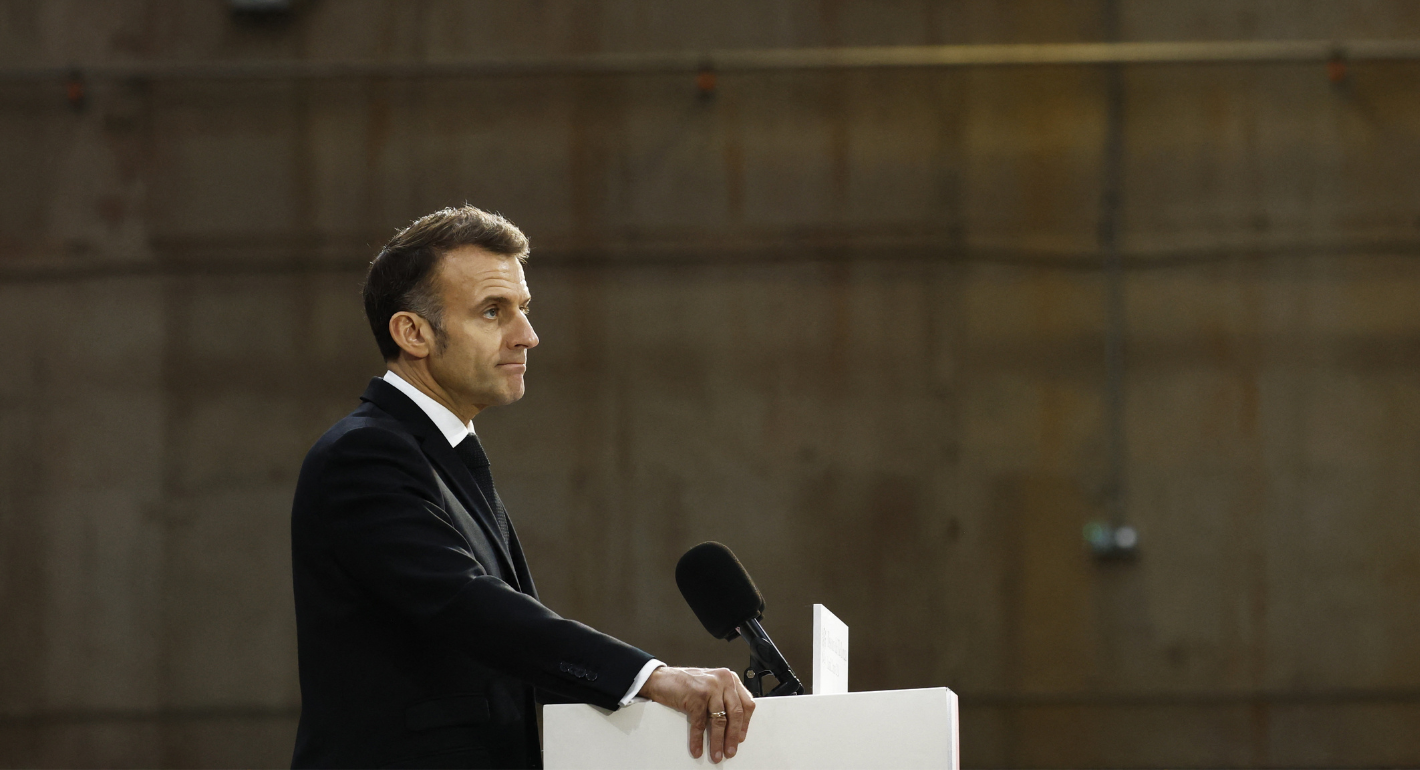
French President Emmanuel Macron has unveiled his country’s new nuclear doctrine. Are the changes he has made enough to reassure France’s European partners in the current geopolitical context?

Rym Momtaz, ed.
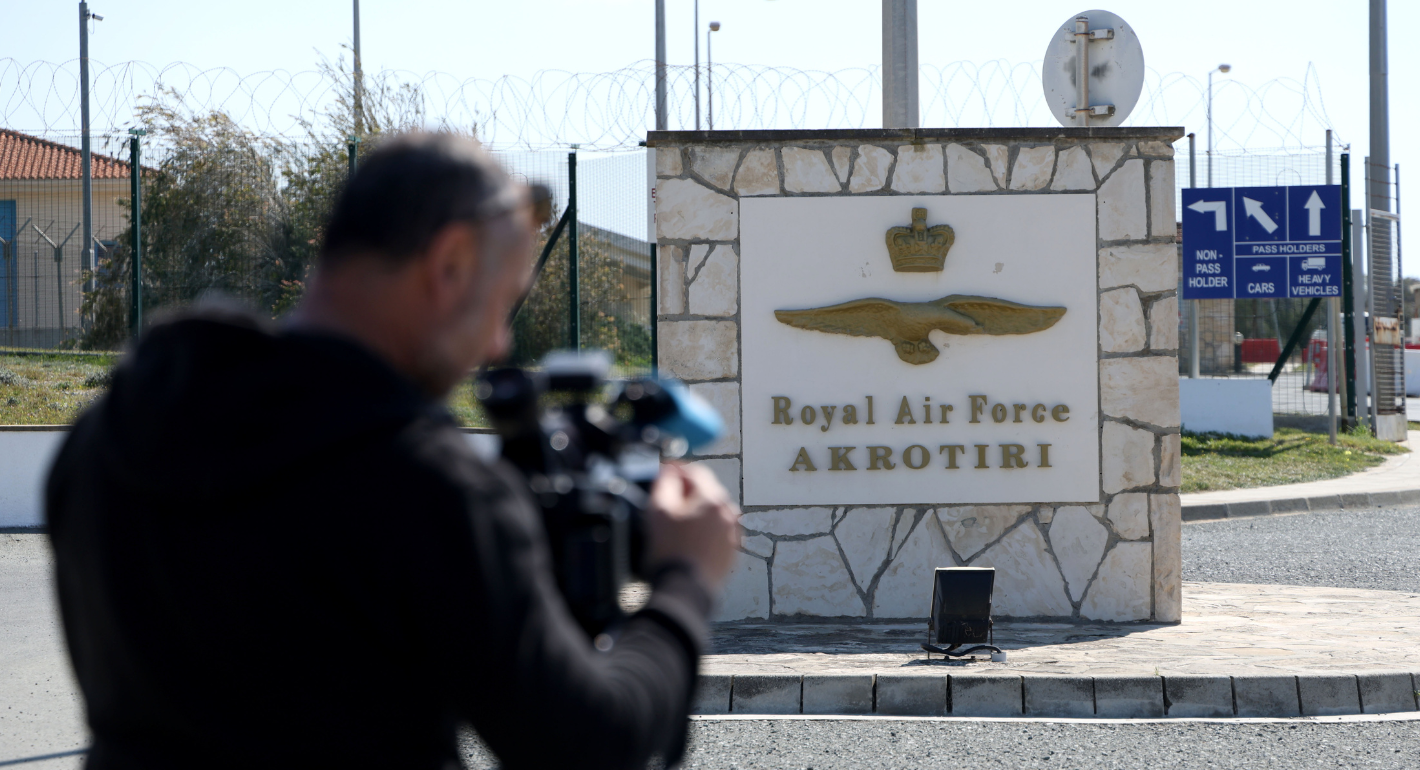
The drone strike on the British air base in Akrotiri brings Europe’s proximity to the conflict in Iran into sharp relief. In the fog of war, old tensions in the Eastern Mediterranean risk being reignited, and regional stakeholders must avoid escalation.

Marc Pierini
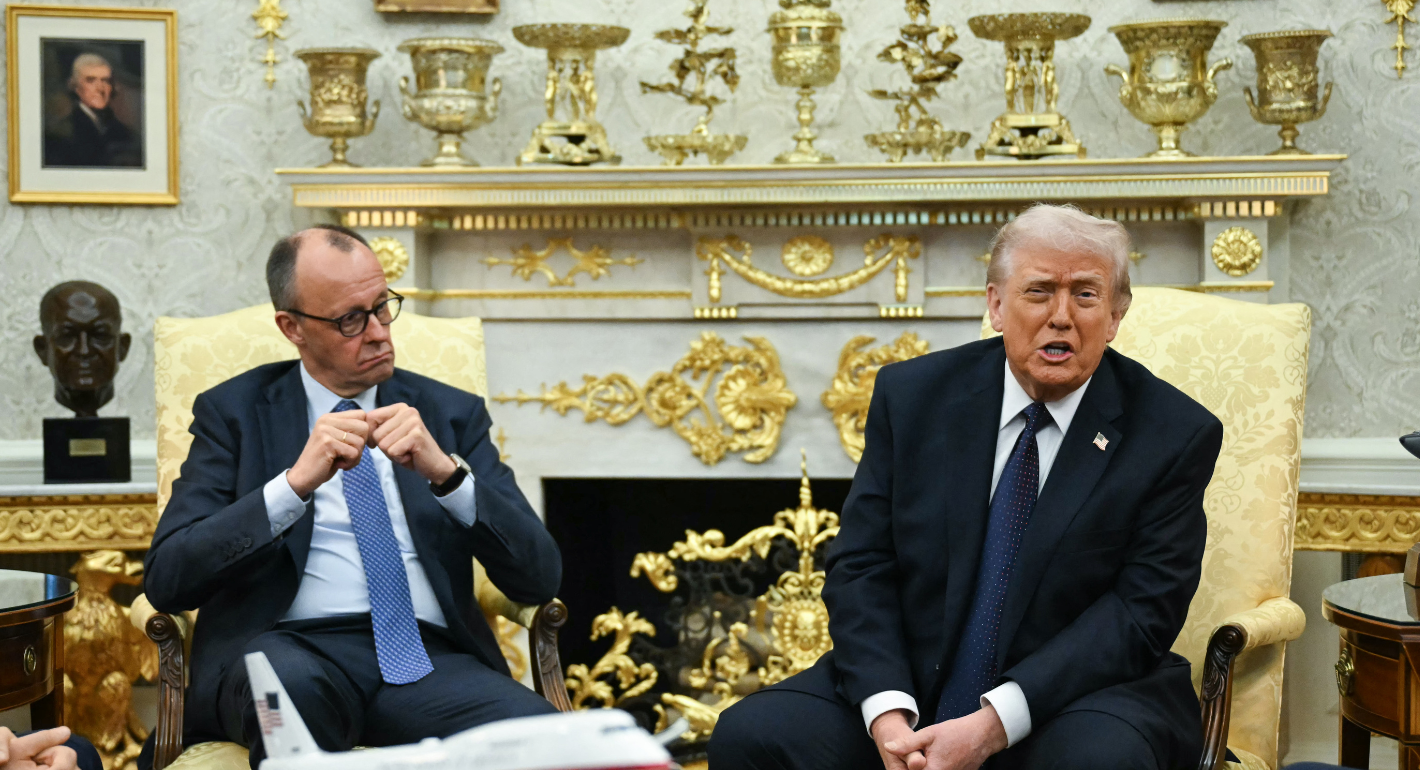
European reactions to the war in Iran have lost sight of wider political dynamics. The EU must position itself for the next phase of the crisis without giving up on its principles.

Richard Youngs
For years, the United States anchored global cyber diplomacy. As Washington rethinks its leadership role, the launch of the UN’s Cyber Global Mechanism may test how allies adjust their engagement.

Patryk Pawlak, Chris Painter
Europe isn’t as weak in the new geopolitics of power as many would believe. But to leverage its assets and claim a sphere of influence, Brussels must stop undercutting itself.

Dimitar Bechev