• Research
  • Strategic Europe
  • About
  • Experts
Carnegie Europe logoCarnegie lettermark logo
EUUkraine
  • Donate
{
  "authors": [
    "Ashley J. Tellis"
  ],
  "type": "legacyinthemedia",
  "centerAffiliationAll": "dc",
  "centers": [
    "Carnegie Endowment for International Peace"
  ],
  "collections": [],
  "englishNewsletterAll": "ctw",
  "nonEnglishNewsletterAll": "",
  "primaryCenter": "Carnegie Endowment for International Peace",
  "programAffiliation": "NPP",
  "programs": [
    "Nuclear Policy",
    "South Asia"
  ],
  "projects": [],
  "regions": [
    "South Asia",
    "India"
  ],
  "topics": [
    "Economy",
    "Trade",
    "Foreign Policy",
    "Nuclear Policy",
    "Nuclear Energy"
  ]
}
Source: Getty

In The Media

Should the U.S. Sell Nuclear Technology to India? Part II

Link Copied
By Ashley J. Tellis
Published on Nov 10, 2005

Source: YaleGlobal Online

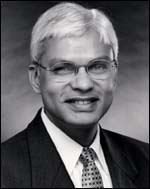
When US President Bush signed a deal in July with Indian Prime Minister Manmohan Singh allowing India access to civilian nuclear technology, naysayers complained that the administration had undermined the principles of the Non-Proliferation Treaty (NPT), which India has not signed. In Should the U.S. Sell Nuclear Technology to India? Part II Ashley J. Tellis argues that such critics fail to see the shrewdness of rewarding India’s record of voluntary non-proliferation with urgently needed civilian nuclear programs, while placing India’s future nuclear development within an international framework. By ensuring that India’s nuclear program enjoys the same benefits and is bound by the same obligations as the other powers in the non-proliferation regime, the US is invoking one of its top national security priorities: the prevention of nuclear commerce between India and a rogue state or non-state actor. Critics point out that other NPT non-signatories, like Pakistan or North Korea, will demand the same recognition and benefits for their nuclear programs that the deal has provided India. Tellis argues that such fears are groundless, since India, a democratic and rapidly developing nuclear power with a good non-proliferation track record outside the NPT, is almost universally acknowledged to be an exception, not the rule. Ultimately, Tellis calls for a global consensus supporting the Bush-Singh agreement, and encourages the critics, within the US Congress itself, to recognize the American national security benefits of bringing India into the recognized nuclear fold.
Click here for the full text

About the Author

Ashley J. Tellis

Former Senior Fellow

Ashley J. Tellis was a senior fellow at the Carnegie Endowment for International Peace.

    Recent Work

  • Paper
    Multipolar Dreams, Bipolar Realities: India’s Great Power Future

      Ashley J. Tellis

  • Commentary
    India Sees Opportunity in Trump’s Global Turbulence. That Could Backfire.

      Ashley J. Tellis

Ashley J. Tellis
Former Senior Fellow
EconomyTradeForeign PolicyNuclear PolicyNuclear EnergySouth AsiaIndia

Carnegie does not take institutional positions on public policy issues; the views represented herein are those of the author(s) and do not necessarily reflect the views of Carnegie, its staff, or its trustees.

More Work from Carnegie Europe

  • Commentary
    Strategic Europe
    Time to Merge the Commission and EEAS

    The EU is structurally incapable of reacting to today’s foreign policy crises. The union must fold the EEAS into the European Commission and create a security council better prepared to take action on the global stage.

      Stefan Lehne

  • Commentary
    Strategic Europe
    Russia’s Imperial Retreat Is Europe’s Strategic Opportunity

    The war in Ukraine is costing Russia its leverage overseas. Across the South Caucasus and Middle East, this presents an opportunity for Europe to pick up the pieces and claim its own sphere of influence.

      William Dixon, Maksym Beznosiuk

  • Research
    Planetary vs International Security: Economic Growth at the Crossroads

    Economic growth is at the heart of a dilemma between planetary and international security.

      Olivia Lazard

  • Commentary
    Strategic Europe
    Europe and the Arab Gulf Must Come Together

    The war in Iran proves the United States is now a destabilizing actor for Europe and the Arab Gulf. From protect their economies and energy supplies to safeguarding their territorial integrity, both regions have much to gain from forming a new kind of partnership together.

      • Rym Momtaz

      Rym Momtaz

  • Commentary
    Strategic Europe
    Taking the Pulse: Is France’s New Nuclear Doctrine Ambitious Enough?

    French President Emmanuel Macron has unveiled his country’s new nuclear doctrine. Are the changes he has made enough to reassure France’s European partners in the current geopolitical context?

      • Rym Momtaz

      Rym Momtaz, ed.

Get more news and analysis from
Carnegie Europe
Carnegie Europe logo, white
Rue du Congrès, 151000 Brussels, Belgium
  • Research
  • Strategic Europe
  • About
  • Experts
  • Projects
  • Events
  • Contact
  • Careers
  • Privacy
  • For Media
  • Gender Equality Plan
Get more news and analysis from
Carnegie Europe
© 2026 Carnegie Endowment for International Peace. All rights reserved.









