

Paper
Omayma Abdel-Latif
{
  "authors": [
    "Omayma Abdel-Latif"
  ],
  "type": "legacyinthemedia",
  "centerAffiliationAll": "dc",
  "centers": [
    "Carnegie Endowment for International Peace",
    "Malcolm H. Kerr Carnegie Middle East Center"
  ],
  "collections": [],
  "englishNewsletterAll": "democracy",
  "nonEnglishNewsletterAll": "",
  "primaryCenter": "Malcolm H. Kerr Carnegie Middle East Center",
  "programAffiliation": "DCG",
  "programs": [
    "Democracy, Conflict, and Governance",
    "Middle East"
  ],
  "projects": [],
  "regions": [
    "Lebanon"
  ],
  "topics": [
    "Political Reform",
    "Democracy"
  ]
}
REQUIRED IMAGE
Last Thursday's confrontation on the campus of the Arab University in Beirut appeared to confirm that the ghosts of the civil war are back with a vengeance. Lebanese leaders had little to offer their constituencies sectarian abuse, while Washington's rhetoric on the political crisis in Lebanon is further complicating an already tense situation.
Source: Al Ahram Weekly
Campus disputes over political allegiance are hardly new in Lebanon, though last Thursday's confrontation on the campus of the Arab University in Beirut appeared to confirm many people's worst fears; the ghosts of the civil war are back with a vengeance.
The violence, which left four students dead and 152 injured, was the latest manifestation of the growing tension between large sections of Lebanon's Sunni and Shia communities. Although it took the nation by surprise confirming its worst fears, this was the most expected outcome after months of the street being mobilised along sectarian lines. For the past weeks, Lebanese leaders from across the political spectrum had little to offer their constituencies beyond insults littered with sectarian abuse as they set out to trash their opponents.
Anti-Shia tirades could be heard in Friday sermons, on television channels belonging to 14 March camp, and among ordinary residents. The sit-in, organised by Lebanon's opposition forces for two months now, was portrayed by pro- government media as an invasion of Sunni Beirut by Hizbullah. Pro-government forces have repeatedly accused Hizbullah of abandoning the Shebaa Farms -- a border town occupied by Israel -- to occupy the alleyways of Beirut. Disputes between the opposition, which includes Christians, Druze and Sunnis alongside Hizbullah, and the government, have been reduced to a simplistic formula: Hizbullah, the Shia party, is working to topple the Sunni prime minister.
Signs of a growing divide along sectarian lines could not be more palpable. During the 10 days of Ashura, mourning the death of Imam Hussein, the Shia hinterland of southern Beirut was the scene of unprecedented security measures amid fears of a possible suicide attack by Salafi groups. Pamphlets denouncing Shias as apostates, and urging they be killed "wherever they are found", circulated in different areas in Beirut, particularly the mixed residential areas. That same pamphlet had appeared in the Biqaa Valley a week before it found its way onto the streets of the capital.
If anything, the current political impasse in Lebanon is testing the resolve of Hizbullah. As the party struggles to come to terms with the regional power shifts, the situation in Iraq and a rising tide of anti-Shia sentiments, its leadership pledged to work hard to avert turning a political dispute into a sectarian strife which pits the Sunnis against the Shia.
Twice in less than 24 hours, on Monday evening and Tuesday morning, Hizbullah Secretary-General Hassan Nasrallah felt the need to tackle the issue head on in his Ashura sermons. Earlier, on Thursday, he had issued a fatwa (religious edict) forbidding Muslims from killing one another. "A Lebanese who shoots another Lebanese is akin to an Israeli. Any weapon that is used against a Lebanese is an Israeli weapon, no matter what the reasons," he said.
On Tuesday's Ashura sermon Nasrallah told his audience, "the Bush administration is preparing the ground in Lebanon, through their agents, for a Sunni-Shia rift". He vowed that Hizbullah, which controls 14 seats in parliament and until recently had two members of Fouad Al-Siniora's cabinet, would not be dragged into civil strife.
Hizbullah's painstaking efforts to contain any conflict and prevent it from slipping into a sectarian strife face many hurdles. Washington's rhetoric on the political crisis in Lebanon is hardening the position of the Siniora government, further complicating an already tense situation. Outlining America's new strategy in the Middle East, Condoleezza Rice lumped Hizbullah together with what she described as "the extremist elements", alongside Iran, Syria and Hamas. In the other camp are those who, Rice says, are targeted by the extremists. They include the Lebanese, Iraqis and Palestinians, while countries such as Jordan, Egypt and Saudi Arabia were characterised as "resisting those extremist elements".
Such is the thinking that informed President Bush's latest State of the Union address. Bush painted Hizbullah as a dangerous terrorist organisation, second only to Al-Qaeda in the threat it poses. He has repeatedly accused the party of collaborating with Tehran and Damascus to wreak havoc in Lebanon. Hizbullah read Bush statements as yet another declaration of war by the US president.
Bush's anti-Hizbullah tirades are interpreted in Beirut as an attempt to embolden the 14 March camp to refuse to come to any accommodation with the opposition, a strategy that can only exacerbate political and sectarian tensions. Soon after the opposition began its general strike, Druze leader Walid Jumblatt, and the head of the Lebanese militia Samir Geagea, both former warlords, began what appeared to be an orchestrated campaign to derail the Lebanese army's efforts to keep the country united. They criticised the army for not forcibly clearing the roads blocked by protesters, and set alarm bells ringing by threatening to take matters into their own hands and send their supporters out to clear the streets. The consequences of such threats were felt last Thursday when scenes of civil war were replayed on the streets of Beirut.
Hizbullah claims Jumblatt and Geagea -- who with Saad Al-Hariri head the majority bloc in Lebanon's parliament -- are behind much of the sectarian incitement that has taken grip of the Sunni street. Nasrallah repeatedly warned in his Ashura sermons that there are parties within the government that want to see a "Sunni-Shia bloodbath". He assured Lebanon's Sunnis that Hizbullah's arms "are your arms against your enemy; Israel".
In his most recent speeches Nasrallah has addressed some of the most contentious issues relating to the Sunni-Shia divide, including claims that Iran is financing a campaign to convert Sunni Muslims in Lebanon, and across the Muslim world, and is fomenting sectarian conflict in Iraq. Nasrallah revealed he had suggested to the Saudi ambassador to Lebanon that Saudi Arabia should form a committee to investigate such claims. He pleaded with opponents that political rivalry should remain just that, saying any settlement must be negotiated, and cannot be imposed through force.
Former Research and Program Associate, Middle East Center
Abdel-Latif, formerly the assistant editor-in-chief at Al-Ahram Weekly, has done extensive work on Islamist movements with special emphasis on the Muslim Brotherhood of Egypt.
Recent Work
Omayma Abdel-Latif
Omayma Abdel-Latif
Carnegie does not take institutional positions on public policy issues; the views represented herein are those of the author(s) and do not necessarily reflect the views of Carnegie, its staff, or its trustees.
European reactions to the war in Iran have lost sight of wider political dynamics. The EU must position itself for the next phase of the crisis without giving up on its principles.

Richard Youngs

New thinking is needed on how global civil society can be protected. In an era of major-power rivalry, competitive geopolitics, and security primacy, civil society is in danger of getting squeezed – in some countries, almost entirely out of existence.
Richard Youngs, ed., Elene Panchulidze, ed.
Integrating AI into the workplace will increase job insecurity, fundamentally reshaping labor markets. To anticipate and manage this transition, the EU must build public trust, provide training infrastructures, and establish social protections.
Amanda Coakley
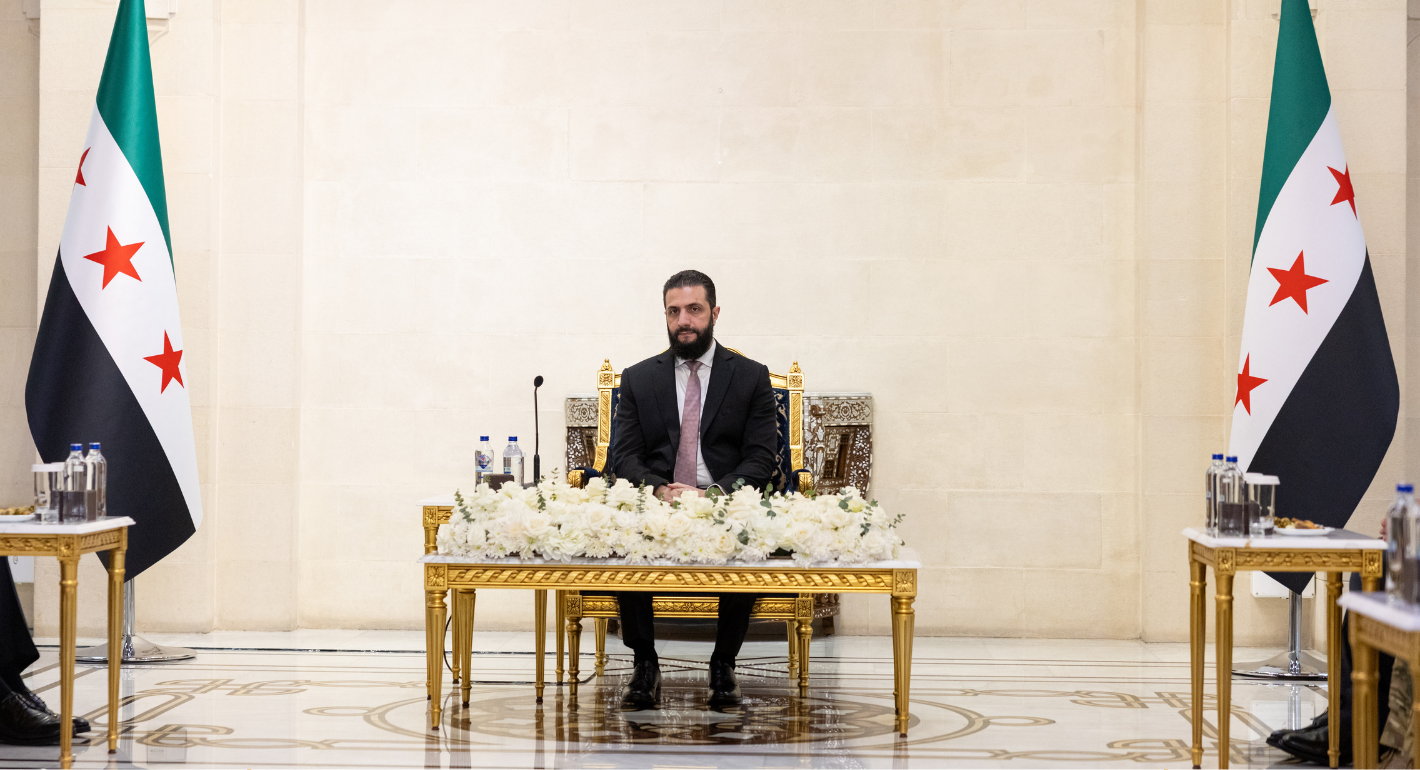
Europe’s interests in Syria extend beyond migration management, yet the EU trails behind other players in the country’s post-Assad reconstruction. To boost its influence in Damascus, the union must upgrade its commitment to ensuring regional stability.

Bianka Speidl, Hanga Horváth-Sántha
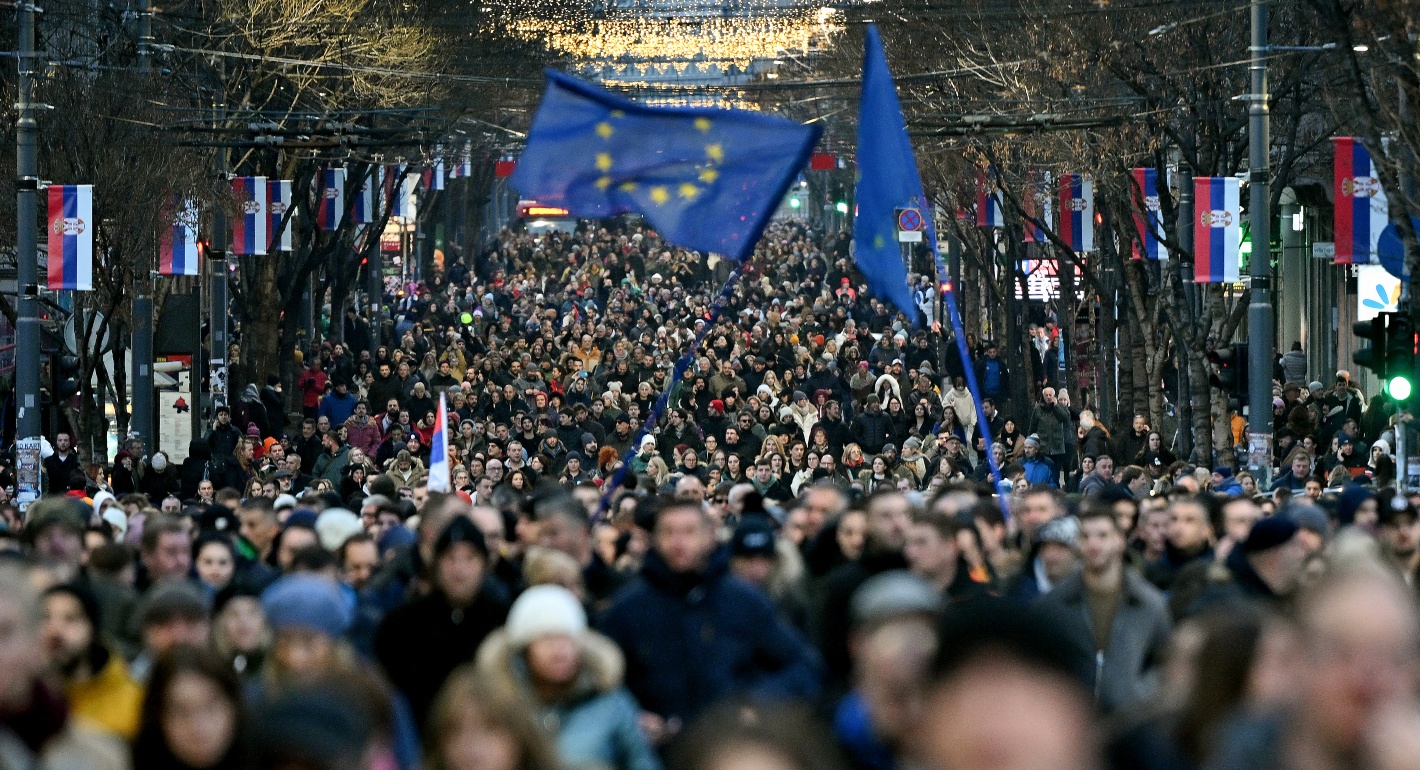
European democracy support strategy in 2025 prioritized protecting democratic norms within Europe. This signals the start of a structural recalibration of the EU’s approach to democracy support.
Richard Youngs, ed., Elena Viudes Egea, Zselyke Csaky, …