

In The Media
Josh Kurlantzick
{
  "authors": [
    "Josh Kurlantzick"
  ],
  "type": "legacyinthemedia",
  "centerAffiliationAll": "",
  "centers": [
    "Carnegie Endowment for International Peace"
  ],
  "collections": [],
  "englishNewsletterAll": "",
  "nonEnglishNewsletterAll": "",
  "primaryCenter": "Carnegie Endowment for International Peace",
  "programAffiliation": "",
  "programs": [],
  "projects": [],
  "regions": [
    "North America",
    "United States",
    "China"
  ],
  "topics": [
    "Foreign Policy"
  ]
}
REQUIRED IMAGE
Source: The New Republic Online
Abu Bakker Qassim faced an unusual situation for a man in prison: His captors, the U.S. military, had essentially declared him innocent. Then again, most of his situation seemed highly unusual. For nearly five years, since being rounded up by U.S. forces in Afghanistan in 2001, Qassim, an ethnic Uighur Muslim from the western Chinese province of Xinjiang, sat in the detention center in Guantánamo Bay, Cuba. In 2005, a military review panel decisively declared Qassim did not pose a threat to America. Yet the White House could not send him home, for fear he would be tortured back in China, which represses the Uighur population. Despite contacting more than 100 countries, it could not find any nation to take him as a refugee. So he sat. Finally, poor Albania, a country that desperately needs U.S. aid and wants to get into NATO, agreed to take him and four other Uighurs.
Still, roughly 20 of Qassim's fellow Uighurs, all of whom face a similar, Kafkaesque imprisonment, remain in Guantánamo, though most have been declared "no longer enemy combatants." And the Uighurs are hardly alone. The White House has realized it eventually must shut the prison--last summer, President Bush declared, "I'd like to close Guantánamo." But as more Guantánamo prisoners either come before military tribunals or are declared noncombatants ready to be released, more will be trapped in the same no-man's land as Qassim, ready to leave but with no country that will take them.
According to transcripts of statements given by Qassim and other Uighurs to military investigators, as well as reports of their story, the Uighurs at Guantánamo say they fled China because of fear of repression. Indeed, in a 2005 report titled "Devastating Blows: Religious Repression of Uighurs in Xinjiang," Human Rights Watch documented widespread arbitrary arrests, torture, and even execution of Uighurs by Chinese authorities. During my own trips to Xinjiang, I have witnessed Uighurs afraid to pray openly, apply to go on pilgrimage to Mecca, or even discuss Chinese politics, for fear of harsh punishment. Uighurs described mass execution rallies in Xinjiang cities and crackdowns on imams just for leading large prayer groups.
Fleeing China, Qassim and the other Uighurs eventually traveled to Afghanistan. In Afghanistan, some of the Uighurs reportedly learned some basic rifle skills, perhaps in order to go back to China to defend themselves. Others may have learned nothing dangerous and only come to Afghanistan as itinerant traders. Still, when their site in Afghanistan was bombed, U.S. forces rounded them up and eventually sent them to Guantánamo. All the Uighurs claim not to have any animus toward the United States, historically a strong supporter of Uighur rights. "The irony is that in many cases the U.S. has actively supported the Uighur cause," Nuri Turkel, the former president of the Uighur-American Association, told the BBC.
The situation soon became worse. In Guantánamo, guards reportedly chained the Uighurs to the floor and, now, have put the Uighurs (and some other prisoners) into isolation cells with almost no access to fresh air or sunlight. Perhaps unsurprisingly, these conditions seem to be driving some of the Uighur prisoners literally insane.
As far back as 2003, the Department of Defense reportedly had decided that most of the Uighurs were not a threat to the United States. But, say several people knowledgeable about the case, European nations approached to take the Uighurs all refused--partly because, by detaining them in Guantánamo, Washington has marked the men as terrorist suspects not worthy of asylum. Partly, Europe also may have feared that admitting the Uighurs would have infuriated China, which has pushed for closer relations with the EU over the past five years and has become a significant trading partner with Europe.
The White House refused to let the Uighurs come to the United States, and has proven unwilling to explain why they could not become refugees in America --perhaps because doing so also would anger China, which continually has asked for the Uighurs back. (Despite refusing to let them go to China, transcripts from the Uighurs' case show the Bush administration probably did allow Chinese authorities, known for their abusive measures, to come interrogate the Uighurs at Guantánamo.) "I find it difficult to imagine how a country like the United States, which claims that it promotes and protects the democratic rights of oppressed people, can treat someone the way I have been treated," one Uighur prisoner wrote in January 2006 in a letter to Secretary of State Condoleezza Rice.
Instead, the administration sent five to Albania, an impoverished nation with almost no Uighur community and where people speak a language unrelated to the Uighur dialect. There, the Uighurs live in a U.N.-provided compound and spend their days wandering around Tirana, the capital, with few job prospects.
Worse, the Bush administration has no better plan to deal with the more than 400 other, non-Uighur men still at Guantánamo. The military already has declared that more than 100 of the Guantánamo detainees are eligible to be released, but how can it send them back to Pakistan, Saudi Arabia, or Uzbekistan, to take three examples of other nations with human rights records as poor as China's? Indeed, Saudi Arabia's horrendous human rights record reportedly has been the biggest stumbling block to freeing all Saudi detainees declared ready to leave, and any assurance Riyadh provides that returnees will not be tortured is worthless.
Knowing this, the administration still has offered no alternative solutions, such as creating a less oppressive long-term holding center or taking the time needed to exhaustively document to potential nations of asylum that people being freed from Guantánamo are not terrorists. Instead, the White House just lets the Uighurs--and many others already declared noncombatants--sit. And sit. And sit.
Joshua Kurlantzick is a special correspondent for The New Republic.
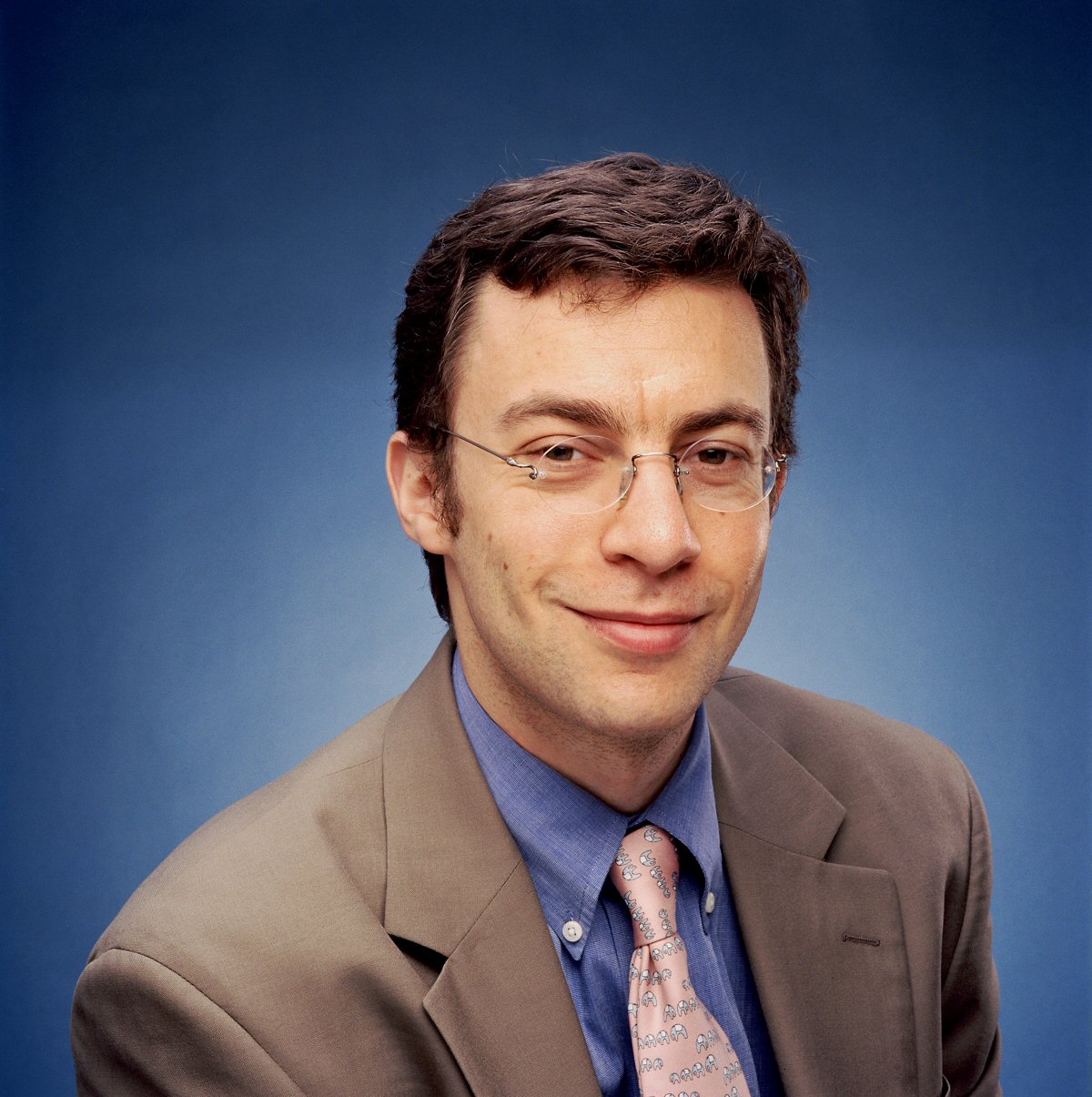
Former Visiting Scholar, China Program
A special correspondent for The New Republic, a columnist for Time, and a senior correspondent for The American Prospect, Kurlantzick assesses China’s relationship with the developing world, including Southeast Asia, Africa, and Latin America.
Recent Work
Josh Kurlantzick
Carnegie does not take institutional positions on public policy issues; the views represented herein are those of the author(s) and do not necessarily reflect the views of Carnegie, its staff, or its trustees.

The EU can impose sanctions but struggles to enforce them without the United States. With Washington increasingly disinterested in backing European interests, the bloc must now fend for itself.


Nicu Popescu, Tiago Antunes

Russia is testing the waters of NATO’s mutual defense clause. What do strikes in Romanian territorial waters mean for the alliance’s posture toward Moscow?

Dimitar Bechev

With its public finances in shambles, the far right polling at 35 percent ahead of the 2027 presidential election, and a growing protest movement, is France’s crisis a threat to the EU’s geopolitical awakening?

Rym Momtaz, ed.

Ahead of a tough winter for Ukraine, Donald Trump’s swing back toward Russia bodes ill. But instead of panicking, Kyiv’s European allies are focusing on action.
Rym Momtaz

Funding Ukraine remains a priority for European leaders. As Russia’s war of aggression heads into another winter, two feasible options to mobilize support for Kyiv should be fast-tracked.


Vladyslav Rashkovan, Gregory P. Wilson