

Q&A
Suzanne Maloney, Aaron David Miller, Karim Sadjadpour
{
  "authors": [
    "Karim Sadjadpour"
  ],
  "type": "legacyinthemedia",
  "centerAffiliationAll": "dc",
  "centers": [
    "Carnegie Endowment for International Peace"
  ],
  "collections": [],
  "englishNewsletterAll": "democracy",
  "nonEnglishNewsletterAll": "",
  "primaryCenter": "Carnegie Endowment for International Peace",
  "programAffiliation": "DCG",
  "programs": [
    "Democracy, Conflict, and Governance",
    "Middle East"
  ],
  "projects": [],
  "regions": [
    "Middle East",
    "Iran"
  ],
  "topics": [
    "Political Reform",
    "Democracy",
    "Foreign Policy"
  ]
}
Source: Getty
From the diplomatic perspective, Tehran may feel like it has chastened the Europeans to think twice before working in concert with the U.S., but in fact they’ve likely achieved the opposite effect.
Source: Post Global

I was reminded of these words when watching the pageantry of Iranian president Mahmoud Ahmadinejad this morning, announcing that 15 British sailors held captive in Iran would be “pardoned” as an Easter “gift” to the British people in a gesture of magnanimity from “the great Iranian nation.”
Hardliners in Tehran are certain to perceive the entire incident as a diplomatic victory. After all, Iran publicly humiliated its long-time nemesis Britain, and won the release of an Iranian diplomat who had been detained in Iraq.
But at what cost?
From the diplomatic perspective, Tehran may feel like it has chastened the Europeans to think twice before working in concert with the U.S., but in fact they’ve likely achieved the opposite effect. Instead of splitting the international coalition assembled against them by weaning the Europeans away from the Americans—a strategy which Iran successfully employed during the era of reformist President Mohammed Khatami—Iran has further eroded European confidence that there exists a mature Iranian leadership amenable to diplomatic compromise.
And what effect will this have on the moribund Iranian economy, the regime’s Achilles heel? Is the multi-national corporation looking for investment opportunities in the Middle East going to go to Iran or Dubai? Is the international energy firm going to look to sign lucrative natural gas contracts with Iran or Qatar? Are the European tourists who were looking to visit the Middle East this year going to journey to Iran or Egypt?
Iranian hardliners similarly proclaimed victory after the 444 day hostage crisis in 1979 which humiliated the Carter administration. While three decades later the hostage crisis is a blip in the history of the United States, Iran continues to pay for it in terms of a soiled international reputation, political and economic isolation, and vastly unfulfilled potential.
And what about the Iranian people, whom president Ahmadinejad professes to speak for? Ahmadinejad’s entire campaign platform was about compassion for the common man and putting the oil money on people’s dinner tables. But they have been diminished to a mere footnote during his presidency, amidst the bustle about uranium enrichment, centrifuges, holocaust denial, and now British sailors.
Before announcing the release of the sailors, Ahmadinejad felt compelled to lecture the West on gender sensitivity, asking why the UK would send Faye Turney, a mother, on such a compromising mission. “Why don't they respect the values of families in the West?” he asked. “Why is there no respect for motherhood, affection?”
His remarks come one month after a few dozen Iranian women were arrested and/or beaten while peacefully assembling against laws which, among other things, permit stoning women to death if they are convicted of adultery and deny women equal rights in divorce, custody and inheritance. I’m sure the double standard was lost on him.
In characteristic fashion, Iran’s leadership is consumed by short-term tactics at the expense of long-term strategy. In the short term, Iran thumbed its nose at the West and put a smile on the face of millions around the world—especially in the Islamic world—who abhor Western policies in the Middle East.
But once the dust has settled in Tehran, more sober Iranian officials will come to realize that Iran has only increased the time and distance it will need to travel until it can reintegrate itself into the international community and assume its rightful position as a respected member of the league of nations.
Karim Sadjadpour recently joined the Carnegie Endowment for International Peace after serving four years as the chief Iran analyst at the International Crisis Group based in Tehran and Washington, D.C. A leading researcher on Iran, Sadjadpour has conducted dozens of interviews with senior Iranian officials, and hundreds across Iranian society. He is a regular contributor to BBC World TV and radio, CNN and National Public Radio, and has written in the Washington Post, New York Times, International Herald Tribune, and New Republic.
This is a posting on Washingtonpost.com/Newsweek's Post Global. Click here to read the full posting and reader comments.

Senior Fellow, Middle East Program
Karim Sadjadpour is a senior fellow at the Carnegie Endowment for International Peace, where he focuses on Iran and U.S. foreign policy toward the Middle East.
Recent Work


Suzanne Maloney, Aaron David Miller, Karim Sadjadpour

Aaron David Miller, Karim Sadjadpour, Robin Wright
Carnegie does not take institutional positions on public policy issues; the views represented herein are those of the author(s) and do not necessarily reflect the views of Carnegie, its staff, or its trustees.
Trump is distracted and Ukraine wants Europe to step up. The continent’s leaders must find their voice and assert it in talks with Russia.

Alissa de Carbonnel
Mounting economic strain and battlefield losses will not necessarily make the Kremlin less dangerous. They could instead push Moscow toward a more aggressive hybrid campaign designed to test NATO’s Eastern flank, exploit allied hesitation, and fracture European resolve.

Maksym Beznosiuk
Over the past ten years, NATO has held almost as many summits as it did during the entirety of the Cold War. Are they still useful, or is it time to stop holding annual meetings?

Rym Momtaz, ed.

As the EU confronts profound challenges, several leaders have called for fundamental reform to the union’s model—but only modest, superficial changes have resulted. What if Europe really could be reimagined from zero today: What should such a redesigned European order look like?

Richard Youngs, ed.
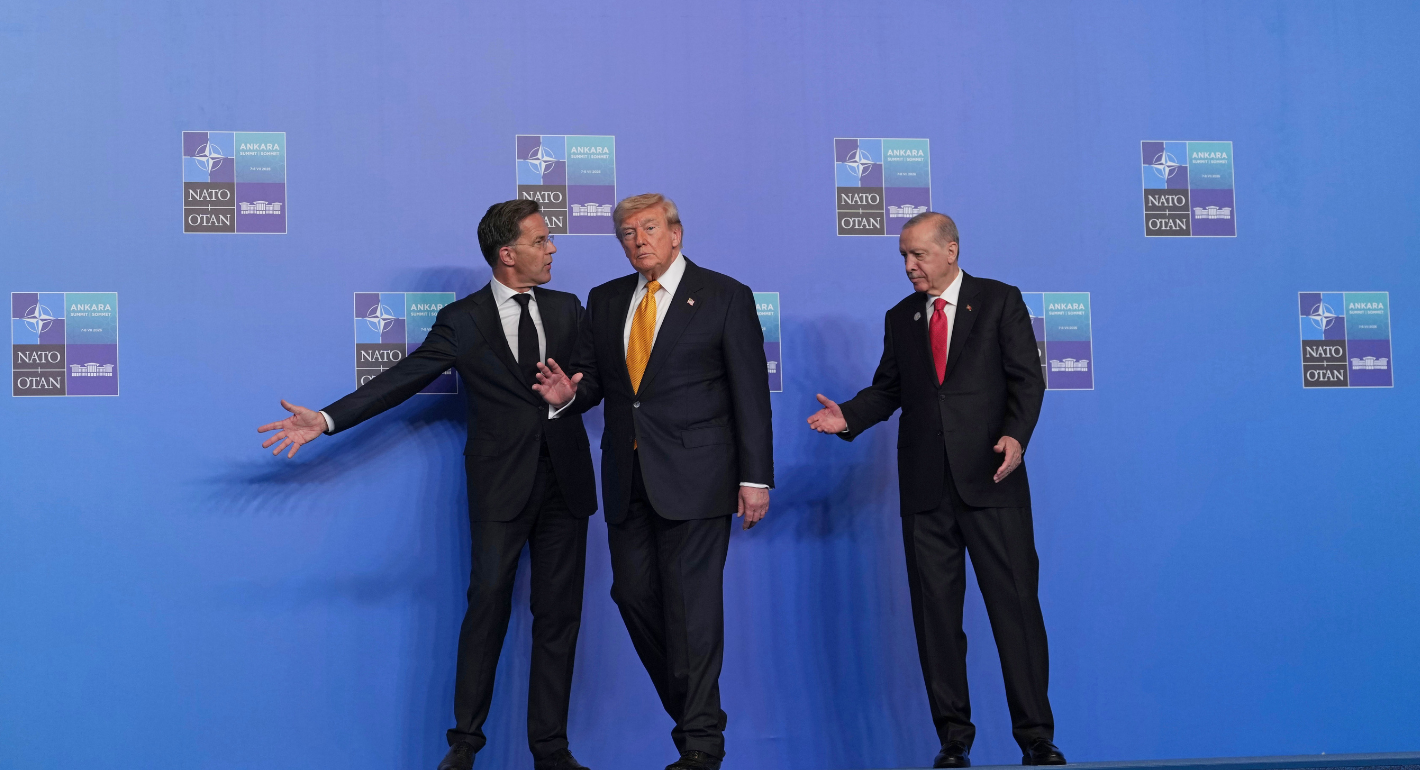
Nearly a year and a half after Europeans leaned into sucking up to Trump, the strategy has produced some benefits when it comes to Ukraine.
Rym Momtaz