

Q&A
Suzanne Maloney, Aaron David Miller, Karim Sadjadpour
{
  "authors": [
    "Karim Sadjadpour"
  ],
  "type": "legacyinthemedia",
  "centerAffiliationAll": "dc",
  "centers": [
    "Carnegie Endowment for International Peace"
  ],
  "collections": [],
  "englishNewsletterAll": "menaTransitions",
  "nonEnglishNewsletterAll": "",
  "primaryCenter": "Carnegie Endowment for International Peace",
  "programAffiliation": "MEP",
  "programs": [
    "Middle East"
  ],
  "projects": [],
  "regions": [
    "Middle East",
    "Iran"
  ],
  "topics": [
    "Foreign Policy"
  ]
}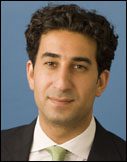
Source: Getty
Does Iran's upcoming parliamentary election on March 14 deserve to be taken seriously? Or is it simply a sham vote for an emasculated institution? Paradoxically, Iranian elections are abnormal by both democratic and autocratic standards. While they are neither free nor fair, there are real differences among candidates, and the outcomes are often unpredictable. In contrast to rigged elections in which the victors are predetermined, Iran's system allows competitive elections among pre-selected candidates.
Source: The Daily Star (via Project Syndicate)

For those who view Iran's democratic glass as being half full, the March 14 Majlis elections will mark the 28th national election since the founding of the Islamic Republic in 1979, further entrenching a political culture unique in the Middle East. As Iran scholar Mohsen Milani puts it: "With all its serious flaws, it is through this process that changes in Iranian policy and behavior can be expected."
But there are valid reasons to view Iran's democratic glass as being half empty. Candidates deemed insufficiently pious or lacking loyalty to the country's theocratic constitution cannot run. This year, hundreds of reformist candidates were disqualified. Even a grandson of Ayatollah Ruhollah Khomeini decided against running after he was initially disqualified and his religious values and political loyalties were called into question.
What's more, the 290-seat Majlis is a second-tier player in Iran's power structure. On the surface, it looks like any other Parliament. Its members draft legislation, ratify international treaties, and sign off on the nation's annual budget. In theory, they even have the authority to remove Cabinet ministers and impeach the president for misconduct.
In practice, however, all of the Majlis' decisions are subject to the approval of the Council of Guardians, an unelected body of 12 jurists (all of whom are either directly or indirectly appointed by supreme leader Ayatollah Ali Khamenei) that has the constitutional authority to vet all electoral candidates and veto any parliamentary legislation. Ironically, in 2003 the reformist Parliament passed legislation aimed at limiting the power of the Council of Guardians, which predictably rejected it.
Nonetheless, in a political system in which decisions are made by consensus, the Majlis can play an important role in framing national debates. The reformist-dominated Majlis that served from 2000 to 2004 comprised allies of Khatami who sought to expand the realm of acceptable political discourse, champion democracy and human rights, and advocate a more conciliatory approach to foreign policy.
By contrast, the current Parliament, elected following a massive purge of reformists, began its inaugural session with chants of "Death to America." Its members share Ahmadinejad's social conservatism and aversion to diplomatic compromise on the nuclear issue.
In the upcoming Majlis elections, the battle between conservatives and reformists has largely been superseded by one between hard-liners sympathetic to Ahmadinejad and more pragmatic conservatives less beholden to revolutionary ideology. The latter group is coalescing under the leadership of former chief nuclear negotiator Ali Larijani, Tehran mayor Mohammad Bagher Ghalibaf, and former Revolutionary Guard commander Mohsen Rezai. While these individuals were themselves considered hard-liners three years ago, today, compared to Ahmadinejad, they appear moderate.
The hard-liners' Achilles heel is Ahmadinejad's mismanagement of the economy. Heat shortages at the height of this year's bitter winter left more than 60 people dead, and Iran is perhaps the only major oil producer whose population claims that economic conditions have worsened despite a tripling of oil prices.
This should help the more pragmatic conservatives. But elections in Iran are notoriously unpredictable for two reasons. First, it is difficult to gauge popular sentiment outside the capital. Though Tehran is Iran's political heart and soul, low turnout among disaffected urban voters has reduced its influence over the rest of the country. Ahmadinejad understands this, making frequent visits to the provinces with promises of economic handouts.
Second, in a country that lacks organized political parties, the campaign role played by paramilitary and military organizations loyal to Khamenei could prove decisive. Their mass mobilization helped propel Ahmadinejad to victory in 2005.
A victory for the more pragmatic conservatives is unlikely to have a marked impact on Iranian foreign policy. However, it would be a welcome reprieve for Iranians and those in the international community concerned about Iran's seeming return to revolutionary radicalism.
If Ahmadinejad's allies seize the advantage in the Majlis elections, the chances of him being re-elected in June 2009 would only increase. However, even if the president's adversaries gain ground, it would still be premature to write Ahmadinejad's political obituary. For this reason alone the upcoming elections must be taken seriously.
Karim Sadjadpour is an associate at the Carnegie Endowment for International Peace. THE DAILY STAR publishes this commentary in collaboration with Project Syndicate (c) (www.project-syndicate.org).

Senior Fellow, Middle East Program
Karim Sadjadpour is a senior fellow at the Carnegie Endowment for International Peace, where he focuses on Iran and U.S. foreign policy toward the Middle East.
Recent Work


Suzanne Maloney, Aaron David Miller, Karim Sadjadpour

Aaron David Miller, Karim Sadjadpour, Robin Wright
Carnegie does not take institutional positions on public policy issues; the views represented herein are those of the author(s) and do not necessarily reflect the views of Carnegie, its staff, or its trustees.
As we close out another season of Strategic Europe, it is worth taking stock of the deep shifts underway.

Rym Momtaz
The EU had to compromise to adopt a twenty-first sanctions package against Russia, exposing growing cracks in the union’s resolve. Is this latest, weaker round worth it to keep pressure on Moscow?
Rym Momtaz, ed.

Trump is distracted and Ukraine wants Europe to step up. The continent’s leaders must find their voice and assert it in talks with Russia.

Alissa de Carbonnel

Mounting economic strain and battlefield losses will not necessarily make the Kremlin less dangerous. They could instead push Moscow toward a more aggressive hybrid campaign designed to test NATO’s Eastern flank, exploit allied hesitation, and fracture European resolve.

Maksym Beznosiuk

Over the past ten years, NATO has held almost as many summits as it did during the entirety of the Cold War. Are they still useful, or is it time to stop holding annual meetings?
Rym Momtaz, ed.