

Paper
Paul Salem
{
  "authors": [
    "Paul Salem"
  ],
  "type": "legacyinthemedia",
  "centerAffiliationAll": "dc",
  "centers": [
    "Carnegie Endowment for International Peace",
    "Malcolm H. Kerr Carnegie Middle East Center"
  ],
  "collections": [],
  "englishNewsletterAll": "menaTransitions",
  "nonEnglishNewsletterAll": "",
  "primaryCenter": "Malcolm H. Kerr Carnegie Middle East Center",
  "programAffiliation": "MEP",
  "programs": [
    "Middle East"
  ],
  "projects": [],
  "regions": [
    "Middle East",
    "Lebanon"
  ],
  "topics": [
    "Political Reform"
  ]
}
Source: Getty
The resumption of the Conference on National Dialogue, after an interruption of over two years, is a welcome step. National dialogue is a profound necessity in Lebanon. At the same time, a faulty or incomplete approach to such a dialogue could backfire and pose a threat to Lebanon's stability.
Source: Daily Star

National dialogue, therefore, is a profound necessity. At the same time, a faulty or incomplete approach to such a dialogue could backfire and pose a threat to Lebanon's stability. It might also mortally weaken the Lebanese presidency, which is a necessary unifying institution in today's polarized environment. The chances are quite low that Lebanon's oligarchs will reach fundamental agreement to transcend their differences in the aftermath of the armed conflict last May and in the midst of a heated election campaign. That is why the dialogue process must be aimed to achieve a measure of success as much as to protect against premature failure and collapse.
Lebanon is not alone in facing these challenges. We can learn from the experience of countries such as South Africa, Northern Ireland and other places around the world that have successfully overcome civil wars, integrated armed resistance movements, and rebuilt their national unity after difficult times. By reflecting on those examples, and by applying their lessons to Lebanon, we can arrive at a number of recommendations.
First, our national dialogue process must be understood as a long one. No country in a condition similar to that of Lebanon today can realistically conclude a national dialogue in just a few months. This means that national dialogue should not be placed under the pressure of the upcoming parliamentary elections. Rather, it should be understood that the dialogue will begin before the elections and continue during and after those elections.
Second, the process must be understood as a much wider process than placing a few politicians around a rectangular table. This is necessary in the positive sense so that the dialogue becomes truly national, and so that it develops the breadth and depth to make it nationally transformative and sustainable. It is also necessary in a negative protective sense, in that if the top leadership falls into disagreement, the process continues at other levels and the country is not subjected to the risk of a total collapse of the dialogue.
Third, the national dialogue should broaden the scope of its discussions rather than narrow them. Focusing only on one item that is the locus of intense disagreement is a formula for failure. A preferable approach is to broaden the areas under discussion, build on areas where agreement is easier and quicker, and use the positive momentum to tackle the harder issues.
A healthy and effective national dialogue process might include the following elements. First, in terms of structure, the current national dialogue conference of 14 bosses could remain the top decision-making committee; however there needs to be a second tier committee of representatives from the main parties, such as the one that met in La Celle-Saint-Cloud, that can meet and discuss issues when the main political committee is not in session.
Second, there need to be technical committees of experts and technicians that can work on particular issues and solicit internal and international expertise.
Third, there need to be mechanisms to reach out to civil society, business associations, labor and worker associations, universities, municipalities, local groups, and the media. The dialogue should be a wide and inclusive process, akin to a national workshop, which creates the necessary national atmosphere, participation, and commitment to make the exchange both meaningful and sustainable, and that protects it from premature collapse.
In terms of issues, the dialogue should not just focus on the very difficult and divisive issue of Hizbullah's weapons and a national defense strategy. There are other national issues that require dialogue as well and that might help build up momentum for success between the different dialogue partners: These might include decentralization, reinforcing the judiciary, strengthening social safety nets, and other issues of national importance.
In terms of process, the national dialogue, guided by the president and his advisers and staff, can begin by devising a road map. This could specify which issues will be discussed in which order, starting with the easier ones first; explore how the dialogue will be expanded; and set a timetable that gives the process ample time (one to two years) to come to fruition.
Lebanon's survival is predicated on its ability to sustain dialogue. Today we are presented with an opportunity to repair our divided society. Let us seize this opportunity to build a dialogue that is truly national.
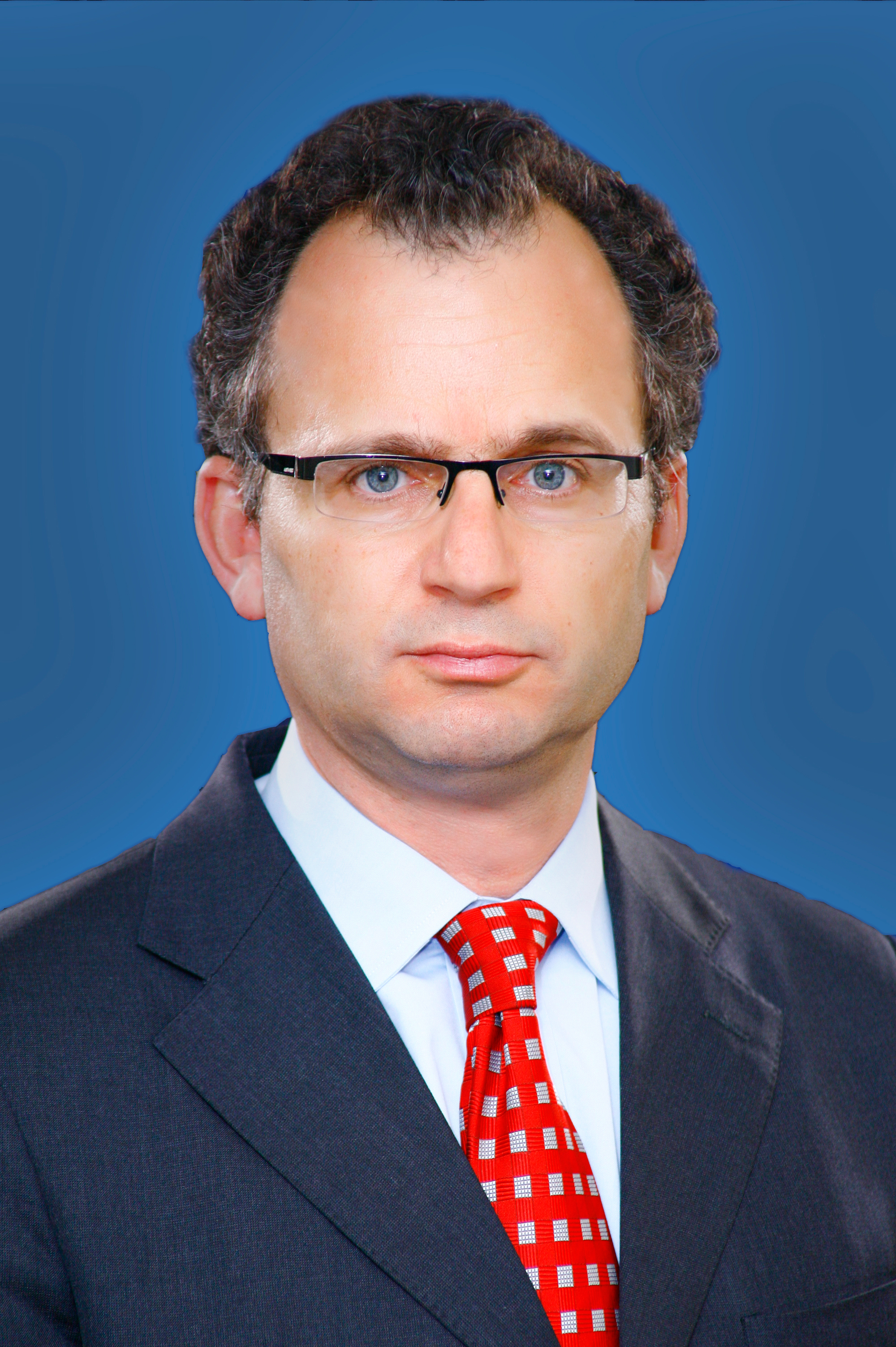
Senior Fellow at the Middle East Institute
Paul Salem is a senior fellow at the Middle East Institute.
Recent Work
Paul Salem
Paul Salem
Carnegie does not take institutional positions on public policy issues; the views represented herein are those of the author(s) and do not necessarily reflect the views of Carnegie, its staff, or its trustees.

A notable degree of participative democracy has firmly arrived in Europe. But to have more far-reaching impact, democratic deliberation needs to move into a radically new phase.

Richard Youngs

Before the next wave of EU enlargement takes place, the union needs to grapple with thorny questions of how power is distributed among its members.


Emil Sondaj Hansen, Ditte Brasso Sørensen

As the EU confronts profound challenges, several leaders have called for fundamental reform to the union’s model—but only modest, superficial changes have resulted. What if Europe really could be reimagined from zero today: What should such a redesigned European order look like?
Richard Youngs, ed.

The EU’s new migration policy is not suited to today’s realities. With climate change increasingly becoming a driver of displacement, Europe needs to rethink its deterrence-focused approach.

Shana Tabak
Europe seems to have accepted its sidelining in the Middle East. The EU must reassert its support for the international rules-based order and step up engagement.

Rym Momtaz