• Research
  • Strategic Europe
  • About
  • Experts
Carnegie Europe logoCarnegie lettermark logo
EUUkraine
  • Donate
{
  "authors": [
    "Nikolay Petrov"
  ],
  "type": "legacyinthemedia",
  "centerAffiliationAll": "",
  "centers": [
    "Carnegie Endowment for International Peace",
    "Carnegie Russia Eurasia Center"
  ],
  "collections": [],
  "englishNewsletterAll": "",
  "nonEnglishNewsletterAll": "",
  "primaryCenter": "Carnegie Russia Eurasia Center",
  "programAffiliation": "",
  "programs": [],
  "projects": [],
  "regions": [
    "Caucasus",
    "Russia"
  ],
  "topics": [
    "Political Reform",
    "Democracy"
  ]
}
Source: Getty

In The Media
Carnegie Russia Eurasia Center

The Kremlin's Sochi Project

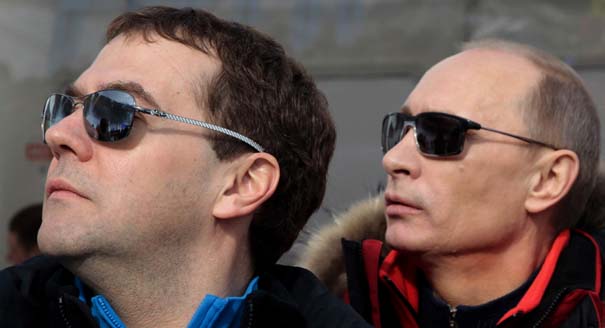
The mayoral campaign in Sochi illustrates the Kremlins desire to demonstrate a more liberal approach to domestic politics while also emphasizing the extent of its political control.

Link Copied
By Nikolay Petrov
Published on Apr 29, 2009

Source: The Moscow Times

The Kremlin's Sochi ProjectThe mayoral campaign in Sochi was full of surprises. Of course, it was not a "full-fledged political battle," as President Dmitry Medvedev described it, but it was a significant improvement compared to mayoral races of recent years. Usually, the main challenge to the ruling party's candidate -- most often the incumbent -- is either from the Communist Party or United Russia itself or a loyal candidate from the business community. 

In the Sochi race, however, the main contender was opposition leader Boris Nemtsov. His challenge was aimed not only at the local administration but also directly at the Kremlin. Contrary to the expectations of most observers, myself included, the Kremlin accepted the challenge. 
 
Russia's election laws would have made it a simple matter to disqualify any undesirable candidate by citing a technical violation of the registration procedure. This is not difficult to pull off when the authorities control the electoral commission, law enforcement agencies and the courts. This means that the top Kremlin leaders approved of Nemtsov's candidacy, particularly when you consider that the Sochi Olympic Games are Prime Minister Vladimir Putin's precious pet project. 
 
A couple of weeks ago, candidates began dropping out of the race one by one. Some pulled out by their own accord and others, like wealthy businessman Alexander Lebedev, were disqualified by the election committee. It seemed that the ground was being prepared for Nemtsov's removal as well. 
 
But Nemtsov never got the ax. Instead, the authorities initiated an informational blockade against Nemtsov, denying him the opportunity to meet voters in the venues of his choice and preventing him from advertising in the media while coverage of acting Mayor Anatoly Pakhomov dominated local television and newspapers. Pakhomov was portrayed less as a candidate and more as a successful, tireless leader, not unlike the way Dmitry Medvedev was portrayed during the presidential election campaign a year ago. 
 
The election was preceded by an intriguing series of liberal gestures from the Kremlin, including Medvedev's interview with the editor-in-chief of Novaya Gazeta, his meeting with human rights advocates in the Kremlin and the early release of former Yukos lawyer Svetlana Bakhmina from jail. 
 
The Sochi election has become the focus of both national and international attention. Without a doubt, it is the most prominent election since the presidential vote in 2008. 
 
In the end, the Sochi vote will be indicative of where the Kremlin goes from here. On one hand, it wants to demonstrate a more liberal approach to domestic politics, and on the other hand, it wants to emphasize how much it controls by showing how easily its candidate can win against the most powerful challenger that the opposition has to offer. 
 
The Kremlin's favored candidate was victorious despite the strong protest vote. The economic crisis and noisy conflicts between the administration and residents over the government's heavy-handed, often illegal methods used to push through Olympic projects surely played a role in the election, but what is important is that on election day there were more voters who supported the Kremlin's polices toward Sochi than those who opposed them. 
 
Lessons learned from the Sochi election will be useful to both the Kremlin and the opposition during the next round of elections in autumn. By that time, the mood of social protest in the regions will have reached the high temperatures we are now seeing in Sochi.
 
This comment first appeared in The Moscow Times

About the Author

Nikolay Petrov

Former Scholar-in-Residence, Society and Regions Program, Moscow Center

Nikolay Petrov was the chair of the Carnegie Moscow Center’s Society and Regions Program. Until 2006, he also worked at the Institute of Geography at the Russian Academy of Sciences, where he started to work in 1982.

    Recent Work

  • Commentary
    Moscow Elections: Winners and Losers

      Nikolay Petrov

  • Commentary
    September 8 Election As a New Phase of the Society and Authorities' Coevolution

      Nikolay Petrov

Nikolay Petrov
Former Scholar-in-Residence, Society and Regions Program, Moscow Center
Nikolay Petrov
Political ReformDemocracyCaucasusRussia

Carnegie does not take institutional positions on public policy issues; the views represented herein are those of the author(s) and do not necessarily reflect the views of Carnegie, its staff, or its trustees.

More Work from Carnegie Europe

  • Commentary
    Strategic Europe
    Is France Shifting Rightward?

    The far right failed to win big in France’s municipal elections. But that’s not good news for the country’s left wing, which remained disunited while the broader right consolidated its momentum ahead of the 2027 presidential race.

      Catherine Fieschi

  • Commentary
    Strategic Europe
    Russia’s Imperial Retreat Is Europe’s Strategic Opportunity

    The war in Ukraine is costing Russia its leverage overseas. Across the South Caucasus and Middle East, this presents an opportunity for Europe to pick up the pieces and claim its own sphere of influence.

      William Dixon, Maksym Beznosiuk

  • Commentary
    Is the Radical-Right Threat Existential or Overstated?

    Amid increased polarization and the influence of disinformation, radical-right parties are once again gaining traction across Europe. With landmark elections on the horizon in several countries, are the EU’s geostrategic vision and fundamental values under existential threat?

      Catherine Fieschi, Cas Mudde

  • Commentary
    Strategic Europe
    Taking the Pulse: Is France’s New Nuclear Doctrine Ambitious Enough?

    French President Emmanuel Macron has unveiled his country’s new nuclear doctrine. Are the changes he has made enough to reassure France’s European partners in the current geopolitical context?

      • Rym Momtaz

      Rym Momtaz, ed.

  • Commentary
    Strategic Europe
    The EU Needs a Third Way in Iran

    European reactions to the war in Iran have lost sight of wider political dynamics. The EU must position itself for the next phase of the crisis without giving up on its principles.

      Richard Youngs

Get more news and analysis from
Carnegie Europe
Carnegie Europe logo, white
Rue du Congrès, 151000 Brussels, Belgium
  • Research
  • Strategic Europe
  • About
  • Experts
  • Projects
  • Events
  • Contact
  • Careers
  • Privacy
  • For Media
  • Gender Equality Plan
Get more news and analysis from
Carnegie Europe
© 2026 Carnegie Endowment for International Peace. All rights reserved.