

Paper
Paul Salem
{
  "authors": [
    "Paul Salem"
  ],
  "type": "legacyinthemedia",
  "centerAffiliationAll": "dc",
  "centers": [
    "Carnegie Endowment for International Peace",
    "Malcolm H. Kerr Carnegie Middle East Center"
  ],
  "collections": [],
  "englishNewsletterAll": "menaTransitions",
  "nonEnglishNewsletterAll": "",
  "primaryCenter": "Malcolm H. Kerr Carnegie Middle East Center",
  "programAffiliation": "MEP",
  "programs": [
    "Middle East"
  ],
  "projects": [],
  "regions": [
    "Lebanon"
  ],
  "topics": [
    "Political Reform"
  ]
}
Source: Getty
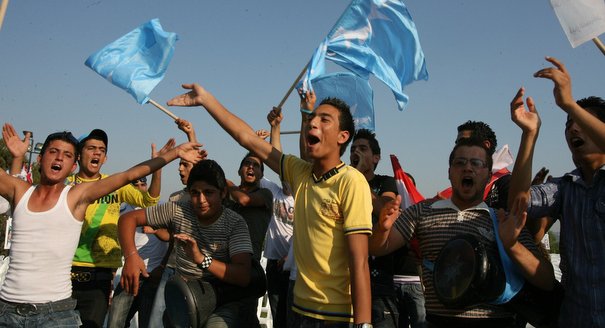
Lebanon’s voters have handed a clear defeat to the Hezbollah-led March 8 alliance. In a smoothly run and peaceful election, the pro-Western March 14 alliance emerged with a clear majority of 71 seats, compared to 58 seats for its rivals.
Source: Project Syndicate

The results elicited a nearly audible sigh of relief from Arab capitals, as well as from leaders in Europe and North America. The fear that the pro-Syrian and pro-Iranian March 8 alliance might secure a victory was palpable prior to the vote. Iran’s President Mahmoud Ahmadinejad had eagerly and publicly anticipated such an outcome. The March 14 Alliance’s victory is good news for Lebanon and the region, ensuring good relations with Lebanon’s Arab and Western friends, and constituting a quiet triumph for moderation and pragmatism over extremism and confrontation.
It is also good news for the Obama administration, which had feared a regional setback soon after Obama’s historic address in Cairo on June 4.
The election also brings a much needed measure of stability and legitimacy to the governing March 14 coalition, which comprises the mainly Sunni Future movement, led by Saad Hariri (son of slain former Prime Minister Rafik al Hariri), the Socialist party, led by Druze leader Walid Junblat, and a number of Christian parties.
Although the March 14 coalition already controlled Parliament, its majority had been repeatedly attacked as the result of a severely skewed election law. Although the March 8 alliance lost the election, not all of its members were equally distressed by the results.
Aside from Hezbollah, March 8 includes the more secular Shiite Amal movement and the Free Patriotic Movement, a large Christian group led by General Michel Aoun. Whereas Hezbollah and Amal swept the Shia districts in the South and the Beqaa Valley, confirming their dominant position among Lebanon’s Shiites, Aoun delivered less than half the Christian votes.
Hezbollah may be quite comfortable with the returns. Winning would have placed Hezbollah in a challenging position. Arab and international governments would have reacted negatively, and investor confidence in Lebanon would have been undermined, jeopardizing Lebanon’s political and economic relations. A victory for the March 8 alliance also would have strengthened Israel’s argument that Hezbollah dominates Lebanon, leaving the country more exposed to attack. Moreover, if the March 8 coalition had won, it would have largely been on the back of Christian voters delivered by Aoun, who might have then demanded the Lebanese presidency, which is reserved for a Christian.
Neither Hezbollah nor Amal wanted this. With a March 14 victory, Hezbollah is more secure vis-à-vis Israeli attack or international isolation, can worry less about managing Lebanon’s economy and finances, and can maintain its alliance with Aoun without delivering him the Moon.
Moving forward, the immediate challenge will be to form the next government. The March 14 alliance has said that it would welcome a national unity government with the March 8 coalition, but without the veto power that the opposition has been demanding. This wrangling is likely to take weeks, but is unlikely to come to blows or to reach a complete impasse. Neither side is interested in escalation or a breakdown. Their patrons in the region and internationally — Saudi Arabia, the United States, Syria, and Iran — are also more interested in negotiation than escalation at this point. On matters of national sovereignty, the new government must continue to build up the national army and police forces, negotiate with Hezbollah over the integration of its militia into the state security structure, and push for regional peace, which would strongly benefit Lebanon. With regard to economic and social policy, the government must manage the national debt while encouraging investment and employment and strengthening public education and health programs.
The government must also move forward on further electoral reform, expand administrative decentralization, hold local elections in 2010, and come up with a credible program to combat rampant corruption.
None of these challenges will be easy. Lebanon has undergone much in the past four years: the withdrawal of Syrian forces, a string of painful assassinations, a devastating 2006 war with Israel, a difficult battle between the Lebanese army and an entrenched terrorist group called Fateh al-Islam, a year and a half of institutional paralysis between late 2006 and early 2008, and a brief civil war in the streets of Beirut in May 2008. However, since then, Lebanon has put together a coalition government, regained security and stability, weathered the global economic crisis, and now organised a largely free and fair election.
Much of this has been achieved through regional and international assistance, but on June 7 the Lebanese people, through the ballot box, proved that they hold ultimate decision-making power over the country’s precarious but potentially promising future.
Distributed by Project Syndicate.
Senior Fellow at the Middle East Institute
Paul Salem is a senior fellow at the Middle East Institute.
Recent Work
Paul Salem
Paul Salem
Carnegie does not take institutional positions on public policy issues; the views represented herein are those of the author(s) and do not necessarily reflect the views of Carnegie, its staff, or its trustees.

A notable degree of participative democracy has firmly arrived in Europe. But to have more far-reaching impact, democratic deliberation needs to move into a radically new phase.

Richard Youngs

Before the next wave of EU enlargement takes place, the union needs to grapple with thorny questions of how power is distributed among its members.


Emil Sondaj Hansen, Ditte Brasso Sørensen

As the EU confronts profound challenges, several leaders have called for fundamental reform to the union’s model—but only modest, superficial changes have resulted. What if Europe really could be reimagined from zero today: What should such a redesigned European order look like?
Richard Youngs, ed.
Europe seems to have accepted its sidelining in the Middle East. The EU must reassert its support for the international rules-based order and step up engagement.

Rym Momtaz
Preparing candidate countries for EU membership is no longer enough. As the enlargement process becomes a reality, the union must also prepare its own societies.

Iliriana Gjoni