

Commentary
Maria Lipman
{
  "authors": [
    "Maria Lipman"
  ],
  "type": "legacyinthemedia",
  "centerAffiliationAll": "",
  "centers": [
    "Carnegie Endowment for International Peace",
    "Carnegie Russia Eurasia Center"
  ],
  "collections": [],
  "englishNewsletterAll": "",
  "nonEnglishNewsletterAll": "",
  "primaryCenter": "Carnegie Russia Eurasia Center",
  "programAffiliation": "",
  "programs": [],
  "projects": [],
  "regions": [
    "Caucasus",
    "Russia",
    "Georgia"
  ],
  "topics": [
    "Political Reform"
  ]
}
Source: Getty
The upsurge of violence in Russia's North Caucasus region is the result of the incompetence of local authorities and the Kremlin’s failure or reluctance to seriously address the issues of the region.
Source: the Washington Post

North Caucasus presents a huge challenge to the Russian government. The territory stretches from the Black Sea to the Caspian Sea in European Russia and includes several republics, or ethnic administrative regions, all of which are weak or dysfunctional economies dependent on allocations from Moscow. It is home to poverty, extreme unemployment, rampant crime and corruption. The population is predominantly Muslim; locals cling to traditional practices and culture; and Russian laws are barely observed. Among its scores of ethnic groups, interethnic relations are often tense or hostile.
In recent years, the Kremlin has relied on handpicked leaders. Moscow funds them and turns a blind eye to the blatant embezzlement and corruption in the region as well as those leaders' heavy-handed governance. For their part, the politicians pledge loyalty to Moscow and deliver an overwhelming pro-Moscow vote during elections.
By rejecting responsibility for law and order in North Caucasus, the Kremlin has probably sought to avoid fomenting anti-Russian sentiments. Moscow is concerned about security in Russia at large, but its security priority for North Caucasus has been simply to contain violence so it would not spill outside the region. With no steady check on illegal behavior, it was only a matter of time before violence spun out of control. Consider developments in three places:
In Chechnya, where Russia had engaged in two atrocious wars against anti-Russian insurgents, the Kremlin has empowered Ramzan Kadyrov. Russian servicemen no longer fight in Chechnya, and until recently Kadyrov kept his territory reasonably peaceful. The Chechen terrorist attacks that began in the mid-1990s fell off after about 10 years. Kadyrov's highly valued service and his loyalty to Moscow earned him impunity; he's a brutal ruler, and his tenure has been marked with an abominable human rights record. In the past month alone, two human rights activists were killed. Kadyrov's rivals and enemies have been methodically eliminated; two assassinations -- in 2006 and 2008 -- took place in broad daylight in central Moscow. Today, Kadyrov is granted free rein; arguably, he enjoys more autonomy than his insurgent predecessors -- all killed in battles with Russia -- ever hoped to achieve. Lately, however, even Kadyrov's inhuman methods have failed to keep Chechnya under control. A number of deadly attacks on police and administrative officials have been reported this summer. Last week, at least four policemen were killed in the Chechen capital of Grozny by suicide bombers on bicycles.
For its part, Ingushetia was once blessed with a wise leader revered by his people, Ruslan Aushev. The Kremlin, wary of Aushev's popularity, which made him too independent, forced Aushev to relinquish his post to a loyal but incompetent president whose unlawful and ferocious methods antagonized many locals. Gradually, Ingushetia became home to a vicious circle of violence: The local government harshly persecuted anyone regarded as a challenge to its authority; the victims of brutal treatment sought revenge on the police, and more severe, punitive measures followed. When the Kremlin finally decided to replace its puppet leader, the situation was out of control. Desperate avengers, clannish feuders, religious radicals and criminal forces nurtured by corruption all battled their adversaries. The new Ingush leader appointed about a year ago tried a more reasonable approach to governance -- and was severely wounded in a June assault.
The situation in Dagestan is hardly better. A Newsweek reporter who traveled there this month noted that "police are blown up, shot on the side of the road, and killed in their beds as part of an ethnic battle" between the politically dominant ethnic group and dozens of the less privileged.
The upsurge of violence in North Caucasus is a consequence of outrageous abuses of authority by local leaders and the Kremlin's irresponsible policies. Politically, the Russian government has no worries; it has no political opposition to challenge its policies, and people at large wouldn't hold the Kremlin to account for the rising violence in North Caucasus. As long as the violence stays away from their homes, they pay little if any attention to developments in this restive region. In a sense, many Russians don't regard North Caucasus as part of their country, and it is not uncommon to hear people say on radio shows or in private conversations that the Caucasus republics should be let go.
That, of course, is not a solution. First, the North Caucasus republics are not seeking independence. Why would they, if allocations from the Russian budget sustain them? And, second, their location ensures that their countless problems are Russia's responsibility.
After the assault on the Ingush police station last week, President Dmitry Medvedev said in a statement that the roots of violence are "in the conditions of our life, in unemployment and poverty, in the clans that have no care for the people but are only concerned with cash flow." In fact, however, the Russian government does not appear capable of, or willing to seriously address these issues.
Former Scholar in Residence, Society and Regions Program, Editor in Chief, Pro et Contra, Moscow Center
Lipman was the editor in chief of the Pro et Contra journal, published by the Carnegie Moscow Center. She was also the expert of the Carnegie Moscow Center’s Society and Regions Program.
Recent Work
Maria Lipman
Maria Lipman
Carnegie does not take institutional positions on public policy issues; the views represented herein are those of the author(s) and do not necessarily reflect the views of Carnegie, its staff, or its trustees.
Preparing candidate countries for EU membership is no longer enough. As the enlargement process becomes a reality, the union must also prepare its own societies.

Iliriana Gjoni
Countries face several hurdles in joining the EU, including the final stage of ratifying their accession treaties. Procedural reforms and substantive adjustments could help move the process forward.

Stefan Lehne
Europe has an interest in supporting Armenian leader Nikol Pashinyan as he tries to make peace with neighbors and loosen ties with Russia. But it is depersonalized support in the long term, not quickfire flash, that will win the day.

Thomas de Waal

Montenegro and Albania are frontrunners for EU enlargement in the Western Balkans, but they can’t just sit back and wait. To meet their 2030 accession ambitions, they must make a strong positive case.

Dimitar Bechev, Iliriana Gjoni
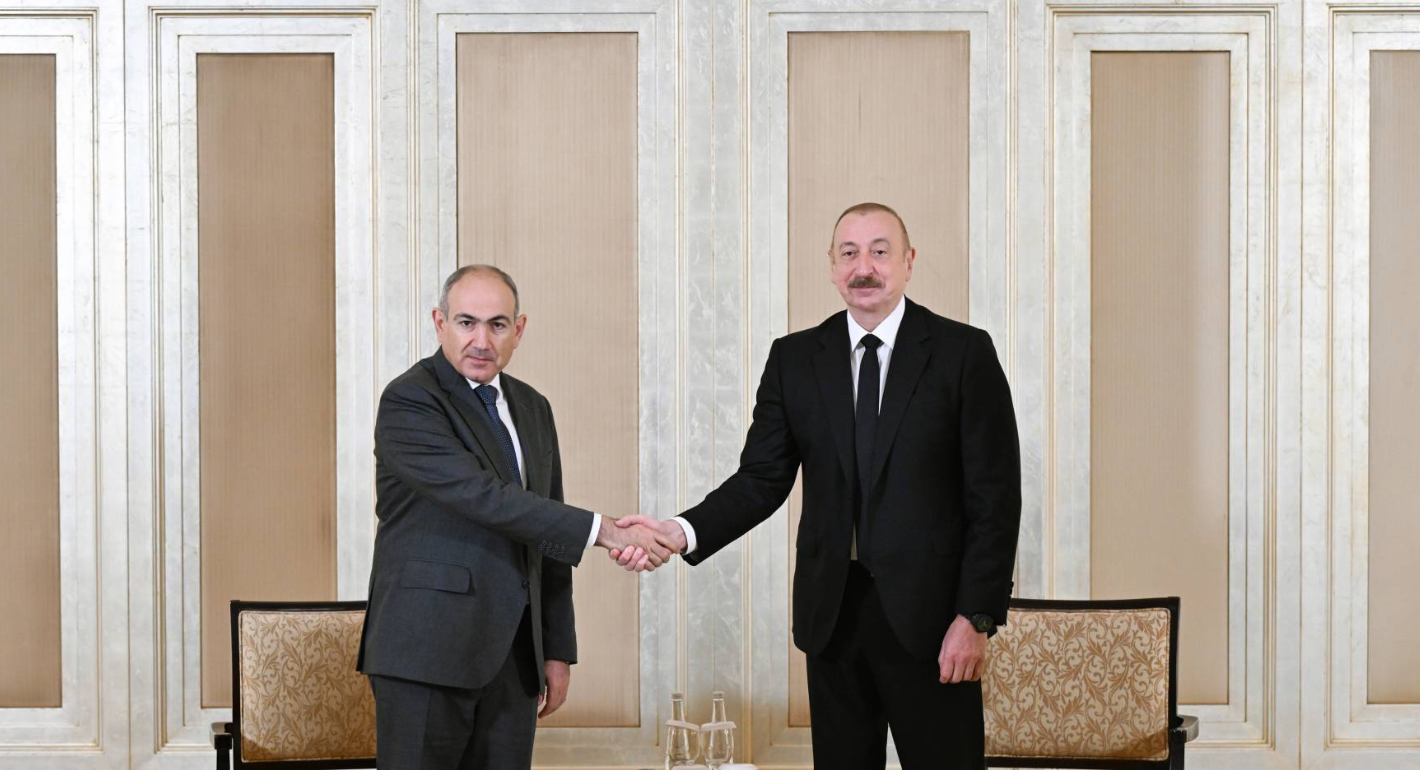
The U.S.-sponsored TRIPP deal is driving the Armenia-Azerbaijan peace process forward. But foreign and domestic hurdles remain before connectivity and economic interdependence can open up the South Caucasus.

Thomas de Waal, Areg Kochinyan, Zaur Shiriyev