

Commentary
As we close out another season of Strategic Europe, it is worth taking stock of the deep shifts underway.
Rym Momtaz
{
  "authors": [],
  "type": "pressRelease",
  "centerAffiliationAll": "dc",
  "centers": [
    "Carnegie Endowment for International Peace"
  ],
  "collections": [],
  "englishNewsletterAll": "menaTransitions",
  "nonEnglishNewsletterAll": "",
  "primaryCenter": "Carnegie Endowment for International Peace",
  "programAffiliation": "MEP",
  "programs": [
    "Middle East"
  ],
  "projects": [],
  "regions": [
    "United States",
    "Middle East",
    "Iran",
    "Israel",
    "North Africa",
    "Egypt",
    "Iraq",
    "Jordan",
    "Bahrain",
    "Kuwait",
    "Qatar",
    "Saudi Arabia",
    "United Arab Emirates"
  ],
  "topics": [
    "Foreign Policy"
  ]
}
REQUIRED IMAGE
Any effective U.S. diplomatic approach to Iran must involve other countries in the Gulf, but Washington will not succeed if it continues to strive for an anti-Iranian alliance. A normalization of relations between Iran and its neighbors is an important and attainable step for reintegrating Iran into the international community.
WASHINGTON, Nov 12—Any effective U.S. diplomatic approach to Iran must involve other countries in the Gulf, but Washington will not succeed if it continues to strive for an anti-Iranian alliance. While an overall security arrangement including all Gulf countries is not possible at this stage, a normalization of relations between Iran and its neighbors is an important and attainable step for reintegrating Iran into the international community, Marina Ottaway concludes in a new paper.
Gulf countries can help engage Iran in negotiations, but messy and often significant divisions between them complicate efforts to normalize relations. Ottaway analyzes Iran’s relationship with the Gulf Cooperation Council (GCC) countries—Saudi Arabia, Kuwait, Bahrain, Qatar, the United Arab Emirates, and Oman—as well as Jordan, Israel, Egypt, and Iraq.
Key Conclusions:
“Although during the negotiations over Iran’s nuclear program Gulf countries are essentially spectators to a process—the outcome of which will be determined by the United States, Iran, major European countries, Russia, and China—GCC countries have an important role to play in the difficult process of reintegrating Iran into the international community,” Ottaway writes. “Normalization of relations among the GCC countries, Iraq, and Iran would be a positive step in this process of reintegration. It would also help stabilize the region, decreasing tensions and the possibility of conflicts over bilateral issues that might trigger more serious problems.”
###
NOTES
Carnegie does not take institutional positions on public policy issues; the views represented herein are those of the author(s) and do not necessarily reflect the views of Carnegie, its staff, or its trustees.

As we close out another season of Strategic Europe, it is worth taking stock of the deep shifts underway.

Rym Momtaz

The hybrid warfare landscape is evolving rapidly, leaving policymakers without clear strategies. To better inform their work in addressing emerging challenges, governments must dig deeper into the underlying dynamics at play.


Raluca Csernatoni, Alicia Wanless
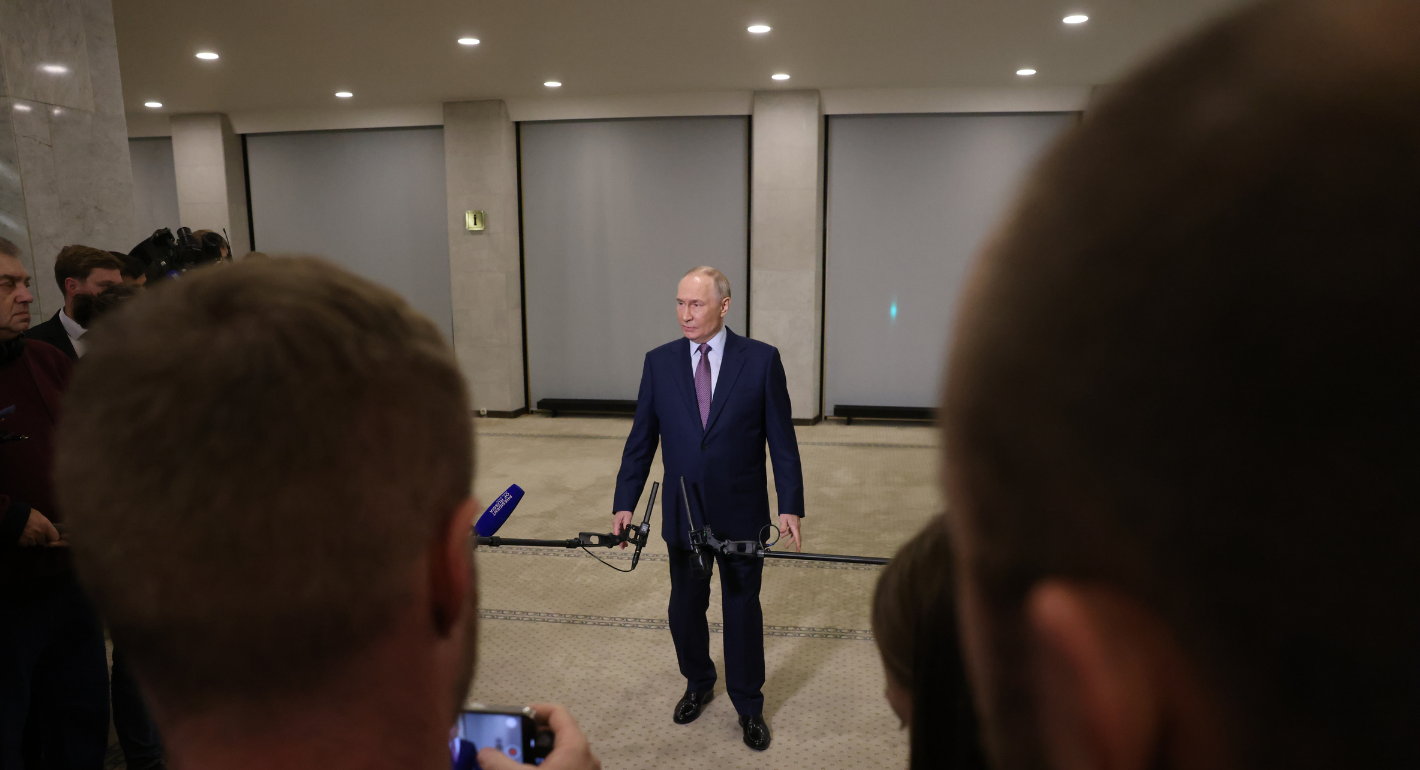
The EU had to compromise to adopt a twenty-first sanctions package against Russia, exposing growing cracks in the union’s resolve. Is this latest, weaker round worth it to keep pressure on Moscow?
Rym Momtaz, ed.

Trump is distracted and Ukraine wants Europe to step up. The continent’s leaders must find their voice and assert it in talks with Russia.

Alissa de Carbonnel

Mounting economic strain and battlefield losses will not necessarily make the Kremlin less dangerous. They could instead push Moscow toward a more aggressive hybrid campaign designed to test NATO’s Eastern flank, exploit allied hesitation, and fracture European resolve.

Maksym Beznosiuk