

Paper
Douglas H. Paal
{
  "authors": [
    "Douglas H. Paal"
  ],
  "type": "legacyinthemedia",
  "centerAffiliationAll": "dc",
  "centers": [
    "Carnegie Endowment for International Peace"
  ],
  "collections": [],
  "englishNewsletterAll": "asia",
  "nonEnglishNewsletterAll": "",
  "primaryCenter": "Carnegie Endowment for International Peace",
  "programAffiliation": "AP",
  "programs": [
    "Asia"
  ],
  "projects": [],
  "regions": [
    "North America",
    "United States",
    "East Asia",
    "Japan"
  ],
  "topics": [
    "Foreign Policy"
  ]
}
Source: Getty
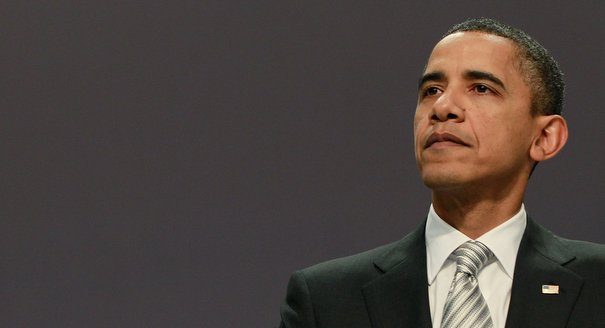
During his visit to Tokyo, Obama will endeavor to guide the U.S.-Japan alliance as Japan adjusts to its new governing party, build the alliance’s capabilities to address future security contingencies, and restore a sense of American involvement in the region.
Source: The National Interest

Obama chose to reveal the broad outlines of his Asia policy in Tokyo, rather than Beijing or, more typically, Washington, to signal the importance of the alliance, and the priority Japan enjoys over China in American policy. By giving the speech in Asia, Obama also reinforces the message that America is back after its long preoccupation with terrorism.
A long-reliable ally, Japan normally proposes few initiatives of its own, and proves a stolid and obliging—if somewhat boring—host. This time, however, the outlook is much less predictable, and will be anything but boring for the officials involved.
On August 31, the Democratic Party of Japan (DPJ) won a majority with its coalition partners in the lower house of the Diet, and the staid image of the Liberal Democratic Party (LDP), which had dominated Japanese politics for almost the entire post-war period—1955–1993 and again from 1994 until August 31—gave way to something like the messy presidential transitions we endure when the White House changes party. A party of disparate interests, the DPJ enjoyed the privilege of opposing everything the LDP stood for—good and bad—while offering few rationalized policies of its own. Its leaders are now doing the rationalization “on the job.”
In the last weeks of October, no fewer than four DPJ ministers took different positions on the future of Futenma, a U.S. Marine helicopter base in Okinawa. The future of the base was formally decided in 2006 in a U.S.-Japan agreement, which is highly contingent on a related set of expensive decisions about how to move the bulk of Marines in Asia from Okinawa to Guam. Beyond that, most of the related disputes are between Japanese interest groups, not the U.S. and Japan.
Obama’s challenge in Japan will be to guide the alliance through its awkward transition period, and build up its capabilities to address future security contingencies. He will need to be proactive in preventing nagging issues—base locations, host nation support costs, and lingering disputes about history and nuclear weapons—from eroding the alliance from within. He will also need to offer a vision for the alliance of the future.
In Washington, policy makers have reached one strategic conclusion about working with the DPJ, and two tactical approaches to that end. The strategic conclusion is that the Japanese people ultimately share overwhelming support for the alliance with the United States, and do not want their government to compromise it. Thus, there is no good reason to assume dramatic outcomes once the transitional period ends and the DPJ is firmly in power.
Washington has pursued both tactical options since the DPJ took office. First, immediately after the DPJ victory, Assistant Secretary of State for East Asian and Pacific Affairs Kurt Campbell, who has extensive Japan experience, flew to Tokyo to offer reassurances of patience and willingness to confer with the new government as it sorts out its differences. Implicit in this approach is a 24/7 all-out diplomatic effort to talk Prime Minister Yukio Hatoyama and his colleagues through any differences that emerge.
The second tactical approach was evident last month in Secretary of Defense Robert Gates’ trip to Tokyo for annual talks, during which he urged his Japanese counterparts to commit to maintaining the 2006 agreements on basing and troop redeployments. The underlying assumption of this approach is that the new Japanese government might inadvertently do a great deal of damage to the alliance as it sorts itself out.
Therefore, it is necessary to set boundaries for Tokyo early.
Obama’s position between these two alternative approaches is not yet known. As in most things, he would do well to split the difference, offering Hatoyama a warm shoulder to lean on, and firm advice to be careful.
Obama’s Tokyo visit will be most important for its collegial expression of the U.S. bottom line on a host of issues, from aid to Afghanistan to nuclear-weapons policy and basing issues. His goal is to lay the groundwork for good, or at least not bad, outcomes in 2010, which marks the fiftieth anniversary of the U.S.-Japan Mutual Defense Treaty. Next year will also be Japan’s turn to host the Asia Pacific Economic Cooperation Forum, bringing leaders from across the region.
The mayor of Hiroshima is already lobbying for Obama to stop in his city next year, to marry regrets for using the atomic bomb on Japan with Obama’s call for an end to nuclear weapons. Others argue that Obama should visit Nagasaki, to mark the last time such a weapon was used in war, symbolizing his intention to abolish them.
If the administration can steer clear of significant gaffes, the visit to Tokyo will be little noted in the United States. Obama’s trip to the region portends no major shifts in policy, or even the appearance of such shifts, as was prominently the case in his new approaches to Russia, the Middle East, Iran, Iraq and Afghanistan.
Obama should endeavor to remind the DPJ where its best interests lie, bringing U.S. and Japanese policy quietly into line, and restore a sense of American involvement after the neglect of the second George W. Bush term.
Whatever happens, the Japanese will welcome Obama warmly, and Americans can be pleased that in this part of the world, where the president rarely stops more than once a year, he’ll get points just for showing up. But to bring the U.S. alliance more in line with the political changes in Japan, and American needs, will require a year of hard work, and far more than showing up.

Distinguished Fellow, Asia Program
Paal previously served as vice chairman of JPMorgan Chase International and as unofficial U.S. representative to Taiwan as director of the American Institute in Taiwan.
Recent Work
Douglas H. Paal


Douglas H. Paal, Tong Zhao, Chen Qi, …
Carnegie does not take institutional positions on public policy issues; the views represented herein are those of the author(s) and do not necessarily reflect the views of Carnegie, its staff, or its trustees.

The EU can impose sanctions but struggles to enforce them without the United States. With Washington increasingly disinterested in backing European interests, the bloc must now fend for itself.


Nicu Popescu, Tiago Antunes

Russia is testing the waters of NATO’s mutual defense clause. What do strikes in Romanian territorial waters mean for the alliance’s posture toward Moscow?

Dimitar Bechev

With its public finances in shambles, the far right polling at 35 percent ahead of the 2027 presidential election, and a growing protest movement, is France’s crisis a threat to the EU’s geopolitical awakening?

Rym Momtaz, ed.

Ahead of a tough winter for Ukraine, Donald Trump’s swing back toward Russia bodes ill. But instead of panicking, Kyiv’s European allies are focusing on action.
Rym Momtaz

Funding Ukraine remains a priority for European leaders. As Russia’s war of aggression heads into another winter, two feasible options to mobilize support for Kyiv should be fast-tracked.


Vladyslav Rashkovan, Gregory P. Wilson