

Commentary
Michael Pettis
{
  "authors": [
    "Michael Pettis"
  ],
  "type": "legacyinthemedia",
  "centerAffiliationAll": "dc",
  "centers": [
    "Carnegie Endowment for International Peace",
    "Carnegie Europe"
  ],
  "collections": [],
  "englishNewsletterAll": "asia",
  "nonEnglishNewsletterAll": "",
  "primaryCenter": "Carnegie Endowment for International Peace",
  "programAffiliation": "AP",
  "programs": [
    "Asia"
  ],
  "projects": [],
  "regions": [
    "East Asia",
    "China",
    "Asia"
  ],
  "topics": [
    "Economy"
  ]
}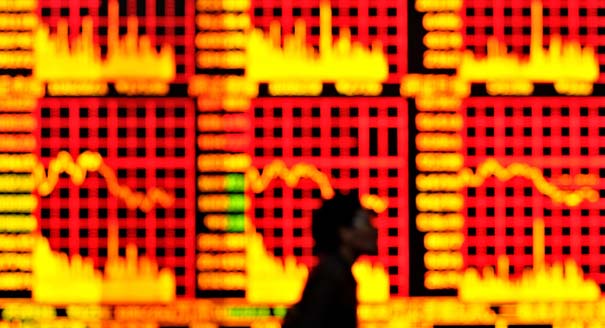
Source: Getty
While China may experience a painful financial contraction as it increases private consumption, even a dramatic slowdown of Chinese growth will not prevent China’s share of global GDP from rising.
Source: Financial Times

That China has structural problems should not have surprised us. No one could have reasonably hoped that the country’s institutions would adapt as quickly as its underlying economic and social systems have changed, and institutional mismatches must result in periods of difficult adjustment. This has been true of every rapidly developing economy in history.
But we need perspective on how China is likely to adjust. As with Japan in the 1980s, China’s export growth relative to the rest of the world has created one of its most serious mismatches. When its share of global trade was tiny, China’s traditional response to domestic economic contraction – to boost investment in infrastructure and production capacity – had a negligible impact on the global balance of payments. The subsequent surge in exports could easily be absorbed by the rest of the world.
Today, China is the world’s largest exporter and its trade surplus among the highest ever as a share of global gross domestic product. This limits its ability to respond to domestic contractions. The world can no longer easily accommodate its growth policies.
China’s financial system and policy responses will adjust, but neither easily nor quickly. Increasing the private consumption share of Chinese GDP will involve unwinding the many ways that income has been systematically transferred from the household sector to subsidise investment in manufacturing, infrastructure and real estate development.
The speed and pain of the adjustment will depend, as it usually does, largely on the shape of the national balance sheet. Countries with unstable balance sheets adjust brutally and quickly; those with more stable balance sheets can slow their adjustment, and so reduce its social cost.
China specialists have known for a long time what the world suddenly seems to be discovering: that China’s national balance sheet contains much more debt, especially in the way of unstable contingent liabilities, than had been assumed. The first reaction is to conclude that China is on the verge of collapse. But this is based on only a partial understanding of the balance sheet. Yes, there is a lot more debt than many supposed, much of it collateralised by non-viable, illiquid assets, but liabilities are also a lot less liquid than we might think. Capital controls, a high savings rate and limited alternative investments will allow China to defend the domestic balance sheet while it works through the adjustment.
Will China collapse? No. It may have a painful financial contraction, but this will not necessarily lead to a collapse in growth. Instead it will grind away at its overinvestment and excess capacity, which, with a reversal of the favourable demographics enjoyed since the mid-1970s, will slow growth sharply, but this will coincide with three more favourable circumstances.
First, China will continue to urbanise rapidly, which will raise household income and create new sources of growth. Second, even as the workforce declines, increased education and infrastructure spending will raise worker productivity. Third, a sharp contraction will force Beijing finally to liberalise the financial system and transfer resources from the inefficient state sector to small and medium enterprises, increasing productivity.
Chinese growth will almost certainly slow dramatically, but the country will nonetheless continue to grow faster than the rest of the world. Its share of global GDP will rise.
No successful emerging country has experienced unbroken growth and, contrary to inane claims by bulls, even China has had at least three economic crises in recent decades. Denying the possibility of difficult adjustment periods makes no historical sense. But adjustment is not collapse.

Nonresident Senior Fellow, Carnegie China
Michael Pettis is a nonresident senior fellow at the Carnegie Endowment for International Peace. An expert on China’s economy, Pettis is professor of finance at Peking University’s Guanghua School of Management, where he specializes in Chinese financial markets.
Recent Work
Michael Pettis
Michael Pettis

The hybrid warfare landscape is evolving rapidly, leaving policymakers without clear strategies. To better inform their work in addressing emerging challenges, governments must dig deeper into the underlying dynamics at play.


Raluca Csernatoni, Alicia Wanless
As geopolitical rivalry weaponizes global supply chains, the EU’s true vulnerability lies in emerging-risk imports. For these goods, suppliers are growing more concentrated, substitution more difficult, and political risk is looming.

Sinan Ülgen

The EU is putting together a new security strategy to meet today’s myriad challenges. But for any proposal to be effective, the union needs to grapple with its identity and ambitions.

Pierre Vimont
Amid uncertainty caused by the Iran war, the global drive for nonproliferation has stalled. With Europe diplomatically marginalized and countries reassessing their nuclear options, efforts to curb the spread of nuclear weapons risk becoming irrelevant.

Jane Darby Menton
Between the United States’ market-driven approach and China's state-led industrial strategy, Europe is reckoning with how it can remain competitive in the global economy. But is Europe in danger of becoming a U.S. or China colony?


Noah Barkin, Anu Bradford