
• Research
  • Strategic Europe
  • About
  • Experts
Carnegie Europe logoCarnegie lettermark logo
EUUkraine
  • Donate
{
  "authors": [
    "Robert Kagan",
    "Aroop Mukharji"
  ],
  "type": "legacyinthemedia",
  "centerAffiliationAll": "",
  "centers": [
    "Carnegie Endowment for International Peace"
  ],
  "collections": [],
  "englishNewsletterAll": "",
  "nonEnglishNewsletterAll": "",
  "primaryCenter": "Carnegie Endowment for International Peace",
  "programAffiliation": "",
  "programs": [],
  "projects": [],
  "regions": [
    "North America",
    "South America"
  ],
  "topics": [
    "Political Reform",
    "Democracy"
  ]
}

Source: Getty

In The Media

In Colombia, Democracy is Stirred But Not Shaken

The recent Colombian court decision to preserve a two-term limit for the presidency is a triumph for democracy in a region where hyper-presidencies are becoming more common.

Link Copied
By Robert Kagan and Aroop Mukharji
Published on Mar 9, 2010

Source: The Washington Post

In Colombia, Democracy is Stirred But Not ShakenThere is plenty of pessimism about democracy these days, and autocrats seem to be on the march on every continent. So we should take note when democracy triumphs over autocratic temptations.

That's what happened in Colombia recently. President Álvaro Uribe had hinted for some time that he might run for a third consecutive term, despite the constitution's two-term limit. Last summer Colombia's House and Senate, controlled by allies of Uribe, passed a bill to change the constitution. The next and final step was a popular referendum in May to endorse Uribe's reelection. If that sounds familiar, it should. It was by popular referendum that Venezuela's Hugo Chávez installed himself as a virtual president-for-life. But late last month Colombia's constitutional court rejected the bill. The referendum is dead, and Colombia's democracy lives.

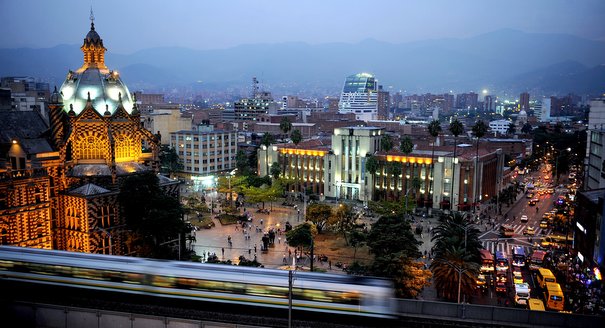
Uribe would almost certainly have been reelected had he been allowed to run again. He is overwhelmingly popular in Colombia. He has beaten back terrorism and the drug cartels and made even the streets of Medellin safe to walk. If anyone could make a case for a third term, it was Uribe. And if the court decided to approve the referendum, many were prepared to look the other way.

Fortunately, the court took a different view, perhaps understanding that a third term would have been bad for Colombia, bad for the hemisphere and bad even for Uribe. It would have been a blow -- possibly fatal -- to the democracy he has done so much to save.

More than reflecting the immediate desires of the people, a successful democracy must also rest on strong institutional and legal foundations that are above any one man. Especially in a nascent democracy, the integrity of institutions is as important as the will of the people. The Colombian constitution is only 20 years old, and it was already changed four years ago to allow Uribe to run for a second term. Had he been in office four more years, Uribe would have ended up appointing most of the supreme court and the top generals. In effect, a third term would have paved the way for Uribe to build a government around himself.

Some Colombians drew analogies between Uribe and Franklin Roosevelt, the only U.S. president to be elected more than twice. In the 1930s and '40s, however, American democracy was deep-rooted and unchallenged, and the short break from the norm led to strict term limits that have been observed since. Colombia is a young democracy whose future is in doubt.

A better model for those on the cusp of being "presidents for life" would be George Washington. When American democracy was young and fragile, Washington chose to limit his time in office despite his popularity. He understood a fundamental axiom of democracy -- that there is more than one person fit to lead a country through a robust government. In several countries, this principle has been sacrificed for personal ambition and misguided notions of irreplaceability.

The effect of a third Uribe term would have extended beyond Colombia. Democracy is being undermined across South America, where hyper-presidencies and constitutional change have become commonplace. Uribe would have strengthened a trend begun by Chávez, joined by Ecuador's Rafael Correa, Bolivia's Evo Morales and attempted in Honduras by Manuel Zelaya.

Instead, Colombia has pushed back against this wave of autocracy and struck a blow that should resonate. Tempted by easy constitutional change, Colombia chose instead to set a model for durable and peaceful democratic transitions of power.

Uribe is the ultimate hero of this story. Whatever his personal desires, he allowed the court to do its job without interference. Whatever his accomplishments, including defeating terrorists and giving Colombians hope, his greatest gift to his people will be a society and political system based not on the power and appeal of an individual but on the rule of law.

It is hard to know what role the Obama administration played in all this. President Obama had privately urged Uribe against seeking a third term, but the administration had done little in public. It is difficult to say whether this was to avoid the appearance of a heavy hand or because the administration is hesitant to make democracy promotion a priority.

But the Obama administration will soon have opportunities to do more. Egypt, for example, is a democracy in name only, and it is to hold parliamentary elections this year. One hopes that Obama seizes these and other chances to further America's interest in a democratic world. We will not always be able to count on the willingness of powerful men to place themselves under the law.

About the Authors

Robert Kagan

Former Senior Associate

Kagan, author of the recent book, The Return of History and the End of Dreams (Knopf 2008), writes a monthly column on world affairs for the Washington Post and is a contributing editor at both the Weekly Standard and the New Republic.

Aroop Mukharji

Former Junior Fellow, South Asia Program, US Role in the World Program

Authors

Robert Kagan
Former Senior Associate
Robert Kagan
Aroop Mukharji
Former Junior Fellow, South Asia Program, US Role in the World Program
Political ReformDemocracyNorth AmericaSouth America

Carnegie does not take institutional positions on public policy issues; the views represented herein are those of the author(s) and do not necessarily reflect the views of Carnegie, its staff, or its trustees.

More Work from Carnegie Europe

  • Commentary
    Strategic Europe
    How to Join the EU in Three Easy Steps

    Montenegro and Albania are frontrunners for EU enlargement in the Western Balkans, but they can’t just sit back and wait. To meet their 2030 accession ambitions, they must make a strong positive case.

      Dimitar Bechev, Iliriana Gjoni

  • Commentary
    Strategic Europe
    Win or Lose, Orbán Has Broken Hungary’s Democracy

    Hungarians head to the polls on April 12 for an election of national and European consequence. Three different outcomes are on the cards, each with their own implications for the EU.

      Zsuzsanna Szelényi

  • Commentary
    Strategic Europe
    Is France Shifting Rightward?

    The far right failed to win big in France’s municipal elections. But that’s not good news for the country’s left wing, which remained disunited while the broader right consolidated its momentum ahead of the 2027 presidential race.

      Catherine Fieschi

  • Commentary
    Is the Radical-Right Threat Existential or Overstated?

    Amid increased polarization and the influence of disinformation, radical-right parties are once again gaining traction across Europe. With landmark elections on the horizon in several countries, are the EU’s geostrategic vision and fundamental values under existential threat?

      Catherine Fieschi, Cas Mudde

  • Commentary
    Strategic Europe
    The EU Needs a Third Way in Iran

    European reactions to the war in Iran have lost sight of wider political dynamics. The EU must position itself for the next phase of the crisis without giving up on its principles.

      Richard Youngs

Get more news and analysis from
Carnegie Europe
Carnegie Europe logo, white
Rue du Congrès, 151000 Brussels, Belgium
  • Research
  • Strategic Europe
  • About
  • Experts
  • Projects
  • Events
  • Contact
  • Careers
  • Privacy
  • For Media
  • Gender Equality Plan
Get more news and analysis from
Carnegie Europe
© 2026 Carnegie Endowment for International Peace. All rights reserved.