

Commentary
Trump is distracted and Ukraine wants Europe to step up. The continent’s leaders must find their voice and assert it in talks with Russia.
Alissa de Carbonnel
{
  "authors": [],
  "type": "other",
  "centerAffiliationAll": "",
  "centers": [
    "Carnegie Endowment for International Peace"
  ],
  "collections": [],
  "englishNewsletterAll": "",
  "nonEnglishNewsletterAll": "",
  "primaryCenter": "Carnegie Endowment for International Peace",
  "programAffiliation": "",
  "programs": [],
  "projects": [],
  "regions": [
    "North Africa",
    "Egypt"
  ],
  "topics": [
    "Political Reform",
    "Democracy",
    "Foreign Policy"
  ]
}
Source: Getty
The renewal of the state of emergency in Egypt heightens concerns that the Obama administration’s practice of quiet diplomacy is not bearing fruit. The United States is uniquely positioned to engage the Egyptian government and civil society and encourage them along a path toward reform.
Source: May 11

Democracy in Egypt has suffered another blow. This week, the Egyptian government extended its state of emergency for an additional two years despite President Mubarak’s promises since 2005 to end it and replace it with a more limited anti-terror law. In light of this disturbing development, we write to you again to urge you strongly to take an interest in promoting democratic reform in Egypt.
In renewing the state of emergency, the Egyptian government has attempted to appease critics with slight changes to the emergency law text; however, these will not alter the fundamentally repressive atmosphere the state of emergency creates. Citizens still do not, for example, enjoy the freedom of assembly. The Egyptian government also has claimed that the emergency law will only apply to cases of terrorism or narcotics, but it has made such promises in the past and not abided by them.
Since 1981, the Government of Egypt has maintained the state of emergency continuously, ostensibly to fight terrorism and protect its citizens and national security. In practice, however, the emergency law has done precisely the opposite. It has encouraged human rights abuses, stifled the public voice, and fortified Egypt’s trend toward authoritarianism. Under the state of emergency, Egyptian citizens face arrest if they participate in political rallies or peaceful demonstrations, trial in military tribunals for political offenses, and prolonged administrative detention without charge. These measures are clearly incompatible with free elections and democratization, which President Mubarak promised twice since his recent return from surgery in Germany.
With elections scheduled for the parliament this year and the presidency in 2011, Egypt has a rare opportunity to reposition itself on the path toward healthy democratic reform. And neither must it start from scratch; while some changes must be constitutional and legal, others are merely administrative. It would require no changes in law, for example, to allow free campaigning and international and domestic election monitoring in this year’s parliamentary elections, to keep security forces away from polling places, or to refrain from violence against activists and protestors.
In our last letter to you, dated April 7, 2010, we outlined the importance of democracy in Egypt to the region, the United States, and the world in general, and we recommended a set of action items. In light of the renewal of the state of emergency, we are more convinced than ever of the importance of U.S. engagement. We urge you to persuade President Mubarak to lift the state of emergency now, as the critical elections period begins, and to release detainees held under the emergency law for clearly political offenses, while bringing all cases within a legitimate legal framework.
Madame Secretary, this is a bipartisan issue, and we strongly encourage you to act quickly and effectively. The renewal of the state of emergency heightens our concern that the administration’s practice of quiet diplomacy is not bearing fruit. As a major aid contributor to and strategic partner of Egypt, the United States is uniquely positioned to engage the Egyptian government and civil society and encourage them along a path toward reform. The time to use that leverage is now.
Sincerely,
The Working Group on Egypt
Thomas Carothers
Carnegie Endowment for International Peace
Elliott Abrams
Council on Foreign Relations
Brian Katulis
Center for American Progress
Tom Malinowski
Human Rights Watch
Michele Dunne
Carnegie Endowment for International Peace
Robert Kagan
Carnegie Endowment for International Peace
Scott Carpenter
Washington Institute for Near East Policy
Ellen Bork
Foreign Policy Initiative
Daniel Calingaert
Freedom House
The Group’s first letter to Secretary Clinton can be viewed here.
Carnegie does not take institutional positions on public policy issues; the views represented herein are those of the author(s) and do not necessarily reflect the views of Carnegie, its staff, or its trustees.

Trump is distracted and Ukraine wants Europe to step up. The continent’s leaders must find their voice and assert it in talks with Russia.

Alissa de Carbonnel

Mounting economic strain and battlefield losses will not necessarily make the Kremlin less dangerous. They could instead push Moscow toward a more aggressive hybrid campaign designed to test NATO’s Eastern flank, exploit allied hesitation, and fracture European resolve.

Maksym Beznosiuk

Over the past ten years, NATO has held almost as many summits as it did during the entirety of the Cold War. Are they still useful, or is it time to stop holding annual meetings?

Rym Momtaz, ed.

As the EU confronts profound challenges, several leaders have called for fundamental reform to the union’s model—but only modest, superficial changes have resulted. What if Europe really could be reimagined from zero today: What should such a redesigned European order look like?

Richard Youngs, ed.
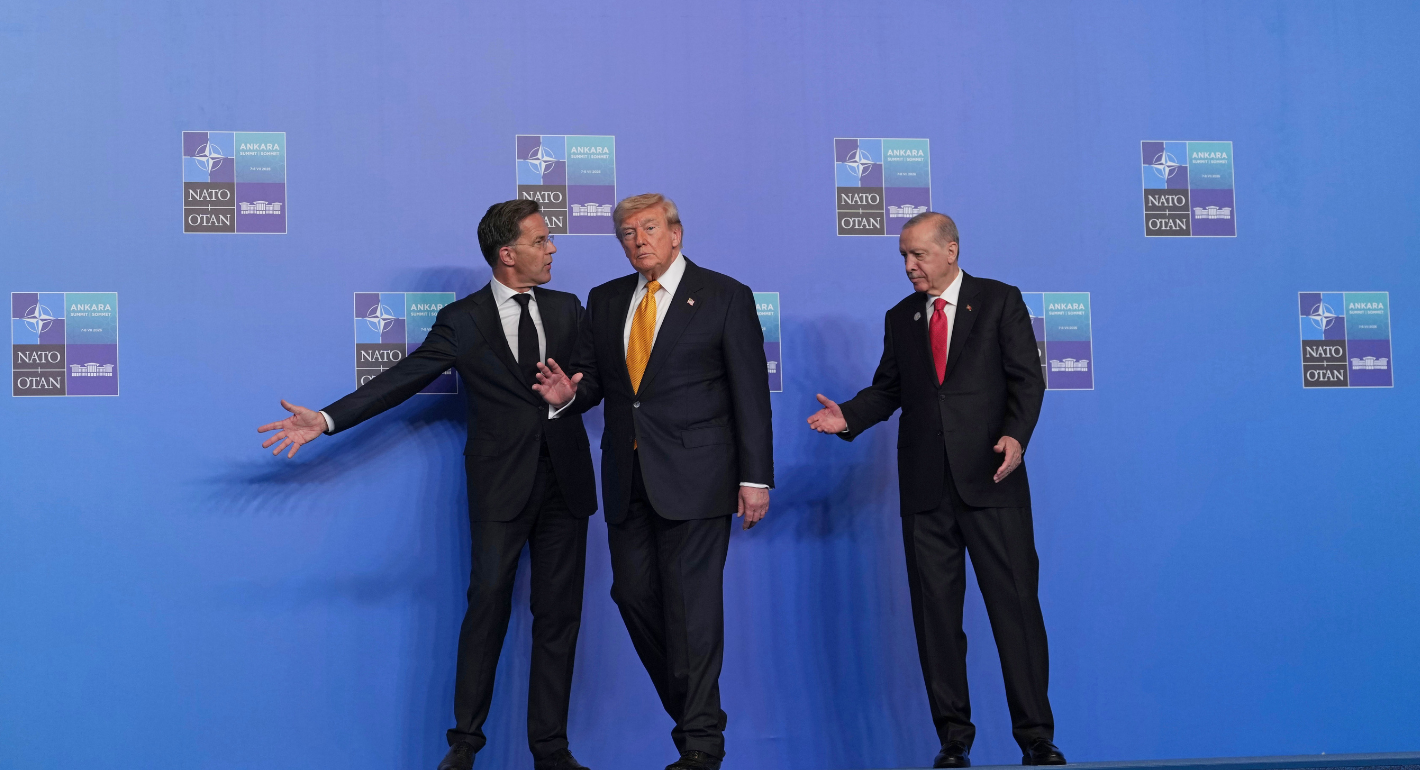
Nearly a year and a half after Europeans leaned into sucking up to Trump, the strategy has produced some benefits when it comes to Ukraine.
Rym Momtaz