

In The Media
Lahcen Achy
{
  "authors": [
    "Lahcen Achy"
  ],
  "type": "legacyinthemedia",
  "centerAffiliationAll": "",
  "centers": [
    "Carnegie Endowment for International Peace",
    "Carnegie Europe",
    "Malcolm H. Kerr Carnegie Middle East Center"
  ],
  "collections": [],
  "englishNewsletterAll": "",
  "nonEnglishNewsletterAll": "",
  "primaryCenter": "Malcolm H. Kerr Carnegie Middle East Center",
  "programAffiliation": "",
  "programs": [],
  "projects": [],
  "regions": [
    "Maghreb"
  ],
  "topics": [
    "Economy"
  ]
}
Source: Getty
The countries of the Maghreb need to shape their policies and programs in order to diversify their trade and financial partners and sever the ties that bind them to the fate of the European economy.
Source: Al-Hayat

Statistics provide sufficient evidence on excessive reliance of Maghreb on Europe. The European Union accounts for 75% of Tunisia’s exports, 90% of emigrant workers’ remittances, 83% of tourism revenues and 73% of foreign direct investments. Likewise, 60% of Morocco’s exports target EU markets, while 80% of tourism revenues and 90% of emigrant workers’ remittances come from the EU. These figures only confirm that the European debacle will definitely be a concern both for the public and the private sectors in the Maghreb.
Forecasts of economic growth for the upcoming years unanimously expect feeble growth within the European Union, not exceeding 1% during the current year and likely to settle at an average of 2% during the next five years, which could impact the European demand on Maghreb goods and services. The same forecasts indicate that the economic growth might be twice as strong as in the United States, while it is expected to be two to three times higher in the emerging countries as in China and India that are continuing to lead world economic growth.
Signing free trade agreements or trade facilitation treaties is apparently not enough to diversify economic partners. Morocco has signed a free trade agreement (FTA) with the United States covering industrial goods, agricultural products and trade of services. Though the FTA entered into effect in early 2006, it has failed to effectively influence trade relations between both countries. The US is accounting for no more than 4% of Morocco’s trade. Morocco and Tunisia have both signed separate FTAs with Turkey and signed the Arab Free Trade Agreement and the Agadir Agreement, also involving Egypt and Jordan. Despite these agreements, Morocco and Tunisia are still caught in an overly-dependent economic partnership with Europe.
Diversify trade and financial partners and break up the heavy ties with the EU is strategically important for the Maghreb. Policy-makers should keep in mind the following four pillars when devising their strategies.
First, the government should support the private sector’s efforts to penetrate new markets, a costly process for private companies that would rather prefer to keep on serving their traditional markets. This is why the government must play its vital catalyst role. However, the effectiveness of the government support depends on its transparency, as it should not become a source of rent for a limited number of privileged private companies.
Second, export supply of goods and services from the Maghreb is limited, their competitiveness is weak, and in some cases fail to comply with quality-standards required to access beyond borders’ markets. Enhancing private sector’s productivity by investing in training the labor force, stimulating scientific research and technological innovation are prerequisites for market diversification.
Third, adopt a more flexible exchange rate policy. Excessive pegging of the Moroccan Dirham and the Tunisian Dinar to the Euro has directly contributed to perpetuating the overly-dependent partnership with Europe. Moreover, the appreciation of the Euro during the last few years compared to US dollar and Asian currencies undermined the competitiveness of Maghreb exports and constrained their ability to enter new markets.
Fourth, strive for the implementation of Arab trade agreements by removing all trade barriers. Most exporters from the Maghreb prefer to avoid venturing into Arab markets, as they lack transparency in customs and other administrative procedures. This again strengthens the status-quo of over-reliance on European markets, despite its potential risks.
Finally, diversification of economic partners is urgently needed. Recent events, such as the Euro zone debacle and the gradual shift of financial and economic power from the West to the East, provide policy-makers with an opportunity to behave strategically.
Former Nonresident Senior Associate, Middle East Center
Achy is an economist with expertise in development, institutional economics, trade, and labor and a focus on the Middle East and North Africa.
Recent Work
Lahcen Achy
Lahcen Achy

As geopolitical rivalry weaponizes global supply chains, the EU’s true vulnerability lies in emerging-risk imports. For these goods, suppliers are growing more concentrated, substitution more difficult, and political risk is looming.

Sinan Ülgen
The EU is putting together a new security strategy to meet today’s myriad challenges. But for any proposal to be effective, the union needs to grapple with its identity and ambitions.

Pierre Vimont

The EU’s new migration policy is not suited to today’s realities. With climate change increasingly becoming a driver of displacement, Europe needs to rethink its deterrence-focused approach.

Shana Tabak
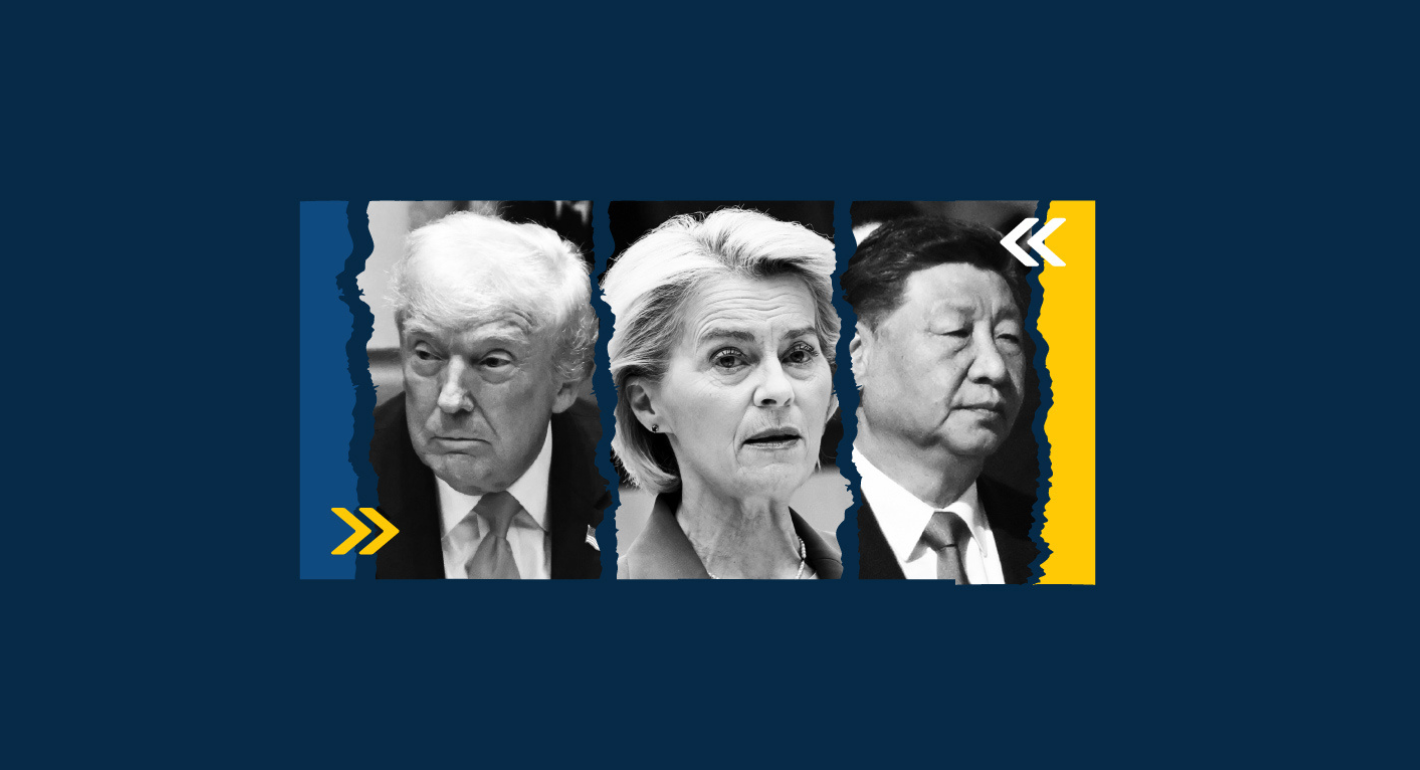
Between the United States’ market-driven approach and China's state-led industrial strategy, Europe is reckoning with how it can remain competitive in the global economy. But is Europe in danger of becoming a U.S. or China colony?


Noah Barkin, Anu Bradford
The U.S.-sponsored TRIPP deal is driving the Armenia-Azerbaijan peace process forward. But foreign and domestic hurdles remain before connectivity and economic interdependence can open up the South Caucasus.


Thomas de Waal, Areg Kochinyan, Zaur Shiriyev