• Research
  • Strategic Europe
  • About
  • Experts
Carnegie Europe logoCarnegie lettermark logo
EUUkraine
  • Donate
{
  "authors": [
    "Amr Hamzawy"
  ],
  "type": "legacyinthemedia",
  "centerAffiliationAll": "dc",
  "centers": [
    "Carnegie Endowment for International Peace",
    "Carnegie Europe",
    "Malcolm H. Kerr Carnegie Middle East Center"
  ],
  "collections": [],
  "englishNewsletterAll": "menaTransitions",
  "nonEnglishNewsletterAll": "",
  "primaryCenter": "Carnegie Endowment for International Peace",
  "programAffiliation": "MEP",
  "programs": [
    "Middle East"
  ],
  "projects": [],
  "regions": [
    "Middle East",
    "Egypt",
    "Gulf",
    "Levant",
    "Maghreb"
  ],
  "topics": [
    "Political Reform"
  ]
}
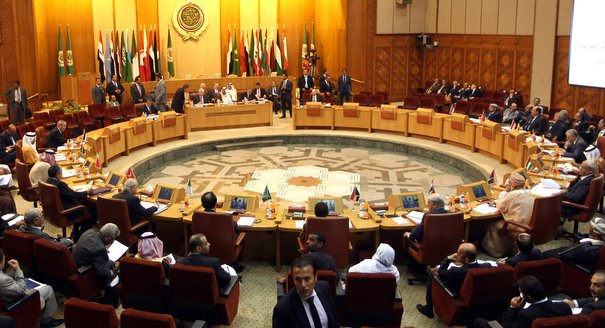
Source: Getty

In The Media

How Arab Governments Resist the Trend to Democracy

The current regimes in the Arab world are resisting democratic change because of firm security measures maintaining the status quo and ineffective, incapable, and insular opposition movements.

Link Copied
By Amr Hamzawy
Published on Aug 20, 2010

Source: U.S.News and World Report

How Arab Governments Resist the Trend to Democracy
Throughout most of the Arab world, poverty, unemployment, and illiteracy rates are on the rise while the quality of education, healthcare, and social safety-nets for the poor and elderly are falling to unprecedented levels. Despite these failures, the repressive governments under which they occur remain firmly entrenched. And this lack of democracy limits the West's ability to realize its goals in the region.
 
While authoritarian governments facing similar circumstances have toppled elsewhere—as we saw in Ghana and Indonesia—the Arab world is different. Some observers suggest its cultural and religious values are responsible. But this is simply not the case. In fact, several unique features hinder reform and block the democratic progress that the United States and Europe desires.
 
First, Arab governments have poured even more money into security in recent years. This spending not only includes monitoring and punishing the opposition using traditional methods, but also exerting pressure on civil organizations and the media and even changing the composition of electoral districts. All of these efforts make it harder for citizens to organize and confront the hugely powerful regimes.
 
But should signs of protest arise, the regimes have no qualms using violence to squelch them. While a number of nonstate actors carry out threats of violence in Iraq, Lebanon, and Palestine, the power of repression resides exclusively with the authoritarian governments in most other Arab countries. The use of violence ranges from intimidation to torture to, ultimately, murder.
 
Second, ruling regimes also squash reform by warning citizens that any demand for change will threaten order and stability and unleash chaos. Despite spontaneous protests increasingly seen throughout the Arab world in recent years, the government's message—delivered largely by religious institutions and the media—has sufficiently scared people from pursuing the kind of organized, sustained activity that could bring about real change.
 
Third, while the elites rule with an iron fist, the resistance responds with kid gloves. Opposition leaders have failed to develop a serious message and platform about what kind of change is possible. This lack of leadership does little to reassure an anxious public that the opposition will not make an already bad situation worse.
 
Fourth, change is unlikely to come from Islamist movements either. Although these forces have sparked excitement in Arab politics, their leaders are more interested in pursuing an ideological and religious agenda than in forging compromises with the regimes to improve people's lives.
 
And fifth, a small group of individuals who form close alliances based on their common interests are leading these regimes. By banding together, these Arab elites limit the possibility of internal conflicts that led to the collapse of authoritarian regimes in Latin America and Eastern Europe.
 
The limited number of powerful families in Arab countries also makes disagreements unlikely. Each family can be represented in the cabinet or in important security positions, as we see in Jordan. Prominent figures, such as those in Egypt and Morocco, can exercise uninterrupted control for decades at a time. Although some Arab elites have cracked open the doors of their regimes to small groups of businessmen, they have not—and do not plan to—fully integrate these outsiders anytime soon.
 
While some ruling elites want to promote ideas like rationality, negotiation, and peaceful settlements—ideas the United States and Europe welcome—others align themselves with non-state actors such as Hamas and Hezbollah. It is this latter group—which calls for waging jihad on the United States and Israel—that creates immediate policy implications for Washington.
 
The West needs to act in defense of democracy in the Arab world. It's critical for its interests in the Middle East peace process, Iraq, Egypt, and Yemen as democracy is the only sustained path for development, moderation, and peace. The United States and its European allies should make democracy and human rights integral parts of bilateral diplomacy, condition aid packages and trade relations on improvements in these policies, publicly condemn abuses, and closely monitor elections.
 
Even as they lose their legitimacy amid deteriorating social conditions Arab governments will remain secure. And the West will face few options for achieving its security objectives in the region without change. Until then, the stalemate continues.

About the Author

Amr Hamzawy

Director, Middle East Program

Amr Hamzawy is a senior fellow and the director of the Carnegie Middle East Program. His research and writings focus on governance in the Middle East and North Africa, social vulnerability, and the different roles of governments and civil societies in the region.

    Recent Work

  • Commentary
    Iran Is Pushing Its Neighbors Toward the United States

      Amr Hamzawy

  • Paper
    U.S. Peace Mediation in the Middle East: Lessons for the Gaza Peace Plan
      • Sarah Yerkes

      Amr Hamzawy, Sarah Yerkes, Kathryn Selfe

Amr Hamzawy
Director, Middle East Program
Amr Hamzawy
Political ReformMiddle EastEgyptGulfLevantMaghreb

Carnegie does not take institutional positions on public policy issues; the views represented herein are those of the author(s) and do not necessarily reflect the views of Carnegie, its staff, or its trustees.

More Work from Carnegie Europe

  • Commentary
    Strategic Europe
    Russia’s Imperial Retreat Is Europe’s Strategic Opportunity

    The war in Ukraine is costing Russia its leverage overseas. Across the South Caucasus and Middle East, this presents an opportunity for Europe to pick up the pieces and claim its own sphere of influence.

      William Dixon, Maksym Beznosiuk

  • Commentary
    Strategic Europe
    Europe and the Arab Gulf Must Come Together

    The war in Iran proves the United States is now a destabilizing actor for Europe and the Arab Gulf. From protect their economies and energy supplies to safeguarding their territorial integrity, both regions have much to gain from forming a new kind of partnership together.

      • Rym Momtaz

      Rym Momtaz

  • Commentary
    Strategic Europe
    The EU Needs a Third Way in Iran

    European reactions to the war in Iran have lost sight of wider political dynamics. The EU must position itself for the next phase of the crisis without giving up on its principles.

      Richard Youngs

  • Commentary
    Strategic Europe
    Europe on Iran: Gone with the Wind

    Europe’s reaction to the war in Iran has been disunited and meek, a far cry from its previously leading role in diplomacy with Tehran. To avoid being condemned to the sidelines while escalation continues, Brussels needs to stand up for international law.

      Pierre Vimont

  • Commentary
    Strategic Europe
    Can Europe Still Matter in Syria?

    Europe’s interests in Syria extend beyond migration management, yet the EU trails behind other players in the country’s post-Assad reconstruction. To boost its influence in Damascus, the union must upgrade its commitment to ensuring regional stability.

      Bianka Speidl, Hanga Horváth-Sántha

Get more news and analysis from
Carnegie Europe
Carnegie Europe logo, white
Rue du Congrès, 151000 Brussels, Belgium
  • Research
  • Strategic Europe
  • About
  • Experts
  • Projects
  • Events
  • Contact
  • Careers
  • Privacy
  • For Media
  • Gender Equality Plan
Get more news and analysis from
Carnegie Europe
© 2026 Carnegie Endowment for International Peace. All rights reserved.










