


In Ukraine, Gaza, and Iran, AI warfare has come to dominate, with barely any oversight or accountability. Europe must lead the charge on the responsible use of new military technologies.
Raluca Csernatoni
{
"authors": [
"Chen Qi",
"Paul Haenle"
],
"type": "legacyinthemedia",
"centerAffiliationAll": "",
"centers": [
"Carnegie Endowment for International Peace",
"Carnegie China"
],
"collections": [
"U.S.-China Relations",
"China’s Foreign Relations"
],
"englishNewsletterAll": "",
"nonEnglishNewsletterAll": "",
"primaryCenter": "Carnegie China",
"programAffiliation": "",
"programs": [],
"projects": [],
"regions": [],
"topics": [
"Arms Control",
"Security"
]
}Source: Getty
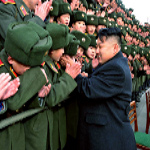
The status of North Korea has a strong affect on bilateral relations between the United States and China.
Source: Phoenix TV
Speaking to Phoenix TV, Chen Qi and Paul Haenle discussed the Korean Peninsula and its impact on U.S.-China relationships. Chen, speaking in Chinese, pointed out that the main cause of tension between North and South Korea is the South’s reversal of its Sunshine Policy, following the Yeonpyeong Island incident on 23 November, 2010. Haenle added that the status of North Korea affects bilateral relations between the United States and China, explaining that some of the recent progress in U.S.-China relations reflects “China getting involved and persuading the North Koreans not to take provocative actions in the future.”
Chen Qi
Former Resident Scholar , Carnegie-Tsinghua Center for Global Policy
Chen Qi was a resident scholar at the Carnegie-Tsinghua Center until June 2020.
Former Maurice R. Greenberg Director’s Chair, Carnegie China
Paul Haenle held the Maurice R. Greenberg Director’s Chair at the Carnegie Endowment for International Peace and is a visiting senior research fellow at the East Asian Institute, National University of Singapore. He served as the White House China director on the National Security Council staffs of former presidents George W. Bush and Barack Obama.
Carnegie does not take institutional positions on public policy issues; the views represented herein are those of the author(s) and do not necessarily reflect the views of Carnegie, its staff, or its trustees.
In Ukraine, Gaza, and Iran, AI warfare has come to dominate, with barely any oversight or accountability. Europe must lead the charge on the responsible use of new military technologies.
Raluca Csernatoni
Donald Trump has repeatedly bashed NATO and European allies, threatening to annex Canada and Greenland and deploring their lack of enthusiasm for his war of choice in Iran. Is this latest round of abuse the final straw?
Rym Momtaz, ed.
Economic growth is at the heart of a dilemma between planetary and international security.
Olivia Lazard
The war in Iran proves the United States is now a destabilizing actor for Europe and the Arab Gulf. From protect their economies and energy supplies to safeguarding their territorial integrity, both regions have much to gain from forming a new kind of partnership together.
Rym Momtaz
French President Emmanuel Macron has unveiled his country’s new nuclear doctrine. Are the changes he has made enough to reassure France’s European partners in the current geopolitical context?
Rym Momtaz, ed.