

Q&A
Christopher Boucek
{
  "authors": [
    "Christopher Boucek"
  ],
  "type": "legacyinthemedia",
  "centerAffiliationAll": "dc",
  "centers": [
    "Carnegie Endowment for International Peace",
    "Carnegie Europe",
    "Malcolm H. Kerr Carnegie Middle East Center"
  ],
  "collections": [
    "Arab Awakening"
  ],
  "englishNewsletterAll": "menaTransitions",
  "nonEnglishNewsletterAll": "",
  "primaryCenter": "Carnegie Endowment for International Peace",
  "programAffiliation": "MEP",
  "programs": [
    "Middle East"
  ],
  "projects": [],
  "regions": [
    "Middle East",
    "Yemen",
    "Gulf"
  ],
  "topics": [
    "Political Reform",
    "Security"
  ]
}
Source: Getty
While Yemen has become a haven for al-Qaida, it is also a quiet U.S. ally in the fight against terrorism. Now its ruler of more than 30 years is under pressure from demonstrators, his generals, and diplomats to step aside.
Source: PBS Newshour
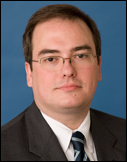
RAY SUAREZ: The nation at the tip of the Arabian Peninsula has become a haven for al-Qaida but also a quiet U.S. ally in the fight against terrorism. Now its ruler of more than 30 years is under pressure from demonstrators, his generals and diplomats to step aside. For more, we turn to Christopher Boucek, an associate in the Middle East program of the Carnegie Endowment for International Peace and a frequent visitor to Yemen. Do these defections, resignations represent a real turning point in the struggle of the opposition against the president of Yemen?
CHRISTOPHER BOUCEK, Carnegie Endowment For International Peace: A week ago, I would have said no, but I think there's a cumulative effect. And I think what we have seen today, with the senior military officers, especially Gen. Ali Mohsen, as well as the large number of foreign ambassadors that have resigned, there's a cumulative effect. And I think this shows that there is decreasing support for the president and the regime.
RAY SUAREZ: At the same time as Maj. Gen. Mohsen resigned, and took his armored division to key sites in the capital, other high-ranking generals declared their allegiance to the president. Does this bring Yemen one step closer to civil war?
CHRISTOPHER BOUCEK: I think there's always been a real concern that violence could escalate, that you would have an unintended escalation of violence. There are too many guns and too many grievances in Yemen. And now you have -- you have very significant power players lined up on either side of this. I think, earlier today, I think there was a very, very real fear that things would turn very violent and very bloody. Speaking with people in Yemen just a few hours ago, it sounds like tensions have reduced somewhat.
RAY SUAREZ: Is this president, who has been in office for 32 years, President Saleh, the type of leader who is ready to turn the guns on his own people?
CHRISTOPHER BOUCEK: I don't think so. I think, when we look at what's happened over the last several weeks and two months, we see that the president has, for most purposes, until last weekend, tried to manage this situation, I believe. I think he's trying to manage the process. And, ultimately, I think this will be a negotiated settlement, where you will have Yemen's power elites working to come to a settlement. It's obvious that the president cannot stay in power until 2013. This cannot go on for two more years. So that's been moved up, and I think it's been moved up an awful lot, in light of today's events and what happened over the weekend.
RAY SUAREZ: So, is this more like Tunisia, more like Egypt, or still has the potential to be more like Libya?
CHRISTOPHER BOUCEK: I think we don't know. I mean, I don't think we can -- I think, honestly, no one knows what will happen in Yemen. It seems very clear that President Saleh will not last much longer, the way that things are going. It also seems very clear that, while there is a potential for violence to get out of hand -- and I don't think anybody wants it to get that far -- I mean, I think the fear is that it may escalate, unintended, to that level.
RAY SUAREZ: Today, the deputy national security adviser, Ben Rhodes, made what would seem to be America's strongest statement yet: "Our concern in the immediate -- immediate term has been with the violence. This should be channeled into a political dialogue." Where is the United States in all of this? Saleh is an ally, isn't he?
CHRISTOPHER BOUCEK: Well, I think for -- our policy on Yemen has been terrorism -- has been terrorism and security and al-Qaida in the Arabian Peninsula, to the exclusion of almost everything else. I think, despite what -- what people in the administration say, we have been focused on terrorism. We have not been focused on the systemic challenges that Yemen faces: unemployment, governance abuses, corruption. I think these are the things that will bring down the state. It's not AQAP. Al-Qaida is our problem. It's what we care about. It's not Yemen's biggest problem. So, I think we need to not have a dialogue that says we support the Yemeni government and will provide them with military and security assistance, at the expense of the Yemeni people, and everyone in Yemen sees that we're supporting the regimes, at the expense of the Yemeni people.
RAY SUAREZ: Does instability in Yemen also threaten a sort of open playground for the very forces that the United States has been worried about in that part of the Arabian Peninsula?
CHRISTOPHER BOUCEK: Oh, I think absolutely. I think, as you see the government's capacity decrease, as you see their presence erode from throughout parts of the country, in some bigger cities, you see the spaces in between get larger and larger. And it's in those undergoverned spaces that al-Qaida or other organizations or other forms of opposition take root. And it's not just an issue in Yemen. It's a regional stability issue and it's a domestic security issue in this country. AQAP is a major threat to American security.
RAY SUAREZ: This is not a country dotted with big cities. It's not a densely populated place. When we see things happening in the capital, Sanaa, what do we know about what's happening in small towns and villages scattered across arid land?
CHRISTOPHER BOUCEK: No, that's a very good point. And the majority of the foreign reporters were expelled last week. There are very few foreign reporters in the country right now. There are no foreign bureaus. We know very little about what's going on in much of the country. It's a place that Westerners and especially Americans, more and more, do not go to. But we do know what's going on in the capital and other big cities. So, I think this is not just happening in the capital. It's in Taiz, in Aden, in other places, too.
RAY SUAREZ: Christopher Boucek, thanks for joining us.
CHRISTOPHER BOUCEK: Thank you.
Former Associate, Middle East Program
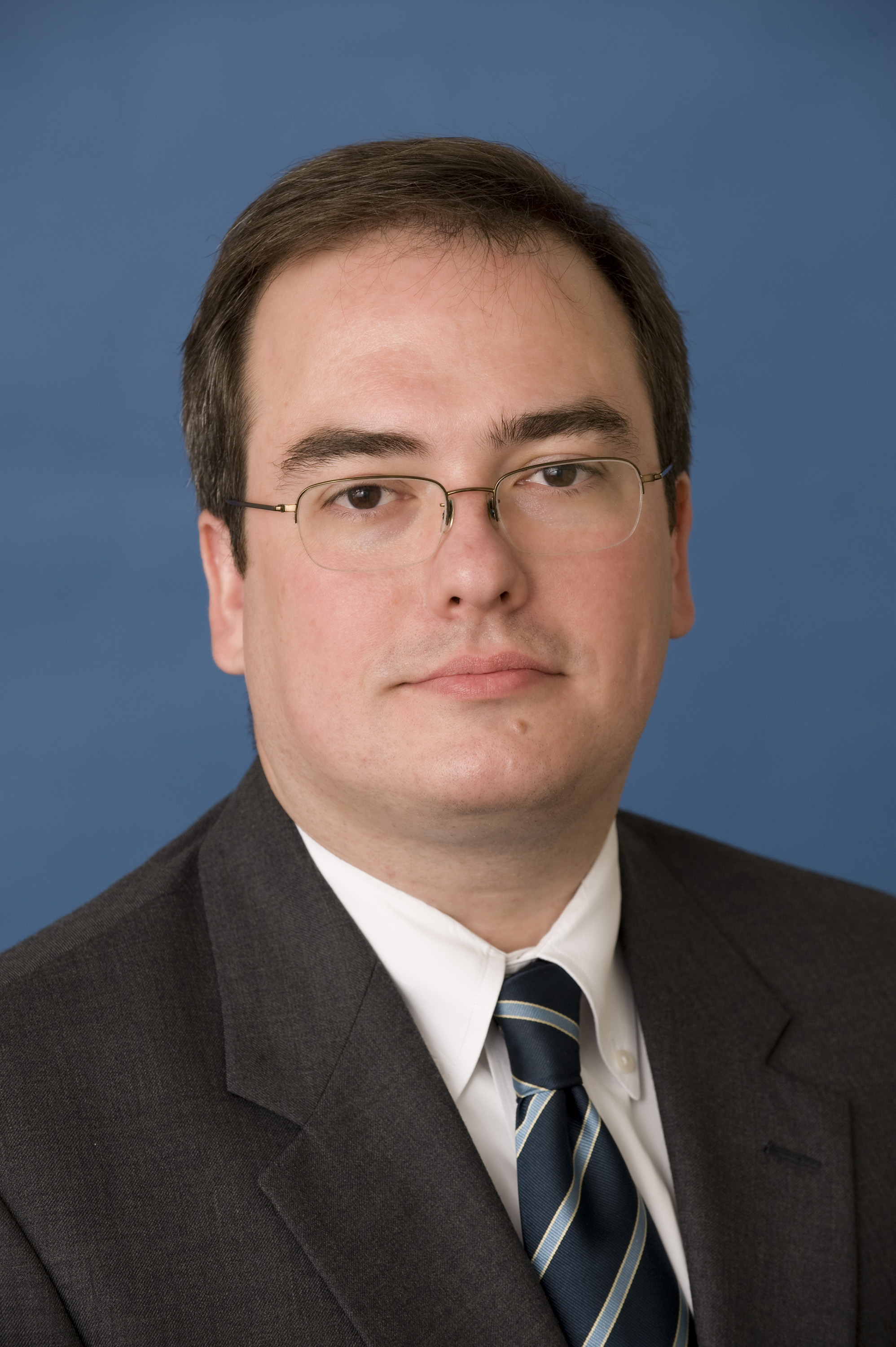
Boucek was an associate in the Carnegie Middle East Program where his research focused on security challenges in the Arabian Peninsula and Northern Africa.
Recent Work
Christopher Boucek

Christopher Boucek, Karim Sadjadpour
Carnegie does not take institutional positions on public policy issues; the views represented herein are those of the author(s) and do not necessarily reflect the views of Carnegie, its staff, or its trustees.

Before the next wave of EU enlargement takes place, the union needs to grapple with thorny questions of how power is distributed among its members.


Emil Sondaj Hansen, Ditte Brasso Sørensen

The new U.S.–Denmark–Greenland agreement will help Washington exert political, economic, and financial dominance under the guise of security. Yet, it acknowledged Copenhagen’s and Nuuk’s sovereignty on the island.

Marc Pierini

A summer of escalation in the Black Sea has hurt Ukraine economically and is exacerbating world food security. A truce is needed—as is a broader reframing of Europe’s Ukraine strategy.

Thomas de Waal

Are Germany’s economic, industrial, and political struggles becoming a liability for the EU’s ability to rise to the geopolitical moment?

Rym Momtaz, ed.

European states control several Overseas Countries and Territories around the world that carry strategic, economic, and environmental weight. As great powers challenge the rules-based order, defending them is a geopolitical imperative for Europe.
Marc Pierini