

Commentary
Maria Lipman
{
  "authors": [
    "Maria Lipman"
  ],
  "type": "legacyinthemedia",
  "centerAffiliationAll": "",
  "centers": [
    "Carnegie Endowment for International Peace",
    "Carnegie Europe",
    "Carnegie Russia Eurasia Center"
  ],
  "collections": [],
  "englishNewsletterAll": "",
  "nonEnglishNewsletterAll": "",
  "primaryCenter": "Carnegie Russia Eurasia Center",
  "programAffiliation": "",
  "programs": [],
  "projects": [],
  "regions": [
    "Caucasus",
    "Russia"
  ],
  "topics": [
    "Political Reform",
    "Economy",
    "Domestic Politics"
  ]
}
Source: Getty
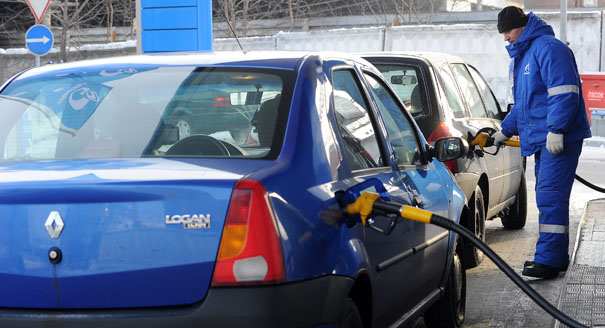
While Russians are increasingly calling for political reforms, the high price of oil allows the Kremlin to increase social spending and avert broad public discontent for a while longer.
Source: Washington Post

For the time being, the Kremlin appears determined to maintain its monopoly on politics and policymaking and an economic model based on the centralized distribution of revenue from Russian resources. But public approval of Prime Minister Vladimir Putin and President Dmitry Medvedev is indeed waning. Putin’s approval rating, which for more than four years had not dropped below 76 percent, is at 69 percent, according to Levada Center polling. Medvedev’s public assessment, closely linked throughout his presidency to his patron’s, has fallen to 66 percent. Levada Center data also indicate that for the first time in several years, the number of Russians who think the country is moving in the wrong direction exceeds the number who believe it is on the right track.
The souring public mood is spurred in part by a growing sense of insecurity as people realize their relative well-being is precarious and by mounting exasperation at social injustice and bureaucratic corruption and impunity. A Levada poll last year found that more than 70 percent of Russians believe civil servants routinely defy the law. Citizens’ contempt for the police has become all but a matter of national consensus.
Public anger and frustration are fairly vocal online and in non-government media outlets. Blogger Aleksey Navalny, a prominent civic activist, is leading a campaign to expose government corruption. Poems making fun of the top leaders have been posted online. The Web is filling with criticism — some thoughtful policy analysis, some plain poison.
Several reports from think tanks and even public statements from officials have pointed out the urgent need for serious political reform. Modernization and sustainable development will be impossible, they argue, unless Russia’s political monopoly and arbitrary rule are replaced by pluralism and the rule of law. Dmitriev and Belanovsky, for instance, cautioned against “lighthearted and dismissive perception of the first alarming signs of emerging political crisis.” The “business as usual approach will not work,” they warn, calling for a dialogue between government and the people.
Dmitriev and Belanovsky may be alarmist. Putin and Medvedev’s approval ratings are still at levels that many world leaders would envy. And the Russian people still show little appetite for political organization or activism. Russians have long accepted the pattern of alienation from politics and do not claim a role in shaping the course of policy. Some critics might perceive citizens’ grumbling as a harbinger of change or political crisis, but for many Russians such complaints are a way to let off steam — while staying away from action. Figures such as Navalny may stir up the blogosphere, but recent polling suggests barely a small percentage of the public follows bloggers.
Still, it would be wrong to dismiss the shift in public complacency. As is its custom, the government has increased social spending ahead of the next election cycle. But the economic slowdown has imposed limits on state spending — and when cutbacks come, the risk of unrest will rise. Civic outrage over government corruption, social injustice and lawlessness may further aggravate economic frustrations; grievances that had been expressed verbally may burst into street protests.
With a system of increasingly inefficient governance and an alienated society, the risk of such tensions is permanent — if hard to assess. To reduce it the government has thrown money at problems and relied on political manipulation. Slowed economic growth and rising public frustration are chipping away at those options.
Thus critics are calling for less governmental control and for policies that would ensure sustainable development and growth. If people’s incomes were not directly tied to the government budget and spending, traditional paternalism would be gradually overcome. That requires a fair business environment, regulated by law and due process, and mechanisms of public accountability preventing, or at least tempering, abuse of office.
Despite the risks of growing discontent, the Russian leadership will hardly listen. Even if leaders are convinced that easing control would foster robust development, their immediate goal is preserving their monopoly on power. In today’s Russia, power and property are tightly entangled. Losing power can be the first step to losing assets — or even freedom.
And with the price of oil once again over $100 per barrel, Putin can maintain a firm grip on power and still avert broad public discontent for a while.
The fates of Hosni Mubarak or Zine el-Abidine Ben Ali, the Egyptian and Tunisian leaders who ruled for decades but waited too long to loosen their regimes, may be a cautionary lesson — but the example of Mikhail Gorbachev may be more apt. Gorbachev chose to ease controls when the Soviet Union was in dire straits. Within a few years he lost his post as well as his country.
Former Scholar in Residence, Society and Regions Program, Editor in Chief, Pro et Contra, Moscow Center
Lipman was the editor in chief of the Pro et Contra journal, published by the Carnegie Moscow Center. She was also the expert of the Carnegie Moscow Center’s Society and Regions Program.
Recent Work
Maria Lipman
Maria Lipman
Carnegie does not take institutional positions on public policy issues; the views represented herein are those of the author(s) and do not necessarily reflect the views of Carnegie, its staff, or its trustees.

The European Commissioner for Trade is headed to China. But after President Xi’s bridge-building visit to Washington, can a more isolated EU overcome Beijing’s stranglehold on critical raw materials? Who will blink first?

Rym Momtaz, ed.

The domestic impacts of how long it is taking to end the war in Ukraine have pushed the French electorate to the political extremes and compromised the country’s diplomatic capacity.
Rym Momtaz

Before the next wave of EU enlargement takes place, the union needs to grapple with thorny questions of how power is distributed among its members.


Emil Sondaj Hansen, Ditte Brasso Sørensen

A summer of escalation in the Black Sea has hurt Ukraine economically and is exacerbating world food security. A truce is needed—as is a broader reframing of Europe’s Ukraine strategy.

Thomas de Waal

European Commission President Ursula von der Leyen is about to give her annual address on the state of the EU. Here’s what she won’t—but should—say.
Rym Momtaz