• Research
  • Strategic Europe
  • About
  • Experts
Carnegie Europe logoCarnegie lettermark logo
EUUkraine
  • Donate
{
  "authors": [
    "Paul Salem"
  ],
  "type": "legacyinthemedia",
  "centerAffiliationAll": "",
  "centers": [
    "Carnegie Endowment for International Peace",
    "Malcolm H. Kerr Carnegie Middle East Center"
  ],
  "collections": [],
  "englishNewsletterAll": "",
  "nonEnglishNewsletterAll": "",
  "primaryCenter": "Malcolm H. Kerr Carnegie Middle East Center",
  "programAffiliation": "",
  "programs": [],
  "projects": [],
  "regions": [
    "Levant"
  ],
  "topics": []
}

Source: Getty

In The Media
Malcolm H. Kerr Carnegie Middle East Center

Tehran Rising: Persian Power in an Unstable Region

Hezbollah is a key ally to Iran and a chief player in Tehran's agenda to expand its influence and advance its interests throughout the Middle East.

Link Copied
By Paul Salem
Published on Apr 13, 2011

Source: America Abroad Media

In May 2008, Hezbollah took up arms to impose a new power-sharing agreement on the Lebanese government. Believing that outside parties were trying to restrain its power, pro-Hezbollah militias took over the capital Beirut. For the first time, the Shiite movement used its weapons not against Israel but against fellow Lebanese. This deadly campaign enabled Hezbollah to gain veto power in a new deal, therefore allowing Syria and Iran to also have asay in Lebanese internal politics, explained Carnegie's Paul Salem to America Abroad Media.
 
“It is in Iran and Syria’s interest to keep supporting Hezbollah as a very effective armed force, using it as a deterrent against any possible Israeli or U.S. attack,” Salem said. In this proxy war, Iran and Syria both have an interest in undermining the work and findings of the Special Tribunal for Lebanon, argued Salem. This international jurisdiction, set up after the assassination of former Prime Minister Rafic Hariri in 2005, is expected to indict senior Hezbollah members. Having already warned that anyone who would want to arrest a member of Hezbollah “would have his hand cut off”, the party managed to topple the government in last January in order to allow a new one to publicly reject the tribunal.
 
“Usually all that Hezbollah needs is to be left alone but this time it felt it needed to gain more influence to actually blunt the tribunal,” Salem concluded.

About the Author

Paul Salem

Senior Fellow at the Middle East Institute

Paul Salem is a senior fellow at the Middle East Institute.

    Recent Work

  • Paper
    Iraq’s Tangled Foreign Interests and Relations

      Paul Salem

  • Article
    Bracing for Impact in Syria

      Paul Salem

Paul Salem
Senior Fellow at the Middle East Institute
Paul Salem
Levant

Carnegie does not take institutional positions on public policy issues; the views represented herein are those of the author(s) and do not necessarily reflect the views of Carnegie, its staff, or its trustees.
More Work from Carnegie Europe

  • Commentary
    Diwan
    Why Turkey’s Syria Policy May Be About to Change

    As municipal elections near, the Erdogan government feels it is facing a dangerous situation that imposes a new military intervention.
      • Francesco Siccardi

      Francesco Siccardi

  • Commentary
    Diwan
    Nagorno-Karabakh: The Broader Implications

    Beyond the tragedy of the Armenians, many countries in the region and internationally have a stake in what happens in the territory.

      Marc Pierini
  • Commentary
    Diwan
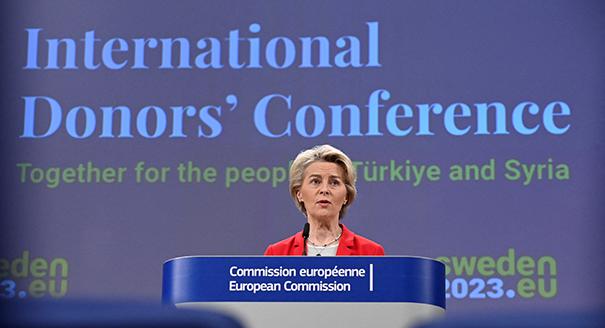
    After the Disaster

    Donors have pledged money to Turkey and Syria after the recent earthquake, but now the hard part begins.

      • Francesco Siccardi

      Marc Pierini, Francesco Siccardi

  • Commentary
    Diwan
    Shaken and Stirred

    The earthquake of February 6 has affected the path of Turkish-Syrian relations in multiple ways.

      • Francesco Siccardi

      Francesco Siccardi

  • Commentary
    Diwan
    After the Cataclysm, Politics

    The impact of the earthquake in Turkey and Syria will continue to be felt in the year to come.

      Marc Pierini

Get more news and analysis from
Carnegie Europe
Carnegie Europe logo, white
Rue du Congrès, 151000 Brussels, Belgium
  • Research
  • Strategic Europe
  • About
  • Experts
  • Projects
  • Events
  • Contact
  • Careers
  • Privacy
  • For Media
  • Gender Equality Plan
Get more news and analysis from
Carnegie Europe
© 2026 Carnegie Endowment for International Peace. All rights reserved.