

Commentary
The European Commissioner for Trade is headed to China. But after President Xi’s bridge-building visit to Washington, can a more isolated EU overcome Beijing’s stranglehold on critical raw materials? Who will blink first?
Rym Momtaz, ed.
{
  "authors": [
    "Ashley J. Tellis",
    "Luis Peral"
  ],
  "type": "other",
  "centerAffiliationAll": "dc",
  "centers": [
    "Carnegie Endowment for International Peace"
  ],
  "collections": [],
  "englishNewsletterAll": "ctw",
  "nonEnglishNewsletterAll": "",
  "primaryCenter": "Carnegie Endowment for International Peace",
  "programAffiliation": "SAP",
  "programs": [
    "South Asia"
  ],
  "projects": [],
  "regions": [
    "South Asia",
    "Afghanistan"
  ],
  "topics": [
    "Political Reform",
    "Democracy",
    "Security",
    "Military",
    "Foreign Policy"
  ]
}
Source: Getty
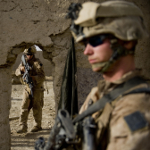
The key to success in Afghanistan lies in transforming what is basically a foreign military operation into a peace building operation led by the Afghan government and the UN and backed by international support, including military support if necessary.
Source: EUISS Joint Report

The priority given by ISAF to doubling the size of the Afghan National Security Forces (ANSF) is misguided and may even jeopardise future democratic progress in Afghanistan, since it represents an extra burden on the country in a likely context of a reduction of international resources. Not only has quality of training and equipment so far been disregarded, but so also has the fundamental concept of civilian police. The international community still needs to confront the issue of a civilian component for the ANSF in its training and long-term practice, as well as the issue of accountability. Military capacity emerging in a vacuum can even threaten democracy. The Afghan state must be able to control its security forces, which in turn requires that national institutions are legitimate, and perceived as such by the population.
While the bulk of international assistance to Afghanistan has been allocated to traditional security schemes, only a marginal amount of effort has been directed to strengthening local governance and institutions. The unbalanced approach of the international community has thus relegated development and governance together with civilian leadership of international action to a secondary role. In these circumstances, ISAF cannot be considered as just a security actor that is leading a strictly security transition, since it has in fact behaved as a political as well as an economic actor. As a consequence, the Afghan government may not survive an imminent withdrawal of ISAF unless the international community offers support also in the political and economic fields.
It may well be that no reconciliation is feasible in Afghanistan unless a profound constitutional and political reform is carried out, including a devolution process by which the government relinquishes some of its concentrated power. However, in spite of it being necessary and urgent, there is no clear vision for a transition in Afghanistan: accountability, mutual confidence and reliance are lacking. Political elites have contributed, with the collaboration or acquiescence of international actors, to rampant corruption in Afghanistan. In order for a transition to be successful, the international community should moreover help overcome the lack of political leadership in Afghanistan. In the socio-economic realm, the lack of job opportunities for up to one million young people, of whom only five percent have access to university education, has indeed become the most important problem for Afghanistan.
Even if corruption is pervasive, the international community should considerably increase assistance channeled through the government. There is no other way for the government to acquire legitimacy, but also there is no other way to hold the government accountable both to Afghans and international donors. It is essential therefore to work intensively on accountability mechanisms, both local and international. At the local level, though, accountability is ultimately dependent on Afghan judicial institutions. No improvements in any other field will be accomplished in the absence of an independent judiciary, which should of course integrate traditional justice mechanisms. Again, support to the judiciary has been neglected for a decade, which will have an impact on many different fields, including jeopardising attempts to attract private sector investments that in turn provide sustainable employment and economic development. Furthermore, there is little hope of upholding human and particularly women’s rights without competent and independent judicial institutions.
Considering also the direct and indirect impact that the scaling down of ISAF will have on the local economy, the viability of the Afghan state ultimately depends on its capacity to generate revenues. Afghanistan’s natural resources, with an estimated value of some three trillion dollars, and the possibilities of boosting its ‘real’ economy remain, however, largely unexplored. New initiatives need to be set up that allow for a sustainable, balanced and non-corrupt exploitation of the country’s plentiful natural resources away from the dangers of the ‘resources curse’, but channeled to the benefit of the Afghan population as a whole. The concept and framework for economic regeneration needs to be articulated by Afghans, aided by support mechanisms from the outside. A note of caution should be sounded here however: exploitation of these mineral resources is not likely to yield benefits during the next five years, a timeframe which is absolutely crucial for the consolidation of the Afghan state.
The regional context is still not conducive towards a political settlement in Afghanistan. Its neighbours seem ready to assert their influence and, as a result, the Afghan civil war could drag on. Pakistan is in this sense central to the counterinsurgency, but the present US strategy is not enhancing the positive role that Pakistan might play in the search for a political solution. The security-oriented operation represents again an obstacle to peacebuilding in the region. The greater involvement of China, not just in economic terms, seems necessary in this connection. Moreover, the central position of Afghanistan in Asia needs to be transformed into a peace factor, with initiatives such as the Regional Economic Cooperation Conference on Afghanistan (RECCA) being substantially supported.
Former Senior Fellow
Ashley J. Tellis was a senior fellow at the Carnegie Endowment for International Peace.
Luis Peral
Carnegie does not take institutional positions on public policy issues; the views represented herein are those of the author(s) and do not necessarily reflect the views of Carnegie, its staff, or its trustees.

The European Commissioner for Trade is headed to China. But after President Xi’s bridge-building visit to Washington, can a more isolated EU overcome Beijing’s stranglehold on critical raw materials? Who will blink first?

Rym Momtaz, ed.

European NATO countries are wrestling with the possibility of U.S. disengagement from the alliance. With the continent’s security increasingly uncertain, governments must restore the credibility of their collective defense.



Hans-Dieter Lucas, Adam Thomson, Pierre Vimont

The domestic impacts of how long it is taking to end the war in Ukraine have pushed the French electorate to the political extremes and compromised the country’s diplomatic capacity.
Rym Momtaz

Before the next wave of EU enlargement takes place, the union needs to grapple with thorny questions of how power is distributed among its members.


Emil Sondaj Hansen, Ditte Brasso Sørensen

The new U.S.–Denmark–Greenland agreement will help Washington exert political, economic, and financial dominance under the guise of security. Yet, it acknowledged Copenhagen’s and Nuuk’s sovereignty on the island.

Marc Pierini