

In The Media
Minxin Pei
{
  "authors": [
    "Minxin Pei"
  ],
  "type": "legacyinthemedia",
  "centerAffiliationAll": "dc",
  "centers": [
    "Carnegie Endowment for International Peace"
  ],
  "collections": [],
  "englishNewsletterAll": "asia",
  "nonEnglishNewsletterAll": "",
  "primaryCenter": "Carnegie Endowment for International Peace",
  "programAffiliation": "AP",
  "programs": [
    "Asia"
  ],
  "projects": [],
  "regions": [
    "East Asia",
    "China",
    "Taiwan"
  ],
  "topics": [
    "Political Reform",
    "Democracy",
    "Security",
    "Military"
  ]
}
Source: Getty
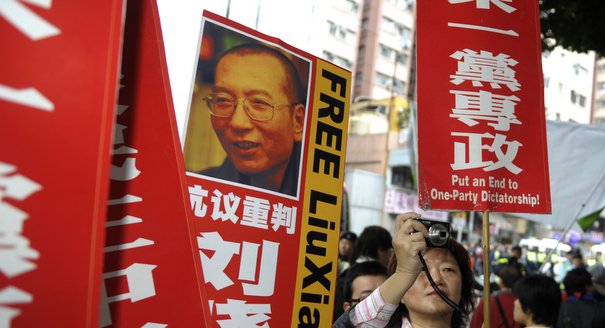
A gradual democratic transition in China would promote a more peaceful Chinese national security policy by enabling greater checks and balances, stronger civil society, and improved civil-military relations.
Source: National Interest

One of the most important changes democratization would bring to China is a new civil-military relationship. This issue has not received adequate attention in discussions about how civilian control of the military influences a country’s external behavior. In the case of China, it is a critical factor. As we all know, at the moment, the Chinese military is under the control of the ruling Chinese Communist Party (CCP). It is not a national army, which would be politically neutral and loyal to the Chinese state not to a particular political party. The mission statement of the People’s Liberation Army is revealing: its top priority is to defend the political monopoly of the CCP. Understandably, the CCP has made it abundantly clear that it will not allow the military to become a national army. If China became democratic, the Chinese armed forces would be much less subject to political manipulation and more loyal to national interests. This fundamental change alone would reduce the likelihood of conflict between China and its neighbors.
A democratic China would also have real political checks and balances. Opposition parties and civil society in a liberal democracy play an important part in constraining the freedom of action of the ruling party in national-security policy. At the moment, the CCP’s national-security policy is completely unchallenged. But that would change if China had well-organized opposition parties and strong nongovernmental organizations that could force the leadership to justify and seek public support for its agenda.
The military establishment itself would be placed under greater scrutiny in a competitive political system as well. Opposition parties and NGOs would raise questions about defense expenditures and force the military to be more transparent regarding its doctrine and capabilities.
Democratic institutions would also make the national-security-policy-making process more open and accessible to different interest groups. As a result, advocates for peace and cooperation would have the ability to rally public opinion and influence policy. Taken together, these institutional checks and balances would make the ruling party and the military more accountable.
No doubt, democratization in China would bring an enormous expansion of press freedoms and would fundamentally change the political dynamics of public discourse on national-security issues. At the moment, the lack of freedom of the press makes it very difficult for the Chinese public to gain a well-informed view of issues critical to the country’s national security. Take the Taiwan question, for example. The mainland’s official press coverage of Taiwan is so distorted that it is impossible for ordinary Chinese people to have a decent understanding of the history of the matter, its complexity and the risks of a military conflict. If China were a liberal democracy, press freedom would allow far more open and objective discussion of foreign-policy issues. Hawkish views would be countered by more moderate voices. Nationalist sentiments would be constrained by more cosmopolitan perspectives. And dangers of an aggressive foreign policy would be readily apparent.
The only caveat about the prospect of a more peaceful democratic China is that the process of democratization within the country could be violent. The research on the connection between democratization and war shows that transitions to democracy are likely to lead to conflict. In the Chinese case, such risks are highest in two ethnic-minority areas, Tibet and Xinjiang. Depending on the transition scenario, a collapse of CCP rule inside China could very likely inspire the hard-core secessionists in these two restive regions to declare independence. Under this scenario, Taiwan could follow suit. Such developments are almost certain to elicit a military response from Beijing, regardless of whether the democrats or the autocrats are in power.
However, should China’s democratic transition unfold in a gradual, managed and peaceful way, these nightmarish scenarios may be avoided. Such a transition is more likely if the CCP takes the initiative to start the democratization process from a position of strength. Unfortunately, at the moment the CCP shows no sign of doing so. That means Washington can do little besides wait to see whether history will vindicate the application of the democratic-peace theory in the Chinese case.
Former Adjunct Senior Associate, Asia Program
Pei is Tom and Margot Pritzker ‘72 Professor of Government and the director of the Keck Center for International and Strategic Studies at Claremont McKenna College.
Recent Work
Minxin Pei
Minxin Pei

The European Commissioner for Trade is headed to China. But after President Xi’s bridge-building visit to Washington, can a more isolated EU overcome Beijing’s stranglehold on critical raw materials? Who will blink first?

Rym Momtaz, ed.

The domestic impacts of how long it is taking to end the war in Ukraine have pushed the French electorate to the political extremes and compromised the country’s diplomatic capacity.
Rym Momtaz

Before the next wave of EU enlargement takes place, the union needs to grapple with thorny questions of how power is distributed among its members.


Emil Sondaj Hansen, Ditte Brasso Sørensen

The new U.S.–Denmark–Greenland agreement will help Washington exert political, economic, and financial dominance under the guise of security. Yet, it acknowledged Copenhagen’s and Nuuk’s sovereignty on the island.

Marc Pierini

A summer of escalation in the Black Sea has hurt Ukraine economically and is exacerbating world food security. A truce is needed—as is a broader reframing of Europe’s Ukraine strategy.

Thomas de Waal