

Paper
Ibrahim Saif, Ahmed Ghoneim
{
  "authors": [
    "Ibrahim Saif"
  ],
  "type": "legacyinthemedia",
  "centerAffiliationAll": "",
  "centers": [
    "Carnegie Endowment for International Peace",
    "Malcolm H. Kerr Carnegie Middle East Center"
  ],
  "collections": [],
  "englishNewsletterAll": "",
  "nonEnglishNewsletterAll": "",
  "primaryCenter": "Malcolm H. Kerr Carnegie Middle East Center",
  "programAffiliation": "",
  "programs": [],
  "projects": [],
  "regions": [
    "Egypt",
    "Gulf",
    "Levant",
    "Maghreb"
  ],
  "topics": [
    "Economy"
  ]
}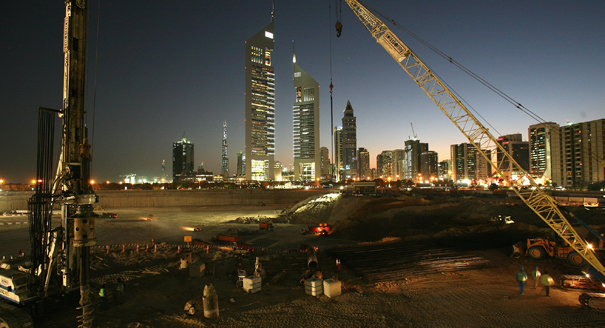
Source: Getty
Arab countries need to understand how the state can preserve its role as the main service provider and legislative authority while allowing small and big businesses to work together, developing the productive base and agricultural sectors, and improving productivity and exports.
Source: Al-Hayat

It is true that many Arab countries succeeded in developing their infrastructure and an appropriate legislative environment during the early development efforts of the 1960s and 1970s. This period also witnessed the development of education and health care systems, which constituted a major achievement at the time, considering that these countries started with almost nothing. Investments and planning produced positive changes on the ground, but after this initial founding phase, qualitative progress became a challenge.
Maintaining this infrastructure required financial resources that were sometimes scarce, and the complexity of the necessary processes required more than good intentions. These two factors highlighted the need for institutions and laws to help regulate quality control, as well as serious research into how to achieve development and compete with the major world powers. For many reasons, none of this came about, perhaps foremost among them that regulatory bodies were weak, and the political leadership's priorities changed from what they had been during the earlier period of accelerated development.This change was also connected to the internal distribution of economic resources within certain Arab countries. Rather than allocating these resources in a way that would diversify the economy, strengthen its competitive position, and promote research and development, they went into state security apparatuses. Many investments were derailed in the name of national security, to the point that even opening a small workshop in a country like Egypt required security clearance. Given the hegemony of the security bodies in some Arab countries, independent businessmen avoided starting new initiatives in which the security authorities would always take a share, and so energy was routed away from activities that would help the country move up the economic ladder.
As a result, the private sector was pushed to secure a close relationship with politicians, and development and manufacturing policies in many Arab countries are now hostage to a reality from which it is difficult to escape. This reality is presided over by a mixed of businessmen and security authorities who are not interested in diversifying the economy as much as they are in making a quick profit, which is not invested locally but rather smuggled outside the country.
The term "vulture capitalism" became increasingly apt, as these so-called investors became a burden on the economy rather than leading the search for new economic prospects. A situation emerged whereby neither the public nor the private sector was interested in diversifying the economy, creating jobs in new sectors, or even adapting to the latest developments in the global economy, such as outsourcing or emerging sectors for value-added products around the world.
This imbalance was compounded by the weakness of local development institutions, which were mostly facades and utterly incapable of implementing their visions for improvement. Governments’ roles became limited that of rentier, and rather than consulting international organizations on how they might change the status quo, they sought advice on how to maintain it. They rarely focused on the institutional dimension of their problems, and thus their so-called economic reform programs focused on budget deficits, the balance of payments, and the quickest ways to privatize state institutions. This weakness in the legislative structure, combined with the presence of a small group of all-powerful businessmen, resulted in an economy characterized by the transition of state assets into private hands. After twenty years of reform, the structure and composition of these economies has not changed.
The Arab Spring presents an opportunity not only for political reform, but also to reconsider the wisdom of economic policies that prioritize agriculture and manufacturing. We might ask, for example, where are we vis-à-vis the technology industry? How do we compare to industries based on advanced research in countries like South Korea and Malaysia? Arab countries should not rush ahead, but rather monitor variables on a micro level and understand how the state can preserve its role as the main service provider and legislative authority while allowing small and big businesses to work together, developing the productive base and agricultural sectors, and improving productivity and exports. This should all be done according to a transparent reform program with clear deadlines. There are many challenges ahead, but taking these steps would succeed in breaking many Arab countries out of the middle-income bracket in which they now find themselves.

Former Senior Associate, Middle East Center
Saif is an economist specializing in the political economy of the Middle East. His research focuses on international trade and structural adjustment programs in developing countries, with emphasis on Jordan and the Middle East.
Recent Work
Ibrahim Saif, Ahmed Ghoneim
Ibrahim Saif, Muhammad Abu Rumman

With its public finances in shambles, the far right polling at 35 percent ahead of the 2027 presidential election, and a growing protest movement, is France’s crisis a threat to the EU’s geopolitical awakening?

Rym Momtaz, ed.

The European Commissioner for Trade is headed to China. But after President Xi’s bridge-building visit to Washington, can a more isolated EU overcome Beijing’s stranglehold on critical raw materials? Who will blink first?
Rym Momtaz, ed.

The domestic impacts of how long it is taking to end the war in Ukraine have pushed the French electorate to the political extremes and compromised the country’s diplomatic capacity.
Rym Momtaz

A summer of escalation in the Black Sea has hurt Ukraine economically and is exacerbating world food security. A truce is needed—as is a broader reframing of Europe’s Ukraine strategy.

Thomas de Waal
When the U.S.-Iran memorandum of understanding was announced, the UK, France, Germany, and Italy declared their readiness to help demine the Strait of Hormuz and lift nuclear sanctions on Tehran. But does Europe need new tools to recover a diplomatic role?
Rym Momtaz, ed.