

Commentary
Are Germany’s economic, industrial, and political struggles becoming a liability for the EU’s ability to rise to the geopolitical moment?
Rym Momtaz, ed.
{
  "authors": [
    "Lizza Bomassi"
  ],
  "type": "legacyinthemedia",
  "centerAffiliationAll": "",
  "centers": [
    "Carnegie Endowment for International Peace",
    "Carnegie Europe"
  ],
  "collections": [],
  "englishNewsletterAll": "",
  "nonEnglishNewsletterAll": "",
  "primaryCenter": "Carnegie Europe",
  "programAffiliation": "",
  "programs": [],
  "projects": [],
  "regions": [
    "Asia",
    "Europe"
  ],
  "topics": [
    "Foreign Policy"
  ]
}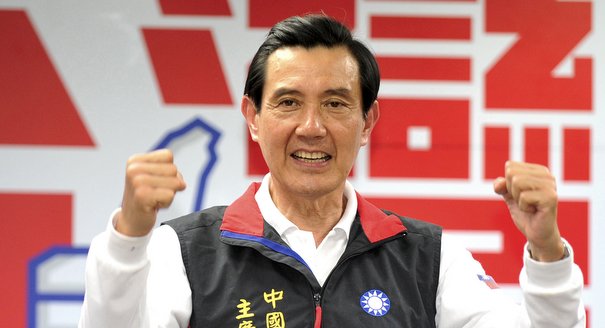
Source: Getty
Sources of inspiration are becoming increasingly difficult to come by in Europe’s current age of austerity, but there are some things that Europe can learn from Taiwan.
Source: European Voice

From ‘what does China think?' to ‘what will China do?' and ‘how can we influence them?', walking the Chinese walk and talking the Chinese talk is very much in vogue these days on both sides of the Atlantic. But across a strait from China lies a smaller, more unassuming player – the Republic of China (Taiwan) – that could also share a lesson or two with its European counterparts.
What could this small island possibly have to offer to the broader international community? It is certainly not a major international player, nor does it ultimately have a grand stake in global security or European affairs. Indeed, it is so far from anything that Europe could fathom in terms of foreign and security policy that one would be hard pressed to find a reason why anyone on this side of the Indian Ocean should give a hoot about the fate of 23 million Taiwanese.
But there are important reasons to care and to better understand the Taiwan narrative because, believe it or not, there are some things that Europe can learn from Taiwan.
Strategic thinking
First is strategy. There are few countries where you would find such a deep-rooted permeation of common strategic thinking across wide segments of society. The current administration has managed to leverage this so well that it encourages a cohesive sense of self-identity (‘we are Taiwanese') and common purpose (‘maintain the status quo') in such a pragmatic way (‘no independence, no unification, no use of force') that it is somewhat moving.
Granted, the circumstances are unique – what other territory can claim to have 1,500 missiles aimed directly at its people at any given time by a country that so completely dwarfs it both territorially and demographically? But there are certainly parallels that can be drawn with Europe's own experiences, especially post-Second World War, when the common purpose was to rebuild and there was a collective sense of shared determination to overcome.
Time and loss of institutional memory have somewhat ravaged that mood but if the current wave of frustration over the economic crisis is anything to go by, then Europeans must rediscover their broader collective sense of self. Separation and leaving the weakest behind cannot, and should not, be an option.
Second is economics. Taiwan is about the size of Belgium and has, over time, found itself increasingly isolated diplomatically from all but a handful of nations. Despite this, it has managed to rise from being one of Asia's poorest countries in the 1950s to one of its richest today. In many ways, Taiwan rendered itself the indispensible little genie in the lamp in terms of access and provision for the hi-tech industry. What can Europe learn from this? Hardship is often the impetus for innovation and that, if necessity is the mother of invention, invention needs to be nurtured. This is something the European business sector, especially the more entrepreneurial European small and medium enterprises (SME), has understood well.
Asia is, and will continue to be, a key market for European goods and services, and rightly so as this is where the most ground can be gained for advancing Europe's economic ambitions. Yet many of these same SMEs begrudge the fact that they get little, if any, help at the European level to navigate the east Asian economic terrain. Too much infighting and a mish-mash of competing priorities buoyed by national self-interest weaken Europe's ambitions for economic and commercial savviness.
Third is values. Taiwan's model of democracy is considered by many to be a potential pathfinder for China. Social change is coming to China. How and when that change will manifest itself is anyone's guess, but it will come. And how the Communist Party will deal with it remains to be seen. It is unlikely that a violent crackdown like the one we saw in Tiananmen Square will be repeated.
The international ramifications for China's slowly rebuilding reputation would be too much to bear even for the relatively untouchable Communist Party. On this, Europe is in a bit of a bind vis-à-vis the Chinese. On the one hand, Europeans are slowly becoming more reliant on Chinese bail-out money – do not bite the hand that feeds you. On the other, Europe must maintain its soft-power credit, even if only on the surface.
The rest of the world is watching and the concessions made on those universal values have already boomeranged in Europe's own backyard. If Europe is going to negotiate with the Chinese in terms that it can understand, it cannot concede its hopes and ideals for universal human rights. Not least of all because Europe must maintain consistency in its relationship with the Chinese. Backing down on these core values would send a message that could be perceived as weakness and, more seriously, as willingness to compromise on ideals long cherished.
On these three fronts, there is much that Europe can learn from the tiny island of Taiwan. But even though it has done everything right – implementing the correct land reforms, liberalising the economy, and democratising the political system – Taiwan still remains the unpalatable taboo of many at a diplomatic dinner party. Ironically for Europe, perhaps, a healthy dose of diplomatic isolation might be the very remedy the old continent needs to understand once and for all that it must get its own house in order and solve its own problems.
Lizza Bomassi is the deputy director of Carnegie Europe.

Lizza Bomassi
Former Deputy Directory, Carnegie Europe
Lizza Bomassi was the deputy director of Carnegie Europe.
Carnegie does not take institutional positions on public policy issues; the views represented herein are those of the author(s) and do not necessarily reflect the views of Carnegie, its staff, or its trustees.

Are Germany’s economic, industrial, and political struggles becoming a liability for the EU’s ability to rise to the geopolitical moment?

Rym Momtaz, ed.

European Commission President Ursula von der Leyen is about to give her annual address on the state of the EU. Here’s what she won’t—but should—say.
Rym Momtaz

Radical-right parties are expected to do well in upcoming elections in four of the EU's biggest member states. If successful, they could prevent the union from addressing key challenges ahead.

Stefan Lehne

The aftermath of the Ceuta crisis shows Europe has drawn the wrong lessons. Rather than doubling down on failed migration policies, the EU needs to address the underlying roots of such episodes.

Richard Youngs

An overwhelming victory by a far-right-wing party in a small state in eastern Germany will have major repercussions for Chancellor Friedrich Merz’s coalition.

Judy Dempsey