

Commentary
A summer of escalation in the Black Sea has hurt Ukraine economically and is exacerbating world food security. A truce is needed—as is a broader reframing of Europe’s Ukraine strategy.
Thomas de Waal
{
  "authors": [
    "Mykola Siruk",
    "Lilia Shevtsova"
  ],
  "type": "legacyinthemedia",
  "centerAffiliationAll": "",
  "centers": [
    "Carnegie Endowment for International Peace",
    "Carnegie Russia Eurasia Center"
  ],
  "collections": [],
  "englishNewsletterAll": "",
  "nonEnglishNewsletterAll": "",
  "primaryCenter": "Carnegie Russia Eurasia Center",
  "programAffiliation": "",
  "programs": [],
  "projects": [],
  "regions": [
    "North America",
    "United States",
    "Caucasus",
    "Russia",
    "Western Europe"
  ],
  "topics": [
    "Political Reform",
    "Domestic Politics",
    "Foreign Policy"
  ]
}
Source: Getty
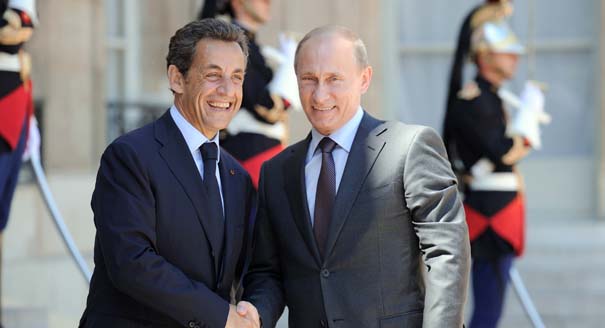
It will be increasingly difficult for EU leaders and bureaucrats to continue supporting Vladimir Putin, with the European public opinion growing worried over the situation in Russia and critical of the policy of “pragmatic realism.”
Source: Day

“I took part, together with Russian human rights activists and liberal public figures, in the conference “Helsinki 2.0: for Democracy and Rule of Law in Russia.” On the Western part, the conference was attended by members of the European Parliament’s Alliance of Liberals and Democrats for Europe, executive power representatives from a number of European countries, and Western experts. In a memorandum, the conference urged the EU not to recognize the upcoming Russian elections legitimate, not to ratify the powers of a new Russian parliamentary delegation in the European Parliament, discontinue close partnership with the Kremlin, and link the future EU-Russia agreement to the way the Russian government is fulfilling the commitments it Sundertook while joining the Council of Europe.
“Naturally, these calls sound idealistic. Who will believe that the governments of, say, Germany and France, which are actively pursuing their own version of Realpolitik, will suddenly begin to pound their fists on the table and call on Putin to respect human right in Russia? Merkel, Sarkozy, and their successors will be hardly prepared to stir up the Kremlin’s resentment. Moreover, in the situation of a European crisis, they do not need any aggravation of relations with Kremlin ‘guys.’ But, in addition to the executive power, Europe also has active political life and powerful public opinion. The increasingly harsh criticism of Russia’s authoritarian regime by European liberal democrats and ‘Greens’ shows that European public opinion is more and more worried over the situation in Russia.
“It is also important that the Western community is more and more critical of the ‘pragmatic realism’ of the current ruling teams that have led Europe into a deadlock. In this new context, pressure on Russia may become one of the elements of a new awakening for Europe.
“As is known, the Western world rode out the 1970s crisis by activating the value-related dimension of politics, which was mirrored in the ten Helsinki Accords and their ‘third basket.’
“Naturally, we should not hope that the EU will immediately take the ‘Helsinki 2’ demands as a goal to be achieved.
“The European bureaucracy is sluggish and not at all idealistically minded. Yet it will be increasingly difficult for European leaders and bureaucrats to ignore the new societal vector and continue the policy of hugging Putin. This is not only becoming indecent – this is tarnishing reputation and may result in electoral losses.
“So the period of hugs between Europe and the Kremlin is drawing to a close. Incidentally, one of the harshest critics of the violation of democracy in Russia at the conference was Marcus Loening, the German Federal Government Commissioner for Human Rights Policy and Humanitarian Aid. He could hardly have taken this stand without a go-ahead from his go-vernment.”
“Today, the rapprochement between Russia and Germany will no longer provide an impetus to the dramatic events that can resemble the last century’s drama – first of all, because Germany has cleansed itself of totalitarianism.
“But resentment about the ‘Schroederization’ of German policies towards Russia is easy to understand. It is about the Berlin-Kremlin deal: mutually beneficial business in exchange for dropping the value-based approach. Former Chancellor Schroeder was once the architect of this deal on the German part. Chancellor Merkel is continuing the Schroeder deal policy. In essence, Europe’s leading country is now a factor that legitimizes Russian autocracy and is creating a medium to keep it alive. Of course, the attitude of united Europe’s less influential members is a foregone conclusion. It sometimes seems to me that the ‘Schroederization’ of German policies towards Russia is based not only on business interests but also on the feeling of guilt for invading the USSR in 1941, which is still deep-seated in many and does not allow them to take a more critical look at the Kremlin’s behavior.
“The German-Russian ‘energy dialogue’ is the most important element of their agreement. But let us also note another thing: Berlin is looking for ways to get rid of energy dependence on Russia.
“As for the attitude of Poland to Russia, we can see today Warsaw’s aspiration to avoid erstwhile harsh accents. It is also sort of a sow of ‘realism’ – this time in Polish policies. How long the current ‘springtime’ in the relations between Moscow and Warsaw will last also depends on the events in Russia itself and on the way the European foreign-policy vector will be shaped.”
“We in Russia are taking with a big pinch of salt what the current President Medvedev is saying. Of course, what he is saying has very little to do with reality. Still, his chats can sometimes open the door to ‘the Kremlin kitchen.’ And what we can see there may shock an uninitiated observer.
“What Medvedev said about the Russian-Georgian war in fact obliterates all the lengthy and voluble Russian propaganda which was supposed to justify Russia’s behavior in 2008 and annexation of Georgian territories. Medvedev in fact admitted: ‘We regarded the Georgia war as a rebuff to NATO and the US.’ And all these threats to deploy Iskander missiles as a response to the Americans confirm just one fact: the Kremlin is looking on the West and, first of all, the US as an opponent and enemy. The West continues to be a hostile civilization for the Russian ruling team. As a matter of fact, very little has changed since the Cold War times if we mean the civilizational dimension. And these accidental revelations of Medvedev only confirm the frailty of the ‘resetting’ which is so much talked-of in the West and admired in Washington.”
“Yes, I have just come back from Washington, where my co-author, Andrew Wood, British ambassador to Moscow, and I launched our book Change or Decay. My impression is that US political circles are aware that the ‘resetting’ is fizzling out after solving some tactical problems. The administration is trying to lay the groundwork for ‘Resetting 2’ – without too much success.
“The mantra about the ‘common interests’ of America and Russia can no longer deceive anybody: there are very few interests of this kind, and what we considered ‘common interests is in fact just a form of concealing what disunites us. Look: Moscow and Washington are taking different approaches to such issues as antimissile defense, European security, Libya, Syria, international terrorism, and the policy towards the new independent states.
“In other words, the US administration is busy today creating a semblance of a successful ‘resetting,’ for it in fact has no other successes in the foreign policy. In their turn, the Republicans are trying to turn the relations with Russia and a weak ‘resetting’ to their own political advantage.
“Yet there also is a certain point that may be decisive for the West’s policy towards Russia. I mean the ‘Magnitsky list.’ If senators manage to pass a law that calls for sanctions against the people implicated in the death of Magnitsky, this will be not only a precedent in the US but also serious grounds for a tougher Western attitude to the Kremlin and the Russian elite.
“As for delaying the approval of Michael McFaul as new US ambassador to Russia, it is so far connected with the domestic struggle and the attempts of a number of Congressmen to swap the approval of McFaul for gaining certain be-nefits for their states. In other words, there is no real danger so far for McFaul’s candidature being blocked. He is a hostage to Washington’s political intrigues which are sometimes unpredictable.
“But, on the whole, Russia is not a major factor in the course of the US election campaign. Still, the Democrats will have to somewhat increase the value-based element in their assessment of Russian reality. It is a forced election-campaign move so far. I do not think Barack Obama will opt for emphasizing the value-based dimension in his foreign policy. But I would like so much to be mistaken in this case.”
Mykola Siruk
Former Senior Associate, Russian Domestic Politics and Political Institutions Program, Moscow Center
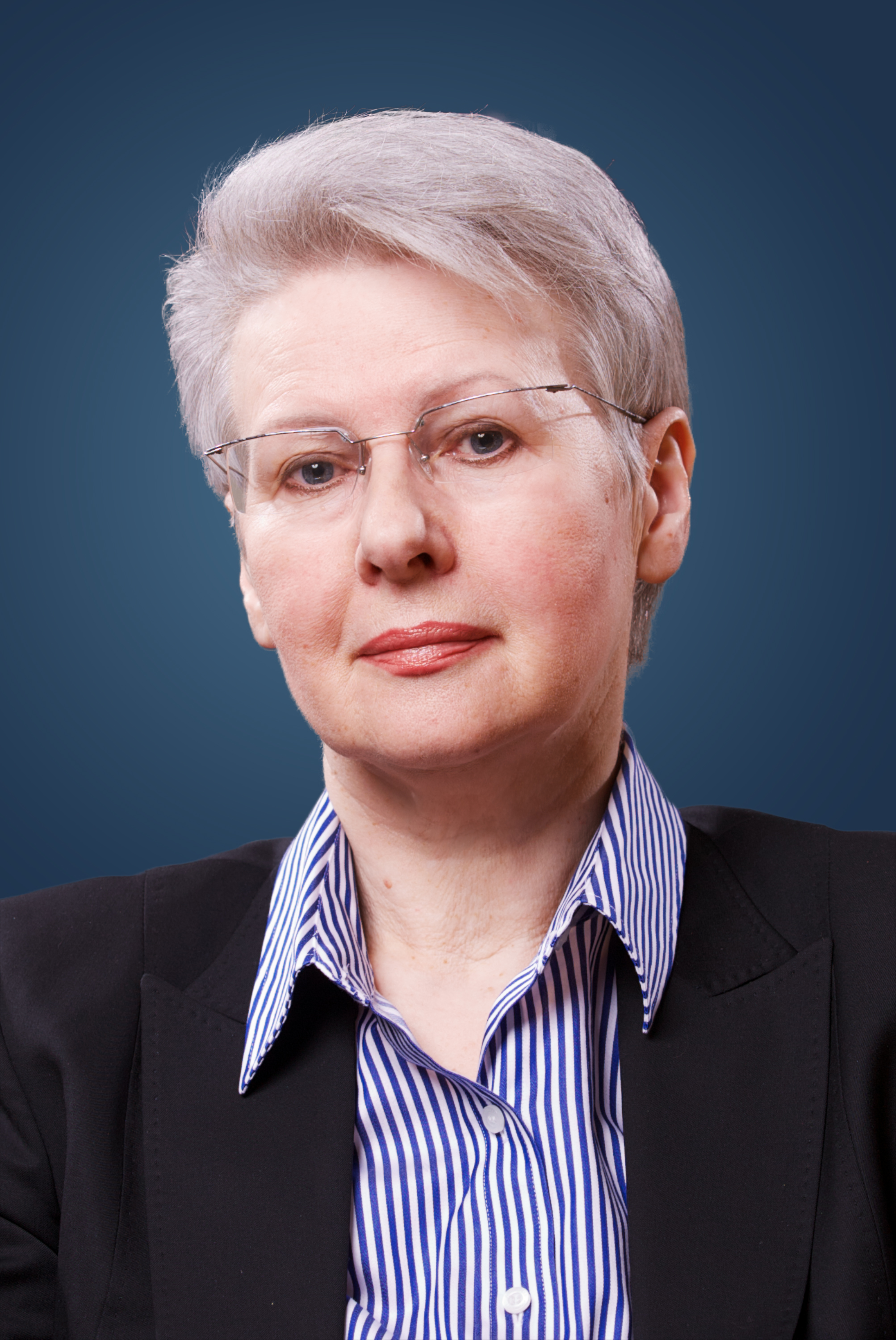
Shevtsova chaired the Russian Domestic Politics and Political Institutions Program at the Carnegie Moscow Center, dividing her time between Carnegie’s offices in Washington, DC, and Moscow. She had been with Carnegie since 1995.
Carnegie does not take institutional positions on public policy issues; the views represented herein are those of the author(s) and do not necessarily reflect the views of Carnegie, its staff, or its trustees.

A summer of escalation in the Black Sea has hurt Ukraine economically and is exacerbating world food security. A truce is needed—as is a broader reframing of Europe’s Ukraine strategy.

Thomas de Waal

Are Germany’s economic, industrial, and political struggles becoming a liability for the EU’s ability to rise to the geopolitical moment?

Rym Momtaz, ed.

European Commission President Ursula von der Leyen is about to give her annual address on the state of the EU. Here’s what she won’t—but should—say.
Rym Momtaz

Radical-right parties are expected to do well in upcoming elections in four of the EU's biggest member states. If successful, they could prevent the union from addressing key challenges ahead.

Stefan Lehne

The aftermath of the Ceuta crisis shows Europe has drawn the wrong lessons. Rather than doubling down on failed migration policies, the EU needs to address the underlying roots of such episodes.

Richard Youngs