

Paper
Paul Salem
{
  "authors": [
    "Paul Salem"
  ],
  "type": "legacyinthemedia",
  "centerAffiliationAll": "",
  "centers": [
    "Carnegie Endowment for International Peace",
    "Malcolm H. Kerr Carnegie Middle East Center"
  ],
  "collections": [
    "Arab Awakening"
  ],
  "englishNewsletterAll": "",
  "nonEnglishNewsletterAll": "",
  "primaryCenter": "Malcolm H. Kerr Carnegie Middle East Center",
  "programAffiliation": "",
  "programs": [],
  "projects": [],
  "regions": [
    "Egypt",
    "Levant",
    "Maghreb",
    "Syria",
    "Tunisia",
    "Libya",
    "Middle East",
    "North Africa"
  ],
  "topics": [
    "Political Reform",
    "Democracy"
  ]
}
Source: Getty
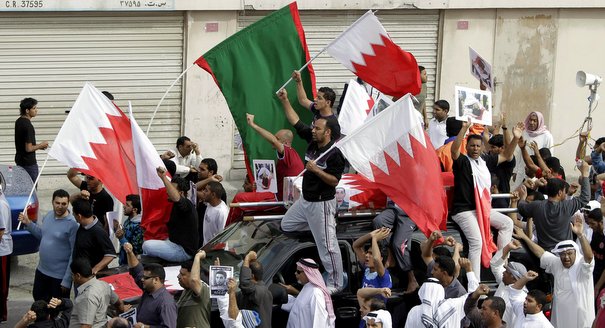
The current uprisings taking place across the Middle East and North Africa are interconnected; the success or failure of one country’s democratic transition could have a direct impact on the prospects for transition in another.
Source: National

The successful elections in Tunisia should have a positive effect on the upcoming elections in Egypt; the success or failure of transition in Libya will affect calculations toward Syria and Yemen; and the negotiation for a managed transition in Yemen or Syria could also have effects elsewhere. The fast-moving seasons of the Arab uprisings show that events in the Arab world are deeply interconnected.
The elections in Tunisia are of great significance. They are the first scene of the second act of the Arab Spring, which is moving from popular revolutions to organising democratic elections. The successful management of Tunisia's elections is a major achievement that Egypt and other countries can learn from.
In terms of political content, the elections confirmed two new realities.
First, political pluralism is a clear part of the new landscape. While the Islamist Ennahda party got 41 per cent of the vote, 59 per cent went to other parties, including secularists, nationalists, leftists, other Islamists and others. This pluralism will likely be echoed in the Egyptian elections and sends a strong signal to political leaders and parties in Libya, Syria, Yemen and elsewhere.
Second, moderate Islamists are the major players in the new political space. It is important that the leaders of the Ennahda party stated their preference for governing by coalition and for political moderation. Ennahda leader Rachid Ghannouchi has said clearly that Turkey's ruling Justice and Development Party (AKP) is his party's model.
This clarity is important for Tunisia and should also send strong messages to the Muslim Brotherhood of Egypt, who have a generally positive view of the AKP experience but have clashed with Turkey's Prime Minister Recep Tayyip Erdogan on his definition of a secular state.
Many in the region and around the world are also watching the Libyan transition closely and linking it to events in Syria and Yemen. If Libya manages to maintain unity, restore security and successfully achieve a transition to effective and democratic government, this will encourage those who argue that revolution - and foreign military intervention - can have a positive outcome even in countries with precarious national unity and weak state institutions.
In particular, Russia and China are closely following Libya. If the country succeeds the Chinese and Russians lose some credibility in their argument against intervention and revolution in Syria; if it stumbles, they will be vindicated in their warnings to the international community that Syria (and Yemen) is not like Tunisia and Egypt, and that in some countries regime survival is the lesser of two evils.
Consistent with the interconnectedness of the Arab Spring, the fate of the proposed negotiated settlements in Yemen and Syria might have a significant effect on one another.
So far, the Syrian regime sees only two models: countries in which the uprisings were crushed (Iran in 2009, for example); and countries where the uprisings succeeded and led to the imprisonment, flight or death of the autocratic ruler (Egypt, Tunisia and Libya, respectively).
There has yet to be a country with a successful negotiated political outcome.
Yemeni President Ali Abdullah Saleh has so far refused to sign the deal proposed by the Gulf Cooperation Council. There are heavy doubts about the Syrian government's commitment to the deal agreed to with the Arab League (the League has already suspended Syria, and set a deadline of early this morning for Damascus to end its bloody crackdown). If either Yemen or Syria actually implements a negotiated agreement, it will put significant pressure on the other country to respond in a similar fashion.
As the Arab Spring enters its 11th month, developments continue to be highly interconnected. This perhaps should not be surprising. Democratisation in other parts of the world also happened in sudden regional waves: Central and Eastern Europe after the fall of the Berlin Wall; Latin America in the 1970s and 80s; and Western Europe after the Second World War. Societies and political systems do not develop in a vacuum, and events in one country have a strong demonstration effect in another.
The regional and international community needs to focus intensely on helping the first transitions succeed to ensure that others follow along a positive path. Many revolutions in the past have collapsed into a renewal of dictatorship or spiralled into civil war. There is nothing guaranteed about transitions to democracy. We need to build success one firm step at a time.
Senior Fellow at the Middle East Institute
Paul Salem is a senior fellow at the Middle East Institute.
Recent Work
Paul Salem
Paul Salem
Carnegie does not take institutional positions on public policy issues; the views represented herein are those of the author(s) and do not necessarily reflect the views of Carnegie, its staff, or its trustees.

Radical-right parties are expected to do well in upcoming elections in four of the EU's biggest member states. If successful, they could prevent the union from addressing key challenges ahead.

Stefan Lehne

An overwhelming victory by a far-right-wing party in a small state in eastern Germany will have major repercussions for Chancellor Friedrich Merz’s coalition.

Judy Dempsey

In supporting Europe’s far-right, MAGA and Russia both want the same thing: a weaker EU. Europe must defend itself without abandoning the openness these forces exploit.

Armida van Rij

The hybrid warfare landscape is evolving rapidly, leaving policymakers without clear strategies. To better inform their work in addressing emerging challenges, governments must dig deeper into the underlying dynamics at play.


Raluca Csernatoni, Alicia Wanless

As the EU confronts profound challenges, several leaders have called for fundamental reform to the union’s model—but only modest, superficial changes have resulted. What if Europe really could be reimagined from zero today: What should such a redesigned European order look like?

Richard Youngs, ed.