

Commentary
Yukon Huang, Isaac B. Kardon, Matt Sheehan
{
  "authors": [
    "Yukon Huang"
  ],
  "type": "legacyinthemedia",
  "centerAffiliationAll": "dc",
  "centers": [
    "Carnegie Endowment for International Peace",
    "Carnegie China"
  ],
  "collections": [],
  "englishNewsletterAll": "asia",
  "nonEnglishNewsletterAll": "",
  "primaryCenter": "Carnegie China",
  "programAffiliation": "AP",
  "programs": [
    "Asia"
  ],
  "projects": [],
  "regions": [
    "East Asia",
    "China"
  ],
  "topics": [
    "Political Reform",
    "Economy",
    "Domestic Politics"
  ]
}
Source: Getty
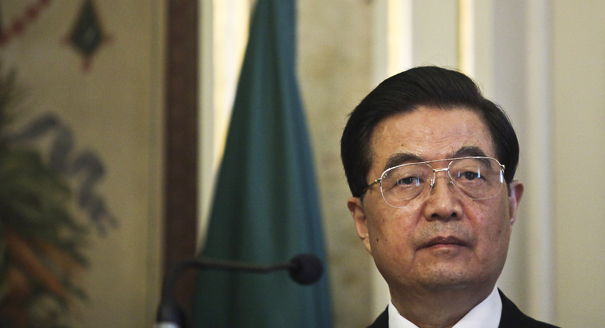
As China’s leaders seek to preserve stability in 2012, they face a host of challenges, including reduced economic flexibility, increasing social, unrest, widening income disparities, and escalating external tensions.
Source: Financial Times

In truth, slower growth of around 8 per cent could be better for China and the world. More environmentally sustainable and equitable outcomes would ease popular concerns and higher consumption would improve global trade tensions.
But many foresee an economic collapse, arguing that a prolonged eurozone crisis coupled with a property bubble could render vast swaths of industry unprofitable. This would reveal hidden financial vulnerabilities and feed a downward spiral. Others believe that Beijing has ample resources to avoid a crisis, but argue that with a growth model based on infrastructure and land sales, and with exchange and interest rates rigidly controlled, it may not have all the necessary tools at its disposal.
Domestically, an increasingly active middle class is generating pressure for more accountable governance. Mounting inequalities have nurtured a sense of injustice, 200m migrant workers remain second class citizens and corruption is worsening. Tackling these problems is urgent, but China’s economic successes have fostered an unwarranted self-confidence. Instead, motivated by the Arab Spring, the system has moved aggressively to contain any social discontent that might spark more politically sensitive movements.
China’s economic prowess is also seen by outsiders as having stimulated nationalism in a generation removed from the Cultural Revolution. Beijing’s belligerent responses to overlapping maritime claims have heightened worries about its security objectives in a region already wary of its economic clout. This is one factor in Japan’s decision to relax its ban on weapons exports; to China’s dismay, it has also driven its neighbours to support a stronger US presence in Asia and complicated regional trade integration initiatives.
The potential for conflict will force China and the US to redefine their respective roles in a shifting environment that neither is comfortable with. Tensions will be further aggravated by anti-China trade sentiments during the American elections. Asian countries are in a position to delineate the boundaries of influence for these two powers but, given their varied interests, alliances will shift depending on individual concerns.
China must walk a very narrow line at a time when its outgoing leadership is reluctant to take any far-sighted decisions.

Senior Fellow, Asia Program
Huang is a senior fellow in the Carnegie Asia Program where his research focuses on China’s economy and its regional and global impact.
Recent Work

Yukon Huang, Isaac B. Kardon, Matt Sheehan
Yukon Huang, Genevieve Slosberg
Carnegie does not take institutional positions on public policy issues; the views represented herein are those of the author(s) and do not necessarily reflect the views of Carnegie, its staff, or its trustees.
In supporting Europe’s far-right, MAGA and Russia both want the same thing: a weaker EU. Europe must defend itself without abandoning the openness these forces exploit.

Armida van Rij

The hybrid warfare landscape is evolving rapidly, leaving policymakers without clear strategies. To better inform their work in addressing emerging challenges, governments must dig deeper into the underlying dynamics at play.


Raluca Csernatoni, Alicia Wanless

As the EU confronts profound challenges, several leaders have called for fundamental reform to the union’s model—but only modest, superficial changes have resulted. What if Europe really could be reimagined from zero today: What should such a redesigned European order look like?

Richard Youngs, ed.
As geopolitical rivalry weaponizes global supply chains, the EU’s true vulnerability lies in emerging-risk imports. For these goods, suppliers are growing more concentrated, substitution more difficult, and political risk is looming.

Sinan Ülgen

The EU is putting together a new security strategy to meet today’s myriad challenges. But for any proposal to be effective, the union needs to grapple with its identity and ambitions.

Pierre Vimont