

Commentary
Yukon Huang, Isaac B. Kardon, Matt Sheehan
{
  "authors": [
    "Yukon Huang"
  ],
  "type": "legacyinthemedia",
  "centerAffiliationAll": "dc",
  "centers": [
    "Carnegie Endowment for International Peace",
    "Carnegie China"
  ],
  "collections": [],
  "englishNewsletterAll": "asia",
  "nonEnglishNewsletterAll": "",
  "primaryCenter": "Carnegie China",
  "programAffiliation": "AP",
  "programs": [
    "Asia"
  ],
  "projects": [],
  "regions": [
    "North America",
    "United States",
    "East Asia",
    "China"
  ],
  "topics": [
    "Economy",
    "Trade",
    "Foreign Policy"
  ]
}
Source: Getty
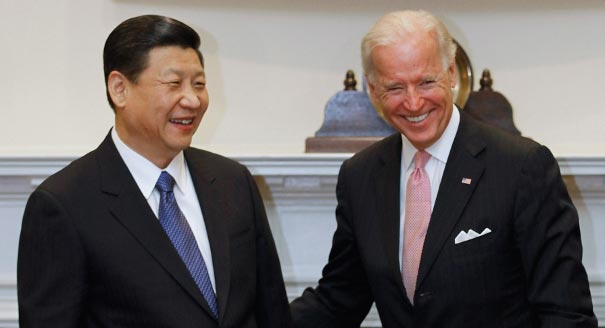
As Xi Jinping, China’s designated next leader, visits the United States, he faces protests over unfair competition and currency manipulation. More worrying than a trade war, however, is the potential for increased tension over technology transfers between China and the United States.
Source: Financial Times

Chinese sensitivities, on the other hand, have been heightened by the election rhetoric and by US reaffirmation of its interests in Asia. Beijing is keen to strike a constructive note, urging collaboration to solve global problems. Such visits are also seen as an opportunity for Mr. Xi to build personal relationships, with planned side trips to Iowa and Los Angeles intended to show a softer, less formal side of the future leader. How Mr. Xi is treated will be scrutinized. This will force Barack Obama and congressional leaders to weigh the pressures of partisan politics against the future of the relationship.
As to economic relations, there are two main threats. One is the increasing likelihood of a trade war. Recent US court verdicts forcing China to scale back production subsidies, along with draft legislation that would penalize China for currency manipulation, are aggravating relations. Many within China thought that the renminbi’s appreciation by some 30 per cent, coupled with a sharp decline in its trade surplus, would subdue criticism of its external policies.
Yet Beijing – which has benefited greatly from open markets – has little appetite for a full-blown trade war. The pattern of China’s growth is already shifting in ways that will moderate future trade imbalances. So Mr. Xi will use the visit to reaffirm China’s intentions to step up imports and maintain its policy of gradual currency adjustments.
More worrying is the likelihood of a war over technology transfer that could dominate the relationship in future, as complaints mount from US companies forced to cede intellectual property rights as a condition for operating in China. This is serious because Beijing is intent on moving up the value chain and realizes that production of more sophisticated goods – especially control over their design and distribution – is where the real profits lie. While iPads may be produced in China, China sees that less than 5 per cent of their value is paid to Chinese assembly workers, with most high-value components produced elsewhere and most of the profit accruing to Apple.
The US, on the other hand, knows it must remain the undisputed leader in innovation if it is also to keep its global political and economic power. No wonder those politicians who can rise above the futile arguments over exchange rates worry more about technology transfer.
Increasingly, western companies think China overly aggressive in trying to acquire their technologies, but a cash-rich China sees little gain in welcoming foreign investors unless they can help it move up the technology ladder. Leapfrogging to “developed” status means relying more on indigenous innovation.
Yet the US pressure for clearer rules on technology transfer may be in the interests of both sides. For example, some US companies complain that China’s subsidies for green growth technologies – the production of solar cells, for example – are unfair. But many others see a growing Chinese presence as offering potential for profitable collaboration, creating jobs. China’s willingness to pour money into new technologies can drive down costs and make renewable energy technologies affordable to a much larger market. Those who see China’s involvement as the best chance for action on climate change would welcome the pairing of American innovation with China’s capacity for mass production.
So there is potential for productive discussion– provided Mr. Obama does not begin with the usual complaints about misaligned exchange rates and unfair competition, but focuses on marrying America’s innovative strength with China’s manufacturing prowess. The US will underscore the need to respect the rules of the game – while China will note that these were established in a system where they had little say. China will also note that to offer US companies a more level playing field in China, there must also be more hospitable treatment of Chinese companies keen to invest in the US, which are deterred by what they see as unwarranted security concerns. These sentiments reflect the mistrust that has built up over years. The challenge for both sides is to turn sentiments around.
This article was originally published in the Financial Times.

Senior Fellow, Asia Program
Huang is a senior fellow in the Carnegie Asia Program where his research focuses on China’s economy and its regional and global impact.
Recent Work


Yukon Huang, Isaac B. Kardon, Matt Sheehan
Yukon Huang, Genevieve Slosberg
Carnegie does not take institutional positions on public policy issues; the views represented herein are those of the author(s) and do not necessarily reflect the views of Carnegie, its staff, or its trustees.

A summer of escalation in the Black Sea has hurt Ukraine economically and is exacerbating world food security. A truce is needed—as is a broader reframing of Europe’s Ukraine strategy.

Thomas de Waal

Are Germany’s economic, industrial, and political struggles becoming a liability for the EU’s ability to rise to the geopolitical moment?

Rym Momtaz, ed.

European Commission President Ursula von der Leyen is about to give her annual address on the state of the EU. Here’s what she won’t—but should—say.
Rym Momtaz

Radical-right parties are expected to do well in upcoming elections in four of the EU's biggest member states. If successful, they could prevent the union from addressing key challenges ahead.

Stefan Lehne

The aftermath of the Ceuta crisis shows Europe has drawn the wrong lessons. Rather than doubling down on failed migration policies, the EU needs to address the underlying roots of such episodes.

Richard Youngs