

Commentary
The new U.S.–Denmark–Greenland agreement will help Washington exert political, economic, and financial dominance under the guise of security. Yet, it acknowledged Copenhagen’s and Nuuk’s sovereignty on the island.
Marc Pierini
{
  "authors": [
    "Shen Dingli"
  ],
  "type": "legacyinthemedia",
  "centerAffiliationAll": "",
  "centers": [
    "Carnegie Endowment for International Peace",
    "Carnegie China"
  ],
  "collections": [
    "China’s Foreign Relations"
  ],
  "englishNewsletterAll": "",
  "nonEnglishNewsletterAll": "",
  "primaryCenter": "Carnegie Endowment for International Peace",
  "programAffiliation": "",
  "programs": [],
  "projects": [],
  "regions": [],
  "topics": [
    "Security",
    "Arms Control"
  ]
}
Source: Getty
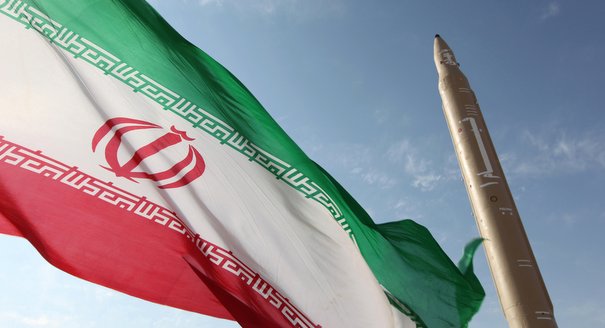
There is a consensus in the international community that while Iran cannot currently build nuclear weapons, if left unregulated, it would eventually succeed in doing so.
Source: Guoji xianqu daobao

To this date, the IAEA report issued in November 8, 2011 is the most authoritative document that illustrates Iran’s military motive behind its nuclear program. The report stated that Iran’s military has acquired some equipment and materials that are linked with the production of nuclear weapons and dual-use projects. Secondly, Iran started its nuclear material production in an undeclared fashion. Thirdly, Iran acquired its nuclear information and documents through secret networks. Finally, Iran is designing its nuclear weapons and component experiments independently. All this evidence demonstrates that Iran’s intention is to develop an explosive nuclear device.
The IAEA report comprehensively cited evidence of Iran’s effort in building nuclear weapons. The information is not only based on the investigation conducted by the IAEA and its member states, but also the evidence from Iran. The IAEA stressed the credibility of the information, because it has acquired a large number of Iranian documents, including mail, reports, speech scripts, construction sketches, and video materials.
Taking the credibility of the IAEA into account, we must attach importance to this report. Before the report was published, the Premier of China and the Chinese Foreign Ministry have declared that China will continue adhering to the view that Iran should not obtain nuclear weapons. China is consistent in urging Iran to cooperate with the international community and clarify the purpose of its nuclear program.
However, the IAEA report indicated that Iran was developing its explosive nuclear device prior to 2003. After that, Iran suspended the program, which seems to have restarted in recent years. For instance, Iran no longer complies with nuclear security supervision and the additional protocol of the IAEA in 2008. Iran also suspended its cooperation with the IAEA for further investigation into its nuclear program. Consequently, the IAEA is uncertain about the progress of Iran’s nuclear weapon and highly doubts if Iran is still pushing forward relevant operations. Since Iran hasn’t withdrawn from Nuclear Non-proliferation Treaty, it must accept the supervision of the IAEA. For this reason, to achieve a breakthrough in building nuclear weapons in transparent nuclear facilities is almost impossible. Even if Iran wanted to develop nuclear weapons, it must proceed with regulation. The enrichment of the Uranium-235 isotope can only be upgraded to 20% for civil use.
Still, Iran is doing its best to promote research and development in regards to its non-explosive nuclear program as the main purpose for its nuclear program. This is precisely why Iran refused to cooperate with the IAEA and abide by nuclear security supervision and the additional protocol. The attitude of Iran has elicited growing suspicion from the international community. It is undeniable that a country without nuclear weapons would not worry about an investigation and oversight.
Iran is cultivating its capacity for building nuclear weapons and claimed that its developments are currently “not ready.” Iran has not yet acquired weapons-grade nuclear fissile material and Iranian scientists are still exploring nuclear-explosion technology. As practice is the sole criterion for testing the actual capacity of Iran’s nuclear program, a nuclear test is the only way to accurately assess the extent of Iran’s nuclear development. Currently, we cannot draw a conclusion of Iran’s possession of nuclear weapons.
Instead of asking “can they?” the more important question is “should they?” Many other countries are concerned only about the question of “can they?” because if Iran does not have the capacity to build nuclear weapons, there will be no risk. However, the question of “should they?” is based on the negotiating with Iran to cooperate with non-proliferation and international security. Only on that basis can the international community effectively persuade Iran to abandon its efforts of acquiring nuclear weapons. If we fail to consider the question of “should they?,” the world will fall into turmoil. The legitimacy of depriving Iran of its nuclear weapons is established on such rules. As for Iran, it is naturally concerned with the question of “can we?,” yet Iran has failed to go further in terms of building nuclear weapons. Iran’s main concern over the cost of building nuclear weapons is the decisive factor behind Iran’s question of “should we?”
This article was originally published in Guoji xianqu daobao.
Shen Dingli
Carnegie does not take institutional positions on public policy issues; the views represented herein are those of the author(s) and do not necessarily reflect the views of Carnegie, its staff, or its trustees.

The new U.S.–Denmark–Greenland agreement will help Washington exert political, economic, and financial dominance under the guise of security. Yet, it acknowledged Copenhagen’s and Nuuk’s sovereignty on the island.

Marc Pierini

A summer of escalation in the Black Sea has hurt Ukraine economically and is exacerbating world food security. A truce is needed—as is a broader reframing of Europe’s Ukraine strategy.

Thomas de Waal

Are Germany’s economic, industrial, and political struggles becoming a liability for the EU’s ability to rise to the geopolitical moment?

Rym Momtaz, ed.

European states control several Overseas Countries and Territories around the world that carry strategic, economic, and environmental weight. As great powers challenge the rules-based order, defending them is a geopolitical imperative for Europe.
Marc Pierini

Mounting economic strain and battlefield losses will not necessarily make the Kremlin less dangerous. They could instead push Moscow toward a more aggressive hybrid campaign designed to test NATO’s Eastern flank, exploit allied hesitation, and fracture European resolve.


Maksym Beznosiuk, Robert Benson