

Article
Thomas Carothers
{
  "authors": [
    "Thomas Carothers"
  ],
  "type": "legacyinthemedia",
  "centerAffiliationAll": "dc",
  "centers": [
    "Carnegie Endowment for International Peace",
    "Malcolm H. Kerr Carnegie Middle East Center"
  ],
  "collections": [
    "Arab Awakening",
    "Democracy and Governance"
  ],
  "englishNewsletterAll": "democracy",
  "nonEnglishNewsletterAll": "",
  "primaryCenter": "Carnegie Endowment for International Peace",
  "programAffiliation": "DCG",
  "programs": [
    "Democracy, Conflict, and Governance"
  ],
  "projects": [],
  "regions": [
    "North America",
    "United States",
    "Middle East",
    "North Africa",
    "Gulf"
  ],
  "topics": [
    "Political Reform",
    "Democracy",
    "Foreign Policy"
  ]
}
Source: Getty
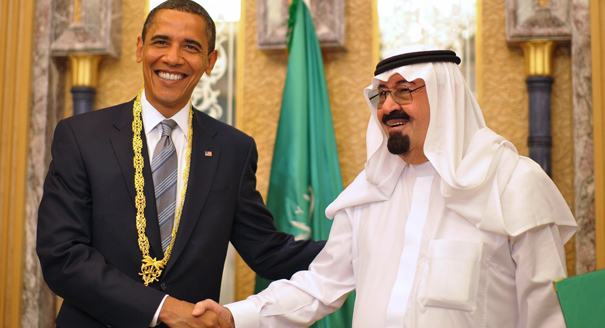
A stark division underlies U.S. policy in the Middle East, where serious efforts to bolster democratic transitions in parts of the region are carried out alongside firm support for most of the remaining non-democratic governments.
Source: Washington Post

Although accounts of the Arab Spring often refer to a wave of political change washing across the Middle East, the reality is otherwise. The wave has bisected the region, swamping one half while leaving the other barely damp. Governments in the majority of the region’s republics, namely Tunisia, Egypt, Libya, Syria and Yemen, have been toppled or have faced serious domestic siege. In startling contrast, however, all of the region’s monarchies appear secure, with the possible exception of Bahrain. Most have enough oil money to keep their citizens well off, and some have a special religious legitimacy.
We should keep in mind that the various autocrats in the region who fell from power last year also looked to be well-entrenched, for all sorts of solid and frequently elaborated reasons, right up until the moment they no longer were. In this time of political surprises, which often stem from sudden, roiling popular protests, betting on reliable autocrats is more perilous than ever.
President Obama says that he recognizes this reality. He declared in May that “after decades of accepting the world as it is in the region, we have a chance to pursue the world as it should be” and that it will be “the policy of the United States to promote reform across the region.” And it is true that where political upheaval has hit, the United States has usually backed democratic change, sometimes actively, as in Libya; sometimes hesitantly, as in Egypt. But where autocratic stability continues to reign, the administration sticks to the decades-old U.S. policy of uncritical support for friendly dictators who are helpful on matters of security and economics.
When the government of Bahrain cracked down harshly on the massive protest movement within its borders last spring, the administration basically folded. The United States was unwilling to risk jeopardizing the convenient Persian Gulf home of the U.S. Navy’s Fifth Fleet for the sake of its commitment to Arab democracy. Saudi Arabia’s military participation in Bahrain’s crackdown and its steadfast opposition to even a glimmer of liberalization within its own borders has not deterred the administration from enthusiastically reaffirming the intimacy of U.S.-Saudi ties. Consider also that, despite having taken no serious steps toward democratic reform in response to popular demands for change, Jordan’s King Abdullah has received only praise and aid from Washington.
A stark division underlies U.S. policy in the Middle East. Serious efforts to bolster democratic transitions in parts of the region are carried out alongside firm support for most of the remaining non-democratic governments. This two-faced stance, little remarked on in Washington but glaringly evident in the region, badly undercuts the persuasiveness of our democracy promotion efforts.
The realpolitik logic that drives the continuing attachment to friendly Arab monarchies is clear enough. The interests at stake — from oil to counterterrorism to containing Iran — are weighty. Yet the logic is so clear precisely because it is so familiar. It is exactly the same logic that we hurriedly disavowed last year after it suddenly looked terribly hollow in country after country.
The United States regretted then being caught so unprepared for historic change and having done so little to pave the ground toward a more democratic Middle East. We lamented our failures to push harder on autocratic friends to take reform seriously, to widen and deepen our support for pro-democratic civil society activists, and to broaden our knowledge of and dialogue with new societal forces that we understood only dimly.
If only we had taken seriously the daunting but not insurmountable challenge of finding a way to combine useful partnerships with regional autocrats with real attention to their political liabilities.
So as we move beyond the first anniversary of the Arab Spring, we might pause from congratulatory toasts to getting U.S.-Saudi relations back on track and think hard about how to avoid potential future regrets in a region that has barely opened a historic period of change.
This article was originally published in the Washington Post.

Harvey V. Fineberg Chair for Democracy Studies; Senior Fellow, Democracy, Conflict, and Governance Program
Thomas Carothers, a senior fellow in the Carnegie Endowment for International Peace’s Democracy, Conflict, and Governance Program, is a leading expert on comparative democratization and international support for democracy.
Recent Work
Thomas Carothers
Thomas Carothers
Carnegie does not take institutional positions on public policy issues; the views represented herein are those of the author(s) and do not necessarily reflect the views of Carnegie, its staff, or its trustees.

The EU can impose sanctions but struggles to enforce them without the United States. With Washington increasingly disinterested in backing European interests, the bloc must now fend for itself.


Nicu Popescu, Tiago Antunes

Russia is testing the waters of NATO’s mutual defense clause. What do strikes in Romanian territorial waters mean for the alliance’s posture toward Moscow?

Dimitar Bechev

With its public finances in shambles, the far right polling at 35 percent ahead of the 2027 presidential election, and a growing protest movement, is France’s crisis a threat to the EU’s geopolitical awakening?

Rym Momtaz, ed.

Ahead of a tough winter for Ukraine, Donald Trump’s swing back toward Russia bodes ill. But instead of panicking, Kyiv’s European allies are focusing on action.
Rym Momtaz

Funding Ukraine remains a priority for European leaders. As Russia’s war of aggression heads into another winter, two feasible options to mobilize support for Kyiv should be fast-tracked.


Vladyslav Rashkovan, Gregory P. Wilson