

Research
- +10
Rosa Balfour, Frances Z. Brown, Yasmine Farouk, …
{
  "authors": [
    "Moisés Naím"
  ],
  "type": "legacyinthemedia",
  "centerAffiliationAll": "",
  "centers": [
    "Carnegie Endowment for International Peace"
  ],
  "collections": [],
  "englishNewsletterAll": "",
  "nonEnglishNewsletterAll": "",
  "primaryCenter": "Carnegie Endowment for International Peace",
  "programAffiliation": "",
  "programs": [],
  "projects": [],
  "regions": [
    "North America",
    "United States"
  ],
  "topics": [
    "Economy",
    "Trade"
  ]
}
Source: Getty
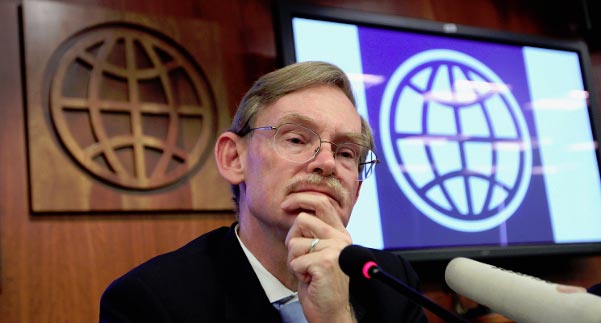
As the Obama administration begins the search for a new president of the World Bank, it risks repeating the same mistakes that all too often in the past have led to the wrong person being appointed.
Source: Financial Times

Every time this process begins, those in charge ponderously – and mendaciously – announce it will be “open, transparent and merit-based”. They know this is not true, as some of the best candidates are automatically disqualified: only US citizens connected to the occupant of the White House at the time are considered and the process is closed, and only tenuously determined by merit.
The reason is, as is well known (and regularly and futilely derided), that leadership selection for the World Bank and the International Monetary Fund is based on a shameful colonial arrangement whereby the bank’s boss is always American and the IMF’s always European. And this will not change until new powers, such as China, India or Brazil agree to join forces to end it – which is not on the cards for now.So how might this flawed process be reformed? In the past, it has led to the appointment of candidates who knew little about the bank. The consequences were confusion over its mission and obstacles in the way of providing assistance to countries in need. This is partly the result of the fact that those in charge of making – or influencing – the decision often base it on wrong notions about the ideal background of the Bank’s president. For example:
So, does all this means that only a superhuman can be successful? No. It means that Mr Obama should look for a professional who already knows this field, its ideas, players and traps, who has a vision for the World Bank rooted in practical experience with development and who has already run successfully a global organisation. This is not the time nor the place for “on-the-job-training”. Nor for paying back political favours.

Distinguished Fellow
Moisés Naím is a distinguished fellow at the Carnegie Endowment for International Peace, a best-selling author, and an internationally syndicated columnist.
Recent Work



Rosa Balfour, Frances Z. Brown, Yasmine Farouk, …
Moisés Naím
Carnegie does not take institutional positions on public policy issues; the views represented herein are those of the author(s) and do not necessarily reflect the views of Carnegie, its staff, or its trustees.

The EU can impose sanctions but struggles to enforce them without the United States. With Washington increasingly disinterested in backing European interests, the bloc must now fend for itself.


Nicu Popescu, Tiago Antunes

With its public finances in shambles, the far right polling at 35 percent ahead of the 2027 presidential election, and a growing protest movement, is France’s crisis a threat to the EU’s geopolitical awakening?

Rym Momtaz, ed.

Ahead of a tough winter for Ukraine, Donald Trump’s swing back toward Russia bodes ill. But instead of panicking, Kyiv’s European allies are focusing on action.
Rym Momtaz

While the EU and European governments are embracing the much-lauded middle-power moment, this entails three difficult conundrums.

Richard Youngs

Europe is facing rising populism internally as well as external pressures from Russia, China, Turkey, and the United States.

Dimitar Bechev