

Research
- +5
Alper Coşkun, Fatih Ceylan, Tacan İldem, …
{
  "authors": [
    "Sinan Ülgen"
  ],
  "type": "legacyinthemedia",
  "centerAffiliationAll": "dc",
  "centers": [
    "Carnegie Endowment for International Peace",
    "Carnegie Europe"
  ],
  "collections": [
    "Arab Awakening"
  ],
  "englishNewsletterAll": "ctw",
  "nonEnglishNewsletterAll": "",
  "primaryCenter": "Carnegie Europe",
  "programAffiliation": "NPP",
  "programs": [
    "Nuclear Policy"
  ],
  "projects": [],
  "regions": [
    "Middle East",
    "Türkiye",
    "Syria"
  ],
  "topics": [
    "Security",
    "Nuclear Policy"
  ]
}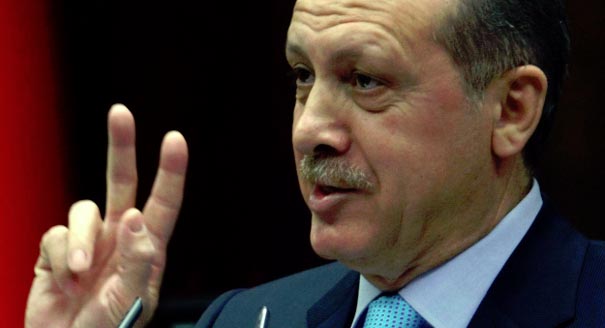
Source: Getty
Much has changed in the Middle East during the past two years, and not to Turkey’s advantage. As a result, Turkey is now seeking to contain a rapidly deteriorating regional security situation.
Source: Project Syndicate

Erdoğan last traveled to Tehran in May 2010 to finalize an agreement that he had negotiated under which Iran was to send large quantities of its low-enriched uranium to Turkey in exchange for nuclear fuel for Iran’s research reactor. The deal, mediated by Turkey and Brazil, was presented to the rest of the world as a groundbreaking confidence-building initiative.
But the US and its allies quickly rejected the agreement as an Iranian ploy designed to halt the growing momentum for additional sanctions. Turkey’s insistence on pressing ahead with the deal caused tension with the US and fueled criticism at home and abroad that Erdoğan’s government was shifting away from its long-standing alliance with the West.The memory of this short-lived crisis with the US is still fresh in Turkish government circles. So why, despite having burned his fingers two years ago, is Erdoğan taking up the issue again? What did he hope to accomplish in Tehran?
Much has changed in the Middle East during the past two years, and not to Turkey’s advantage. As a result, Turkey is now seeking to contain a rapidly deteriorating regional security situation.
Events in Syria are forcing Turkish authorities to accept the harsh reality of the Assad regime’s resilience – and now its hostility towards Turkey. Iraq, another of Turkey’s neighbors, faces the risk of a protracted sectarian power struggle following withdrawal of US troops.
Given this, Turkey’s main objective now is to prevent a military intervention against Iran. From Turkey’s perspective, an Israeli or American strike against Iran’s nuclear facilities would destabilize the region further, as Iran would undoubtedly retaliate by fueling sectarian tensions and undermining the prospects of a settlement in both Syria and Iraq.
As a result, Turkey wants to prolong, at all costs, the time available for diplomacy. But Erdoğan’s specific objective was more modest this time than it was in 2010, because Turkey does not want to play the role of mediator and will not seek to negotiate the details of an agreement.
Instead, Erdoğan emphasized to his Iranian counterparts the international community’s resolve to bring transparency to Iran’s nuclear program, and insisted on the importance of concrete progress in the next round of the nuclear talks. He warned that Iranian intransigence would doom the talks to failure, raising the prospects of yet another military confrontation in the Middle East.
In particular, Erdoğan stressed the need for Iran to offer a gesture of goodwill about its nuclear program. The Iranian regime should, at the very least, commit itself to halt uranium enrichment at 20%, a figure short of the threshold needed to produce weapons. Having had direct meetings with both Iranian President Mahmoud Ahmadinejad and Supreme Leader Ayatollah Ali Khamenei, Erdoğan was in a unique position, as a prime minister of a NATO country, to convey these critical messages to a regime whose top-level decision-making processes remain as opaque as ever to the West.
Paradoxically, however, Erdoğan’s task, while more modest than in 2010, is also more difficult, owing to the prospect of new sanctions on Iran, including a ban on oil exports, that are to enter into force in July. Advocates of sanctions argue that they are having a crippling effect on the Iranian economy. The value of the Iranian rial has fallen by 50% against the US dollar since the beginning of the year, and the country is suffering from a severe shortage of foreign exchange. So now is not the time to pull back.
Moreover, US President Barack Obama, facing an election in November, does not wish to be accused of being soft on Iran, making it difficult for the West to reciprocate potential Iranian overtures.
Yet Erdoğan’s best ally in his risky gambit may be the US consumer. Faced with rising gasoline prices as a result of the ongoing crisis with Iran, Americans’ concerns about the cost of driving have contributed to Obama’s shaky popularity ratings. Thus, the Obama administration may find it more politically expedient to seek a deal with Iran. If Iran displays a real willingness to compromise, the West should hold off on the new sanctions.
It will soon become clear whether Erdoğan’s visit succeeds. If Iran decides to engage the international community with concrete confidence-building measures at the next round of multilateral talks, Erdoğan will take much of the credit for giving diplomacy a last chance – and quite possibly for averting a disastrous military confrontation in the Middle East.

Senior Fellow, Carnegie Europe
Sinan Ülgen is a senior fellow at Carnegie Europe in Brussels, where his research focuses on Turkish foreign policy, transatlantic relations, international trade, economic security, and digital policy.
Recent Work

Alper Coşkun, Fatih Ceylan, Tacan İldem, …
Carnegie does not take institutional positions on public policy issues; the views represented herein are those of the author(s) and do not necessarily reflect the views of Carnegie, its staff, or its trustees.

With its public finances in shambles, the far right polling at 35 percent ahead of the 2027 presidential election, and a growing protest movement, is France’s crisis a threat to the EU’s geopolitical awakening?

Rym Momtaz, ed.

Europe is facing rising populism internally as well as external pressures from Russia, China, Turkey, and the United States.

Dimitar Bechev

Much has been said of the changes Brussels is trying to make to the EU enlargement process. Here’s why gradual integration might—or might not—be the answer.
Dimitar Bechev

The new U.S.–Denmark–Greenland agreement will help Washington exert political, economic, and financial dominance under the guise of security. Yet, it acknowledged Copenhagen’s and Nuuk’s sovereignty on the island.

Marc Pierini

A summer of escalation in the Black Sea has hurt Ukraine economically and is exacerbating world food security. A truce is needed—as is a broader reframing of Europe’s Ukraine strategy.

Thomas de Waal