

Paper
Matthew Rojansky
{
  "authors": [
    "Matthew Rojansky"
  ],
  "type": "legacyinthemedia",
  "centerAffiliationAll": "dc",
  "centers": [
    "Carnegie Endowment for International Peace",
    "Carnegie Russia Eurasia Center"
  ],
  "collections": [],
  "englishNewsletterAll": "ctw",
  "nonEnglishNewsletterAll": "",
  "primaryCenter": "Carnegie Endowment for International Peace",
  "programAffiliation": "russia",
  "programs": [
    "Russia and Eurasia"
  ],
  "projects": [],
  "regions": [
    "Caucasus",
    "Russia",
    "Eastern Europe",
    "Ukraine",
    "Moldova"
  ],
  "topics": [
    "Security"
  ]
}
Source: Getty
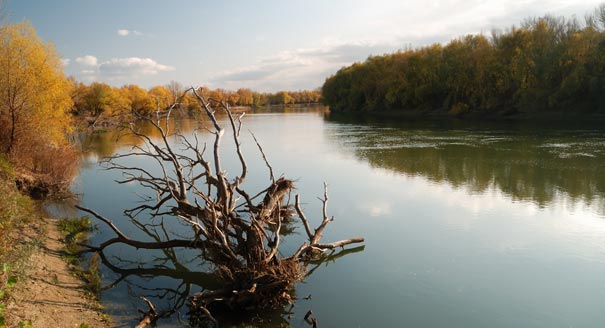
The latest apparent thaw on all sides of the protracted Transnistria conflict is a hopeful sign, but the resolution process will continue to be gradual and deliberate.
Source: World Politics Review

After that bloody season in 1992, the Transnistrian war settled into a kind of suspended animation, becoming one of the handful of so-called frozen conflicts in the post-Soviet space. For years, the two sides convened and disbanded various negotiation formats, while rhetoric flared over disputed language, transit and property rights. The conflict mostly avoided international headlines and was bloodless for nearly two decades -- until New Year’s Day, when a Russian peacekeeper shot and killed a young Moldovan man at a checkpoint on the Vadul Lui Voda Bridge near Moldova’s capitol, Chisinau.
Tragic as the shooting was, it was also a fitting reminder that the conflict over Transnistria should no longer be ignored by regional powers and the wider world. Over the past year, governments on the left and right banks of the Dniester have undergone major changes that are likely to improve the lives of ordinary people and hold real promise for conflict resolution. In Moldova, a pro-European coalition that has held a majority in parliament since 2009 finally succeeded in electing a president, obviating the need for new elections until 2014 and offering Chisinau a window of opportunity to implement a longer-term reform agenda. In Transnistria, a Web-savvy, reform-minded 42-year-old has been elected president, replacing the Soviet-era factory boss who had ruled the region for the preceding two decades.At last, there are signs of hope that the end to this protracted conflict may be in sight. Under Lithuanian and Irish chairmanship, the Organization for Security and Cooperation in Europe (OSCE) has brought Moldovans and Transnistrians, along with representatives of the key international stakeholders -- Russia, Ukraine, the European Union and the U.S. -- together for new talks aimed at easing the conflict’s impact on daily life and regional development, while pursuing a path to permanent reconciliation between the two sides.
The Transnistria conflict matters for Brussels and Washington, both despite and because of its small size and relative quiet. The perception that this is a “solvable” conflict has inspired European heavy hitters like German Chancellor Angela Merkel and French President Nicolas Sarkozy to declare it a “test case” for a new, inclusive model of European security. Recognizing Russia’s central role and influence over the Transnistrians, Merkel has even offered Moscow a permanent bilateral security dialogue in exchange for support in resolving the conflict. A resolution would indeed serve Germany and Europe’s wider security interests, reducing the opportunities the standoff provides for trafficking in weapons, people and other contraband, while forcing the region’s shadowy enterprises to submit to international scrutiny. Furthermore, at a time when the EU badly needs success stories in the East, Brussels sees Moldova as the next likely candidate for EU membership -- but only if Chisinau settles its differences with the left bank.
For Russia, Transnistria is both an asset and a liability. As a strongly pro-Kremlin outpost on the doorstep of NATO and the EU, the region offers Moscow a narrow foothold in Central Europe and an indirect veto over NATO expansion in the Black Sea region. Together with Russia’s Black Sea Fleet based at Sevastopol, Russian troops in Transnistria also help remind Ukrainians that they still live in Russia’s neighborhood. Russian President-elect Vladimir Putin’s recent appointment of fire-breathing nationalist Dmitry Rogozin to the post of presidential envoy for Transnistria underscores that for Russians the conflict is not only about geopolitics. It is also about the collective memory of World War II, when Nazi-allied Romania seized a swath of land from Chernivtsi to Odessa and persecuted Russians, Jews, gypsies and others living there. Yet except for a handful of Russian oligarchs who profit from “gray market” trading with Transnistria’s hastily privatized enterprises, Russians are unhappy subsidizing the region through some $30 million in direct annual aid and more than $3 billion in unpaid gas debts. Given adequate representation for Transnistria’s Russian speakers, protection of Russian economic interests and a prohibition on NATO expansion in the region, Moscow might well support Moldovan reunification.
Officially a neutral “guarantor” of the OSCE conflict resolution process, Ukraine stands to benefit significantly from such an outcome. Bringing Transnistrian territory under Moldovan sovereignty would choke off smuggling routes that cost Kiev millions in lost customs revenue and would mean an end to the Russian military presence on Ukraine’s southwest frontier. Moreover, with its territorial questions resolved, Moldova would be more likely to secure a path to EU membership, potentially opening the door for Ukraine’s own bid, or at least for a full association agreement. In 2013, Ukraine will chair the OSCE, so next year is seen as a key opportunity for progress on resolving the conflict.
The latest apparent thaw on all sides of the Transnistria conflict is a hopeful sign. But the conflict resolution process will still be gradual and deliberate. The passing of two decades has brought a new and wholly post-Soviet generation into positions of influence on both sides of the Dniester. These young people may be impatient to see and feel progress in their own lives, but they are not immune to the sensitivities that brought their parents and grandparents into tragic conflict during the past century. To help today’s Moldovan and Transnistrian leaders break the pattern of this protracted conflict, Europe, Russia, Ukraine and the U.S. must pay close and sustained attention, while searching for a compromise among themselves that enables the region as a whole to move forward.
Former Deputy Director, Russia and Eurasia Program
Rojansky, formerly executive director of the Partnership for a Secure America, is an expert on U.S. and Russian national security and nuclear-weapon policies.
Recent Work
Matthew Rojansky
Matthew Rojansky

The EU’s responses to two recent incidents expose the gulf between European perceptions and capabilities. Unless the union can bridge that gap, it will never become a real geostrategic power.

Rym Momtaz

European states control several Overseas Countries and Territories around the world that carry strategic, economic, and environmental weight. As great powers challenge the rules-based order, defending them is a geopolitical imperative for Europe.

Marc Pierini

In supporting Europe’s far-right, MAGA and Russia both want the same thing: a weaker EU. Europe must defend itself without abandoning the openness these forces exploit.

Armida van Rij

As we close out another season of Strategic Europe, it is worth taking stock of the deep shifts underway.
Rym Momtaz
The hybrid warfare landscape is evolving rapidly, leaving policymakers without clear strategies. To better inform their work in addressing emerging challenges, governments must dig deeper into the underlying dynamics at play.


Raluca Csernatoni, Alicia Wanless