

Commentary
Judy Dempsey
{
  "authors": [
    "Judy Dempsey"
  ],
  "type": "legacyinthemedia",
  "centerAffiliationAll": "",
  "centers": [
    "Carnegie Endowment for International Peace",
    "Carnegie Europe"
  ],
  "collections": [
    "Transatlantic Cooperation"
  ],
  "englishNewsletterAll": "",
  "nonEnglishNewsletterAll": "",
  "primaryCenter": "Carnegie Europe",
  "programAffiliation": "",
  "programs": [],
  "projects": [],
  "regions": [
    "Europe",
    "North America"
  ],
  "topics": [
    "Foreign Policy"
  ]
}
Source: Getty
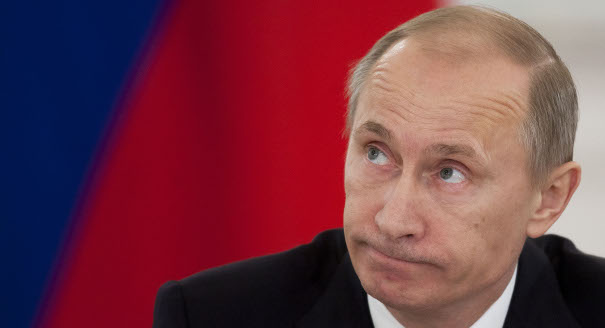
There is one thorny issue that NATO will not be able to cast aside at its summit in Chicago: the increasingly difficult relationship with Russia.
Source: Munich Calling

No doubt, NATO diplomats will try to put the best gloss on this state of affairs at next month’s summit in Chicago. But there is one thorny issue that NATO will not be able to cast aside: the increasingly difficult relationship with Russia. It is one of the last chapters of the Cold War that has not been closed yet. The issue will remain open until NATO and Russia decide to move beyond the formal political ties that exist now to something fundamentally new.
But that would require a leap in perception by both sides. In Russia, this is not likely to happen under President Vladimir Putin. On the side of NATO, it is not certain either that it is something that all members want. During the recent presidential election campaign in Russia, Mr Putin, the outgoing Prime Minister, used every opportunity to demonize NATO.In language reminiscent of the Cold War, he accused NATO of threatening the security of Russia. In particular he singled out US plans to build a missile defense shield. Despite repeated assurances by NATO and especially the Obama administration that the missile shield would not threaten Russia, the Kremlin has yet to be convinced. There is little reason to believe that once Mr Putin is sworn in as president next month, he will soften his tone. If anything, his relationship with NATO could become more antagonistic than under the outgoing president, Dmitri Medvedev.
Not all blame should rest with Russia, either. NATO has been unable or unwilling to give Russia a proper role in its discussions. The NATO-Russia Council, or NRC, a forum in which the 28 members meet with Russia, does not work in a way that increases trust or confidence. Russia’s reputation as a difficult partner in any multilateral organization is well known. NATO is no exception. But there are also different expectations of what the NRC should do. Russia wants it to solve disputes and not just rubberstamp decisions.
But many NATO countries, especially the member states from Eastern Europe, do not want to give Russia a formal say over matters concerning the alliance. They only want to take issues to the NRC that have been agreed beforehand. Little has been done to overcome these fundamental differences. Yet there are signs of cautious hope between NATO and Russia.
Russia can surprise the skeptics, even when it comes to its national and security interests. Consider what happened over the past few weeks. The Kremlin proposed to NATO that the Alliance establish a transit camp for military personnel and non-lethal cargo to and from Afghanistan. It would be based in the central Russian city of Ulyanovsk (named after Lenin who as Vladimir Ulyanov was born there). The facilities at Ulyanovsk Vostochny Airport are ideal. It has the fifth longest runway in the world, perfect for large cargo planes and heavy strategic airlift.
Ever since the beginning of NATO’s operations in Afghanistan, the Kremlin granted NATO member states transit and overfly rights through Russia to Afghanistan. But according to a new report by Heidi Reisinger, security expert in the Research Division at NATO’s Defense College in Rome, “the Kremlin’s proposal to allow NATO the use of Ulyanovsk Vostochny Airport was unexpected, but it is perfectly in line with Russian interests.” This is because the United States and NATO have been taking care “of the pressing security problem originating from the soft underbelly of the former Soviet Union,” Ms. Reisinger argued. Its very presence in Ulyanovsk Vostochyny, apart from providing jobs, represents some kind of security for this part of Russia.
That is why Sergei Lavrov, Russia’s foreign minister, decided to back this proposal when a few weeks ago he addressed the State Duma, the lower chamber of the Russian parliament. “We are helping the coalition…primarily out of our own national interest,” Mr Lavrov told lawmakers. What an admission! And some Russian military analysts, including Anatoly Tsiganok from the Institute of Political and Military Analysis in Moscow praised the United States for protecting Russia against the Taliban.
Even Dmitry Rogozin, Russia’s former ambassador to NATO who is not known for harboring any sympathies for the organization, was quoted by Ria Novosti as saying that the transit of NATO toilet paper through Russia could not be considered a betrayal of the Fatherland. Assuming NATO takes up the offer, it means both sides will gain. Clearly, cooperation based purely on practical issues, such as Uluyanovsk or search and rescue missions, is useful. But nothing more will be possible as long as NATO and Russia lack a common vision of the world’s security architecture and their respective roles in it.
Both sides will have to explain what they want. Otherwise this last chapter of the Cold War will remain open and susceptible to even more acrimony. Chicago will not close it. And Mr Putin will stay away.
This article was originally published in the Munich Security Conference's Munich Calling.

Nonresident Senior Fellow, Carnegie Europe
Judy Dempsey is a nonresident senior fellow at Carnegie Europe
Recent Work
Judy Dempsey
Judy Dempsey
Carnegie does not take institutional positions on public policy issues; the views represented herein are those of the author(s) and do not necessarily reflect the views of Carnegie, its staff, or its trustees.

The aftermath of the Ceuta crisis shows Europe has drawn the wrong lessons. Rather than doubling down on failed migration policies, the EU needs to address the underlying roots of such episodes.

Richard Youngs

An overwhelming victory by a far-right-wing party in a small state in eastern Germany will have major repercussions for Chancellor Friedrich Merz’s coalition.
Judy Dempsey

Canadian Prime Minister Mark Carney has twice inspired praise for standing up to U.S. President Donald Trump: at the 2026 World Economic Forum in Davos and on Canada-U.S. trade negotiations. Is Carney showing a third way better than the EU has in dealing with the Trump administration?

Rym Momtaz, ed.

The EU’s responses to two recent incidents expose the gulf between European perceptions and capabilities. Unless the union can bridge that gap, it will never become a real geostrategic power.
Rym Momtaz

European states control several Overseas Countries and Territories around the world that carry strategic, economic, and environmental weight. As great powers challenge the rules-based order, defending them is a geopolitical imperative for Europe.

Marc Pierini