

Research
- +10
Rosa Balfour, Frances Z. Brown, Yasmine Farouk, …
{
  "authors": [
    "Moisés Naím"
  ],
  "type": "legacyinthemedia",
  "centerAffiliationAll": "",
  "centers": [
    "Carnegie Endowment for International Peace"
  ],
  "collections": [],
  "englishNewsletterAll": "",
  "nonEnglishNewsletterAll": "",
  "primaryCenter": "Carnegie Endowment for International Peace",
  "programAffiliation": "",
  "programs": [],
  "projects": [],
  "regions": [
    "North America",
    "United States",
    "South America"
  ],
  "topics": [
    "Economy",
    "Trade",
    "Foreign Policy"
  ]
}
Source: Getty
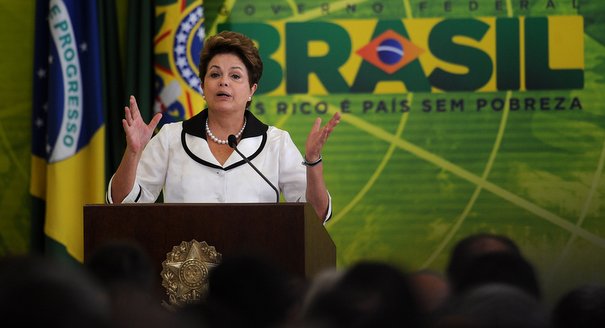
The Brazilian president's visit to Washington provides an opening for the two countries to deepen their relationship—a step which would help Brazil as it seeks to become a global power and enable the United States to benefit from Brazil's economic ascent.
Source: Financial Times

I wrote this 10 years ago in the Financial Times. The presidents I was hoping would strike such a historic deal were George W. Bush and Luiz Inacio Lula da Silva. Of course, nothing happened. Two years ago, when Dilma Rousseff became president, I wrote another column, this time urging the Brazilian leader to take the initiative and make Barack Obama an offer he could not refuse. Again, nothing happened. President Rousseff is arriving in Washington on Monday to meet the US president and, again, nothing important will happen.
This is too bad, because few other bilateral relationships hold as much immediate promise for the US as a deeper one with Brazil. Obviously, the US has many other critical bilateral relationships – China or Russia for example. But slow evolution is the most likely scenario in most of these.That is not, however, the case with Brazil. The potential is enormous and the obstacles for an agreement, while very real, could be overcome by leaders determined to do so. A broad, ambitious deal can disrupt current trends where the US risks not becoming a major beneficiary of Brazil’s continuing economic success and Brazil risks being at odds with a geopolitical power whose support it needs if it wants to be an influential global player.
In my column of a decade ago I wrote that the offer of a bilateral economic treaty would also help “to redress the US’s neglect of the region”. The US president should offer Brazil freer access to the US market for Brazilian products that face import barriers, I added. In exchange, America “should demand that Brazil open market sectors that restrict foreign imports or investors. The region’s two leading nations should agree that any other country in the region can join this pact if it liberalises its trade, adopts the targets of a hemispheric economic stability pact and enforces the provisions... of the charter of the Organisation of American States.”
Unfortunately, unless Ms Rousseff and Mr Obama disrupt the status quo in their countries’ relationship, this will continue to be a story of missed opportunities, in which minor agreements are extolled as epic changes while, in practice, the two nations continue to fail to forge a world-changing alliance. There are many reasons behind their incapacity to engage in ambitious bilateral initiatives. Perhaps the most important is that Brazil’s ascent over the past decade coincided with the time when Washington was deeply distracted. While Brazil was busy booming America was busy fighting in Iraq and Afghanistan or rescuing its economy. Washington did not have the time to focus on Latin America.
This lack of attention is not new. US foreign policy towards Latin America has been reactive and mostly centred on emergencies, small countries and failed states. In Washington it is easier to find experts on Cuba, Nicaragua or Haiti than on Brazil; the drug trade, not trade with Brazil, is what gets juices flowing. All this has to change in the US’s own interest.
On the other hand, Brazil is not an easy partner. It expects and demands the same respect and consideration from Washington as other powers at the top of the world’s pecking order. A country that has overtaken the UK as the world’s sixth-largest economy has a hard time swallowing the fact that it is not accorded similar treatment. A US government official speaking anonymously because of her dealings with Brasilia told me that Brazil is the “France of Latin America”, arguing that its “obstructionism in global talks is often driven by their need to assert their newfound power ... Undermining our initiatives in Iran or over trade talks, for example, is their way of forcing us to pay attention to them.”
These failings on both sides can be overcome. A decade ago I wrote that all it would take is for the presidents of the US and Brazil to show political bravery and a thirst for history. That is still the case.
This article was originally published in the Financial Times.

Distinguished Fellow
Moisés Naím is a distinguished fellow at the Carnegie Endowment for International Peace, a best-selling author, and an internationally syndicated columnist.
Recent Work



Rosa Balfour, Frances Z. Brown, Yasmine Farouk, …
Moisés Naím
Carnegie does not take institutional positions on public policy issues; the views represented herein are those of the author(s) and do not necessarily reflect the views of Carnegie, its staff, or its trustees.
The war in Iran proves the United States is now a destabilizing actor for Europe and the Arab Gulf. From protect their economies and energy supplies to safeguarding their territorial integrity, both regions have much to gain from forming a new kind of partnership together.

Rym Momtaz
French President Emmanuel Macron has unveiled his country’s new nuclear doctrine. Are the changes he has made enough to reassure France’s European partners in the current geopolitical context?
Rym Momtaz, ed.
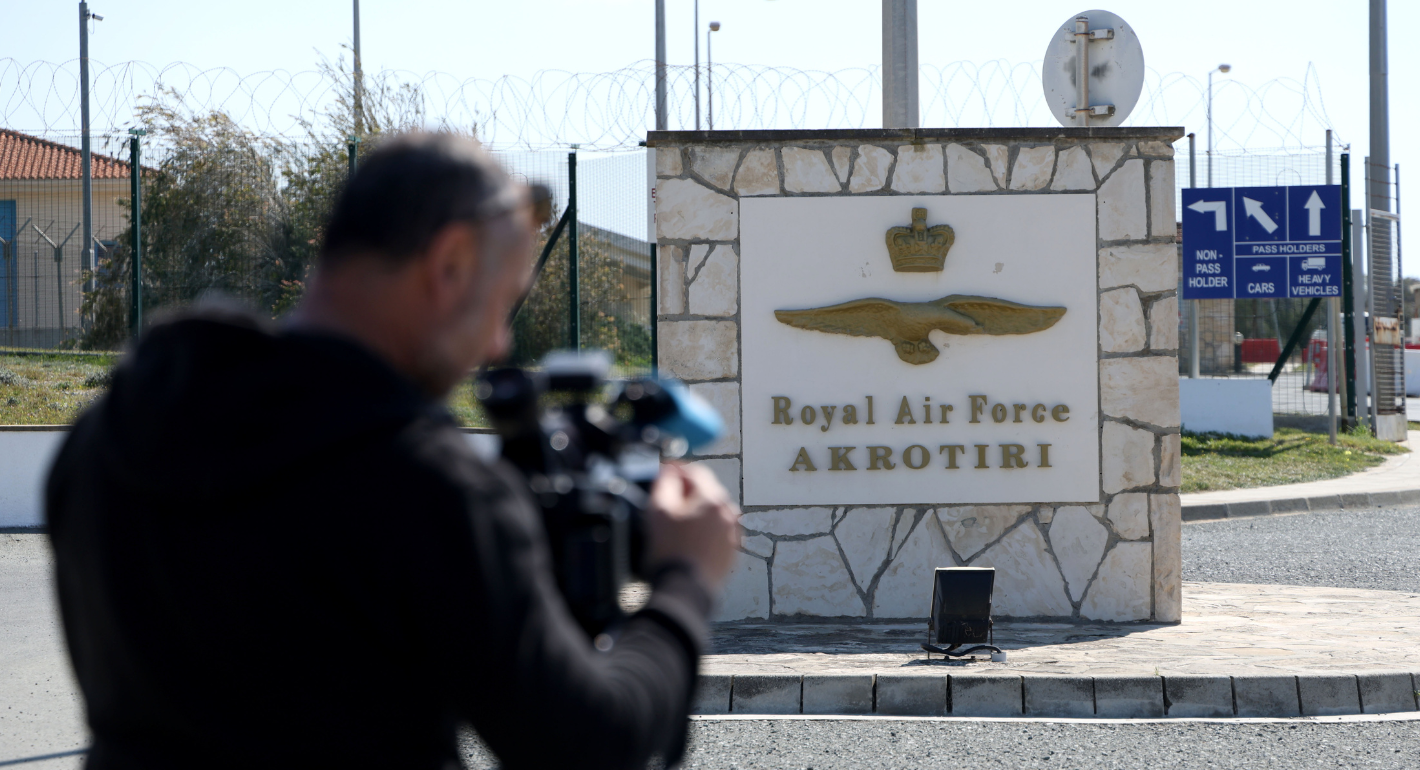
The drone strike on the British air base in Akrotiri brings Europe’s proximity to the conflict in Iran into sharp relief. In the fog of war, old tensions in the Eastern Mediterranean risk being reignited, and regional stakeholders must avoid escalation.

Marc Pierini
European reactions to the war in Iran have lost sight of wider political dynamics. The EU must position itself for the next phase of the crisis without giving up on its principles.

Richard Youngs
For years, the United States anchored global cyber diplomacy. As Washington rethinks its leadership role, the launch of the UN’s Cyber Global Mechanism may test how allies adjust their engagement.

Patryk Pawlak, Chris Painter