

Paper
Paul Salem
{
  "authors": [
    "Paul Salem"
  ],
  "type": "legacyinthemedia",
  "centerAffiliationAll": "",
  "centers": [
    "Carnegie Endowment for International Peace",
    "Carnegie Europe",
    "Malcolm H. Kerr Carnegie Middle East Center"
  ],
  "collections": [
    "Arab Awakening"
  ],
  "englishNewsletterAll": "",
  "nonEnglishNewsletterAll": "",
  "primaryCenter": "Malcolm H. Kerr Carnegie Middle East Center",
  "programAffiliation": "",
  "programs": [],
  "projects": [],
  "regions": [
    "Levant",
    "Lebanon",
    "Middle East"
  ],
  "topics": [
    "Political Reform",
    "Security"
  ]
}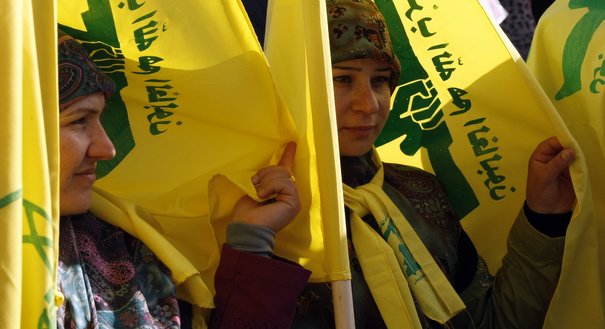
Source: Getty
Hezbollah’s hard power has not yet been affected by developments in the Arab Spring or Syria, but a new regional power order and shifting public opinion prioritizing civil rights and democracy could severely weaken the movement's hold on power.
Source: Project Syndicate

With the Arab Spring, regional public opinion has shifted toward prioritizing civil rights and democratic reform over foreign policy. Today, Assad is reviled, Ahmadinejad’s government is accused of violently suppressing its own pro-democracy protestors, and both Hezbollah and Iran are condemned for continuing to back Assad as he slaughters his own population.
As a result, Hezbollah is no longer the widely popular movement that it once was across the Arab and Muslim worlds, but it remains a highly effective and heavily armed force. And, in politics, as Machiavelli pointed out long ago, it is more important to be feared than loved.To be sure, Hezbollah is still grudgingly respected for its ability to stand up to Israel. But it has lost its halo as a voice for the oppressed and downtrodden, and has exposed itself as a partisan and sectarian party that will side with Iran and its allies even at the expense of human rights and human lives in neighboring Syria.
But Hezbollah’s hard power has, up to now, not been affected by developments in the Arab Spring or Syria. Its deployment in Lebanon, its fighting capacity, and its thousands of missiles are all still intact.
Hezbollah was initially thrilled at the outbreak of popular revolts against rulers closely allied with the US and the West. Even Libya’s Colonel Muammar el-Qaddafi was considered a foe for having allegedly ordered the killing of Lebanese Shiite leader Imam Musa Sadr in 1978. Hezbollah had been in a virtual cold war with Hosni Mubarak’s Egypt since January 2009, when Nasrallah had effectively accused Mubarak’s government of collusion in Israel’s intervention in Gaza, and had called for the “Egyptian people to take to the streets in their millions.”
But, as the revolts proceeded, it emerged that people wanted good government and social justice, and were not enamored of Iran or interested in joining an axis of resistance. Furthermore, as the Muslim Brotherhood rose in Egypt, Hezbollah’s erstwhile ally, Hamas, drifted away from it and its Syrian and Iranian backers, and found a new footing in Egypt and the Gulf.
But Hezbollah’s disappointment turned to intense concern when Syrians rebelled against Assad. If his regime falls, Hezbollah is at risk of losing its arms-supply bridge to Iran. It would be unable to compensate for that loss by relying on Lebanese seaports or Beirut’s airport, because both could easily be blockaded. It would still have its full first-strike and retaliatory capacity, but, like a bee, it would be able to sting only once. Without the ability to resupply itself, Hezbollah would emerge from any future war a significantly weakened force.
Within Lebanon itself, Hezbollah is still strong, but its comfort level has declined. In May 2008, it demonstrated its domestic dominance by taking over the capital, Beirut. In January 2011, it brought down Saad Hariri’s government and installed one more to its liking. But, in just the last few weeks, parts of the Sunni north have erupted in armed defiance of Hezbollah and the government that it dominates, and are openly supporting the Syrian rebels.
In a sense, these Sunni groups are creating an armed enclave in northern Lebanon to counterbalance the armed Shia enclaves in Beirut, the south, and the Bekaa region. Hezbollah has also been shaken by the abduction and continued detention of a dozen Lebanese Shiites – some close to Nasrallah – by opposition forces in Syria.
Hezbollah faces parliamentary elections in the spring of 2013. If its Christian ally, Michel Aoun’s Free Patriotic Movement, does poorly, or if the ever-shifting Druze leader Walid Jumblatt returns his Progressive Socialist Party to the anti-Syrian alliance of which it was once a part, Hezbollah would lose its parliamentary majority, and hence its ability to form and topple governments. Perhaps anticipating these domestic vulnerabilities, Hezbollah encouraged and joined the resumption of National Dialogue discussions involving all of Lebanon’s main communities.
Strategically, Hezbollah fears that if Assad falls, and if it loses the ability to resupply itself rapidly and effectively as a result, Israel will take advantage by unleashing another war against it. With tensions between Israel and Iran, Hezbollah’s patron, unresolved, this fear cannot be discounted. Even if Hezbollah can adjust to the Arab Spring, it fears the winter with Israel that might follow.
This article was originally published by Project Syndicate.
Senior Fellow at the Middle East Institute
Paul Salem is a senior fellow at the Middle East Institute.
Recent Work
Paul Salem
Paul Salem
Carnegie does not take institutional positions on public policy issues; the views represented herein are those of the author(s) and do not necessarily reflect the views of Carnegie, its staff, or its trustees.

Mounting economic strain and battlefield losses will not necessarily make the Kremlin less dangerous. They could instead push Moscow toward a more aggressive hybrid campaign designed to test NATO’s Eastern flank, exploit allied hesitation, and fracture European resolve.

Maksym Beznosiuk

Over the past ten years, NATO has held almost as many summits as it did during the entirety of the Cold War. Are they still useful, or is it time to stop holding annual meetings?

Rym Momtaz, ed.

As the EU confronts profound challenges, several leaders have called for fundamental reform to the union’s model—but only modest, superficial changes have resulted. What if Europe really could be reimagined from zero today: What should such a redesigned European order look like?

Richard Youngs, ed.
As Russia's war on Ukraine drags on, NATO is expanding its footprint in the Black Sea. Turkey, Romania, and Bulgaria are upgrading their fleets and deepening trilateral cooperation.

Dimitar Bechev
For ninety years, Turkey has been positioned as the principal gatekeeper of Black Sea security. As a result, European and NATO efforts to support Ukraine will require closer engagement with Ankara.

Thomas de Waal