

Paper
Yezid Sayigh
{
  "authors": [
    "Yezid Sayigh"
  ],
  "type": "legacyinthemedia",
  "centerAffiliationAll": "",
  "centers": [
    "Carnegie Endowment for International Peace",
    "Malcolm H. Kerr Carnegie Middle East Center"
  ],
  "collections": [
    "Arab Awakening"
  ],
  "englishNewsletterAll": "",
  "nonEnglishNewsletterAll": "",
  "primaryCenter": "Malcolm H. Kerr Carnegie Middle East Center",
  "programAffiliation": "",
  "programs": [],
  "projects": [],
  "regions": [
    "Levant",
    "Syria",
    "Middle East"
  ],
  "topics": [
    "Political Reform",
    "Security"
  ]
}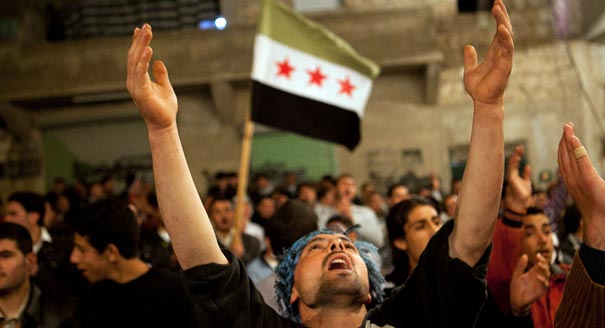
Source: Getty
The Syrian regime has recently suffered a series of significant blows, but strong military responses and Assad's unwillingness to step down indicate that violence in Syria is unlikely to end soon.
Source: Al Hayat

This sequence of events has prompted a rush to revise predictions of when the regime will fall; while previous estimates claimed it was a matter of months, it is now apparently mere weeks away. This is premature. Certainly, the regime is suffering a rate of political, economic, and military attrition that it cannot sustain indefinitely. But the repeated demonstrations of its continued ability to ratchet up its military response to new challenges suggests that it has not yet exhausted its reserves, and that the potential for further escalation of the level of violence is high.
Not only is the regime’s collapse less than imminent, but the far more likely outcome of the growing challenge to its grip on power is the emergence of the first serious opportunity for a negotiated settlement since the start of the crisis over a year ago. There is evidence that core members of the regime are coming to the conclusion that the regime’s “security solution” is a dead-end strategy, and are consequently beginning to look for alternative paths. Russia may have come to the same conclusion. Top-ranking state officials have taken of late to speaking dismissively of President Bashar al-Assad in private to Arab counterparts. Public statements by Russian diplomats that al-Assad may step down as part of a transitional agreement— furiously denied by the Syrian authorities—are clearly intended to pressure the regime into being more accommodating.That there is a serious international realignment in favor of a compromise is strongly suggested by the conflicting reactions of the Syrian National Council, which until very recently rejected any deal with the regime. On July 24, George Sabra, a member of the council’s executive committee, said that it would “agree to the departure of Assad and the transfer of his powers to a regime figure, who would lead a transitional period like what happened in Yemen.” The council’s chairman, Abdul-Baset Sida, and foreign relations bureau head Bassma Kodmani quickly denied that the council would join a unity government, let alone one headed by a regime figure. But clearly this is an issue now facing the opposition—as a result, in large part, of the ground it has gained inside Syria during the past two months.
Of course, it is entirely possible that a deal will not be reached. The Assad family and their closest associates are reported to be completely unwilling to acknowledge just how far the balance has shifted against them, or to abandon the military solution in favor of a negotiated transition. After all, while the opposition claims to control 30 to 60 percent of the country, the regime has not yet relinquished any area permanently. With a few exceptions such as al-Rastan, the rebels remain unable to hold any location in which to train, rearm, or assemble for major combat operations without suffering encirclement and assault. Meanwhile, the regime’s hold on the core of the army has not been decisively broken, despite the daily defections and mounting casualties it continues to suffer.
Even if a deal is in fact reached, it is likely to collapse quickly. The regime and opposition will fight on, but a sudden and dramatic swing in the balance remains improbable. Since there is no prospect of external military intervention (despite continuing calls for the establishment of safe areas and no-fly zones), only the defection of an entire army brigade could trigger a chain reaction precipitating regime collapse sooner than expected. Otherwise, it is far more likely that we will see further attempts by domestic and external actors to capitalize on the mounting signs of regime weakness to cobble together new deals and engineer pauses in the armed conflict. Whether these attempts are successful or not, the whole messy sequence will take at least until the end of 2012 to unfold.

Senior Fellow, Malcolm H. Kerr Carnegie Middle East Center
Yezid Sayigh is a senior fellow at the Malcolm H. Kerr Carnegie Middle East Center in Beirut, where he leads the program on Civil-Military Relations in Arab States (CMRAS). His work focuses on the comparative political and economic roles of Arab armed forces, the impact of war on states and societies, the politics of postconflict reconstruction and security sector transformation in Arab transitions, and authoritarian resurgence.
Recent Work
Yezid Sayigh
Yezid Sayigh
Carnegie does not take institutional positions on public policy issues; the views represented herein are those of the author(s) and do not necessarily reflect the views of Carnegie, its staff, or its trustees.

Mounting economic strain and battlefield losses will not necessarily make the Kremlin less dangerous. They could instead push Moscow toward a more aggressive hybrid campaign designed to test NATO’s Eastern flank, exploit allied hesitation, and fracture European resolve.

Maksym Beznosiuk

Over the past ten years, NATO has held almost as many summits as it did during the entirety of the Cold War. Are they still useful, or is it time to stop holding annual meetings?

Rym Momtaz, ed.

As the EU confronts profound challenges, several leaders have called for fundamental reform to the union’s model—but only modest, superficial changes have resulted. What if Europe really could be reimagined from zero today: What should such a redesigned European order look like?

Richard Youngs, ed.
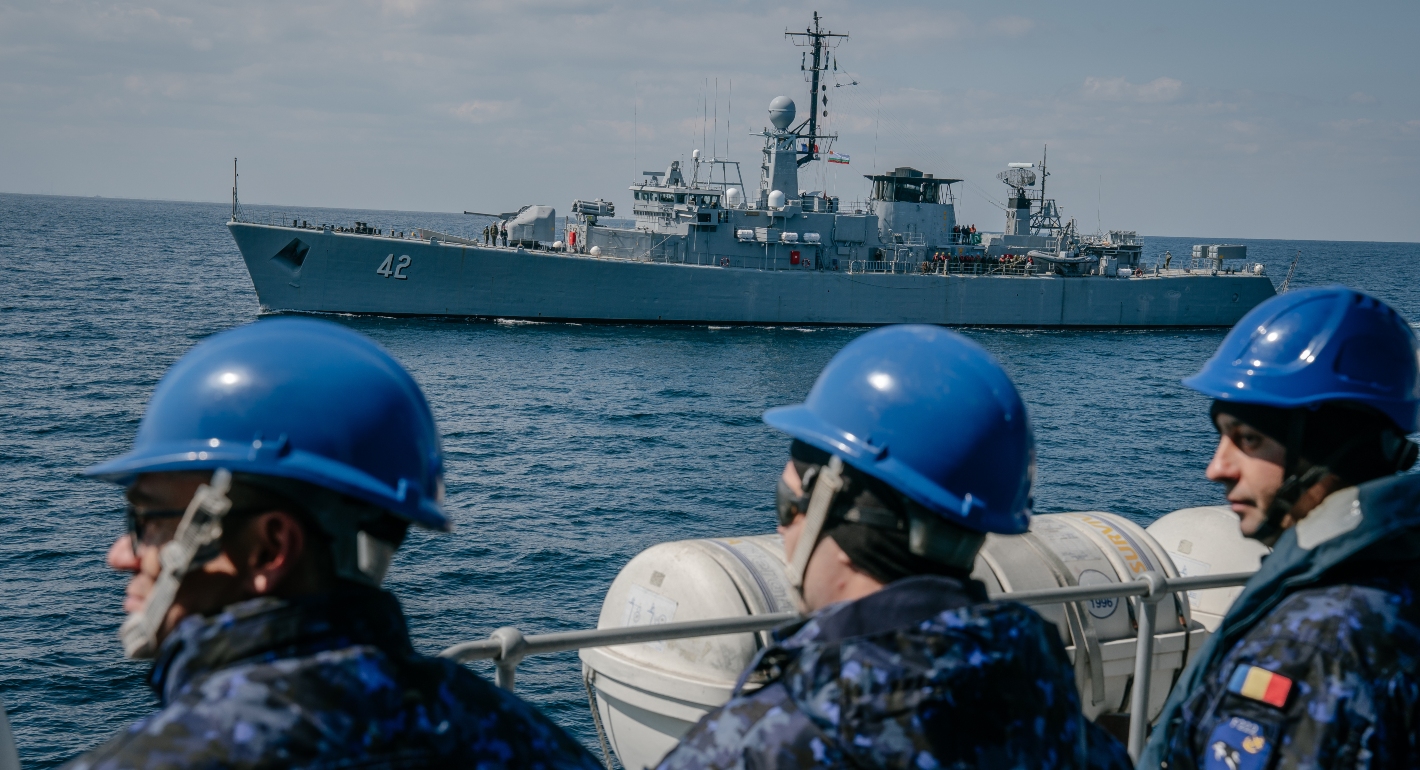
As Russia's war on Ukraine drags on, NATO is expanding its footprint in the Black Sea. Turkey, Romania, and Bulgaria are upgrading their fleets and deepening trilateral cooperation.

Dimitar Bechev
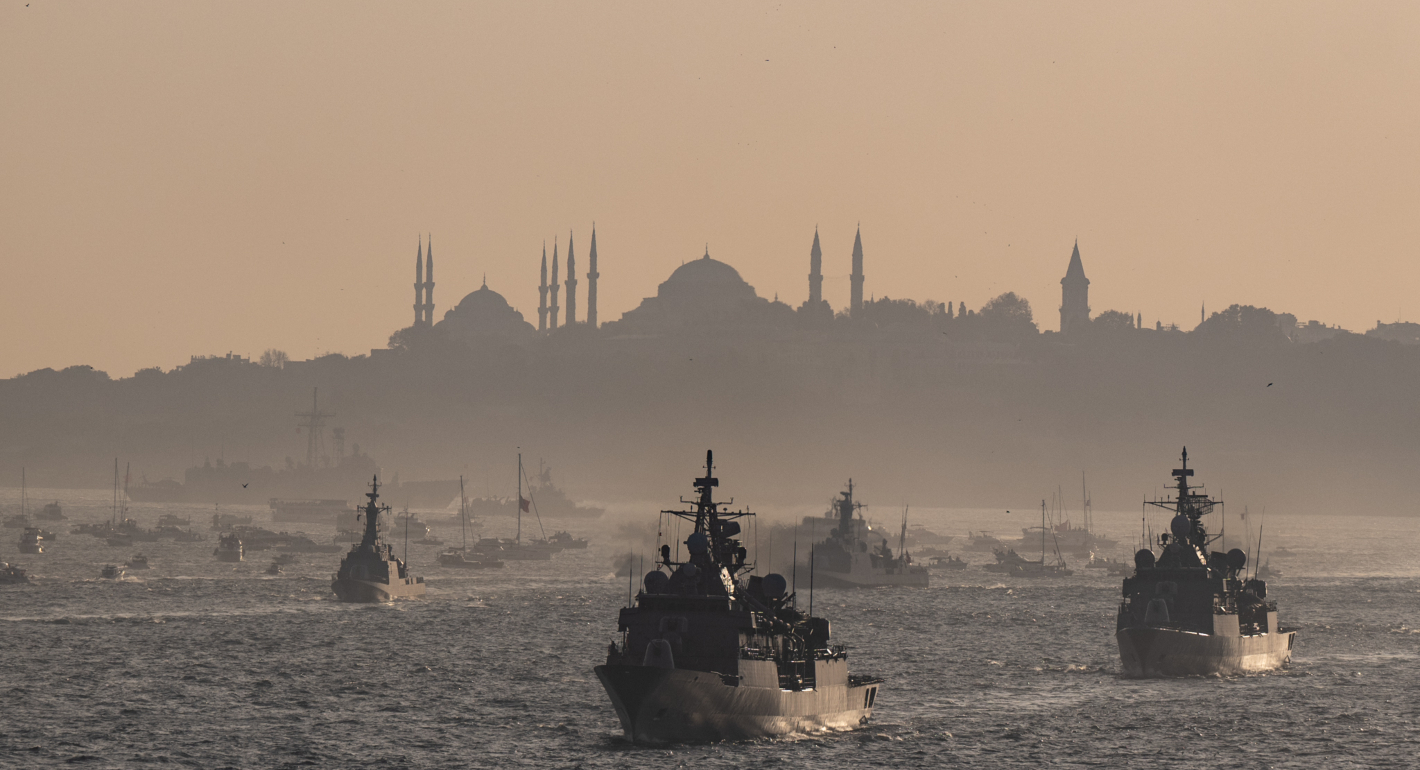
For ninety years, Turkey has been positioned as the principal gatekeeper of Black Sea security. As a result, European and NATO efforts to support Ukraine will require closer engagement with Ankara.

Thomas de Waal