

In The Media
David Rothkopf
{
  "authors": [
    "David Rothkopf"
  ],
  "type": "legacyinthemedia",
  "centerAffiliationAll": "",
  "centers": [
    "Carnegie Endowment for International Peace"
  ],
  "collections": [],
  "englishNewsletterAll": "",
  "nonEnglishNewsletterAll": "",
  "primaryCenter": "Carnegie Endowment for International Peace",
  "programAffiliation": "",
  "programs": [],
  "projects": [],
  "regions": [
    "North America",
    "United States",
    "Middle East",
    "Israel",
    "Iraq"
  ],
  "topics": [
    "Foreign Policy",
    "Nuclear Policy"
  ]
}
Source: Getty
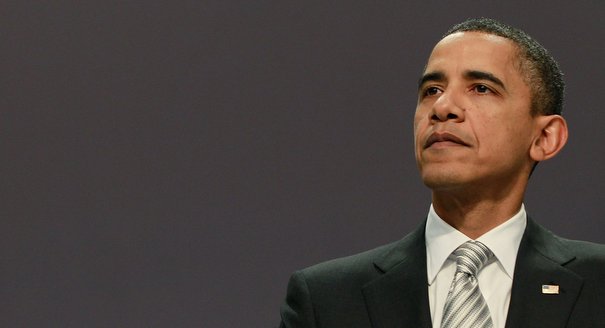
The Romney campaign has argued that Obama has not offered a credible military threat against the Iranians. The easiest way for the Obama team to defuse Romney's critique is to communicate better what options they are in fact considering.
Source: Foreign Policy

But of equal importance to the Republican critique of Obama is Romney's assessment that Obama's efforts to reverse Iran's course toward gaining nuclear weapons have been unsuccessful. In the hours before the speech was delivered, neoconservative Romney foreign-policy advisor Dan Senor suggested on MSNBC's Morning Joe that Obama effectively had to be dragged against his will toward tougher sanctions on Iran -- the same tough sanctions for which the administration is now regularly taking credit because they have started to work. Senor noted that both Treasury Secretary Timothy Geithner and former Deputy Secretary of State James Steinberg pushed back against bipartisan congressional support for the sanctions out of concern that they would have unintended negative consequences for the U.S. and global economies.
A centerpiece of the Romney campaign's argument that Obama has not been tough enough on Iran is that the president has not offered a credible military threat against the Iranians. Say what you will about the rest of Romney's remarks -- and broadly speaking, there was not much new in them except that for the first time, the Republican nominee has addressed foreign policy recently without tripping over one of his own misstatements -- but even some of the president's supporters have told me privately they wonder about his commitment and that of the U.S. military to taking action against Iran.
The reasons for these doubts are several. Despite the president's regular assurance that Iran will not be allowed to develop nuclear weapons and that force will be used if necessary, the American people's war fatigue in the wake of Iraq and Afghanistan has made any complex, costly, or highly risky action a tough political sell back home. Further, there have been multiple assertions by analysts that the likelihood of a successful strike on Iran is low. Finally, the public bickering with the Israelis suggested that the United States was dragging its feet and that the Israelis might be forced to act alone precisely because they did not expect to get U.S. support.
Despite the public histrionics in the run-up to the U.N. General Assembly meetings, both White House and Israeli officials assert that the two sides behind the scenes have come closer together in their views in recent days. While there may not be exact agreement on what constitutes a "red line" -- a sign of Iranian progress toward the development of nuclear weapons that would trigger military action -- the military option being advocated by the Israelis is considerably more limited and lower risk than some of those that have been publicly debated.
Indeed, according to a source close to the discussions, the action that participants currently see as most likely is a joint U.S.-Israeli surgical strike targeting Iranian enrichment facilities. The strike might take only "a couple of hours" in the best case and only would involve a "day or two" overall, the source said, and would be conducted by air, using primarily bombers and drone support. Advocates for this approach argue that not only is it likely to be more politically palatable in the United States but, were it to be successful -- meaning knocking out enrichment facilities, setting the Iranian nuclear program back many years, and doing so without civilian casualties -- it would have regionwide benefits. One advocate asserts it would have a "transformative outcome: saving Iraq, Syria, Lebanon, reanimating the peace process, securing the Gulf, sending an unequivocal message to Russia and China, and assuring American ascendancy in the region for a decade to come."
While this approach would limit the negative costs associated with more protracted interventions, it could not be conducted by the Israelis acting alone. To get to buried Iranian facilities, such as the enrichment plant at Fordow, would require bunker-busting munitions on a scale that no Israeli plane is capable of delivering. The mission, therefore, must involve the United States, whether acting alone or in concert with the Israelis and others.
What does this have to do with Romney's remarks? Were it clearer that the primary Iran option being discussed is this very limited surgical strike, then a U.S. threat of force would be that much more credible. And if it were more credible -- because it seemed like the kind of risk the president is more willing to undertake -- then it would have the added benefit of providing precisely the kind of added leverage that might make diplomacy more successful. In other words, the public contemplation of a more limited, doable mission provides more leverage than the threat of even more robust action that is less likely to happen.
With that in mind, and given the progress that the Israelis and the administration seem to have made in the past couple of weeks, it may be that the easiest way for the Obama team to defuse Romney's critique on Iran is simply to communicate better what options they are in fact considering. It's not the size of the threatened attack, but the likelihood that it will actually be made, that makes a military threat a useful diplomatic tool. And perhaps a political one, too.

Former Visiting Scholar
David Rothkopf was a visiting scholar at the Carnegie Endowment as well as the former CEO and editor in chief of the FP Group.
Recent Work
David Rothkopf
David Rothkopf
Carnegie does not take institutional positions on public policy issues; the views represented herein are those of the author(s) and do not necessarily reflect the views of Carnegie, its staff, or its trustees.

A summer of escalation in the Black Sea has hurt Ukraine economically and is exacerbating world food security. A truce is needed—as is a broader reframing of Europe’s Ukraine strategy.

Thomas de Waal

Are Germany’s economic, industrial, and political struggles becoming a liability for the EU’s ability to rise to the geopolitical moment?

Rym Momtaz, ed.

European Commission President Ursula von der Leyen is about to give her annual address on the state of the EU. Here’s what she won’t—but should—say.
Rym Momtaz

Radical-right parties are expected to do well in upcoming elections in four of the EU's biggest member states. If successful, they could prevent the union from addressing key challenges ahead.

Stefan Lehne

The aftermath of the Ceuta crisis shows Europe has drawn the wrong lessons. Rather than doubling down on failed migration policies, the EU needs to address the underlying roots of such episodes.

Richard Youngs