

Paper
Yezid Sayigh
{
  "authors": [
    "Yezid Sayigh"
  ],
  "type": "legacyinthemedia",
  "centerAffiliationAll": "",
  "centers": [
    "Carnegie Endowment for International Peace",
    "Malcolm H. Kerr Carnegie Middle East Center"
  ],
  "collections": [],
  "englishNewsletterAll": "",
  "nonEnglishNewsletterAll": "",
  "primaryCenter": "Malcolm H. Kerr Carnegie Middle East Center",
  "programAffiliation": "",
  "programs": [],
  "projects": [],
  "regions": [
    "Egypt",
    "Maghreb"
  ],
  "topics": [
    "Political Reform",
    "Security"
  ]
}
Source: Getty
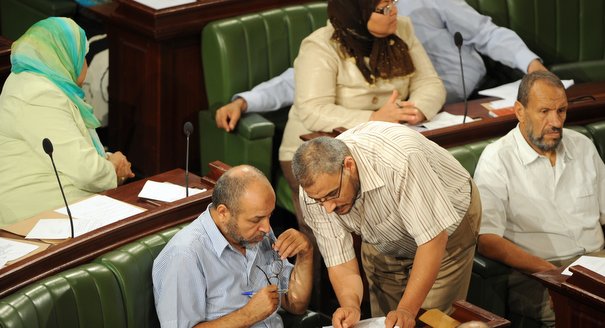
The new Islamist governments of the southern Mediterranean are as diverse in their political arrangements and economic behavior as their predecessors.
Source: Al-Hayat

The violence accompanying some public displays of Muslim societies’ sensitivity to perceived slights to Islam has influenced those postures. The murder of the U.S. ambassador to Libya and assaults by Tunisian Salafists on universities, cinemas, and art exhibitions have only heightened anxiety in those countries and abroad that Islamist politics will be shaped primarily by ideological values and that relations with others will be complicated by deepening cultural rifts.
But the Islamists in power are also on unfamiliar ground. They must learn how to function as legally registered political parties—rather than outlawed “societies”—within nascent multiparty political systems. And instead of dealing only with tightly knit, inward-looking, and loyal memberships, Islamist party leaderships must now be transparent and accountable to the general electorate, which is diverse in its composition and expectations.The “rules of the game”—both formal and informal—are still being developed through negotiation in parliaments and constituent assemblies, and occasionally through the hurly-burly of public contestation in the streets. This, moreover, takes place within broader struggles over constitutional frameworks. Key questions are up for debate, relating not to the place of sharia but to the balance of power between heads of state, prime ministers, and parliaments as well as to the independence of the judiciary.
Ultimately, the fate of governments headed by Islamists or in which Islamists are significant partners—in Egypt, Libya, Tunisia, and Morocco—will hinge on whether they succeed or fail in addressing the massive socioeconomic challenges they face. Topping the list are widespread poverty, rising unemployment, and widening income disparities—which all reinforce the marginality of significant social sectors. Governments will have to reverse these trends in the face of declining or fluctuating economic growth and low foreign direct investment in productive sectors. Meanwhile, the speculative sectors of real estate and the stock market that are favored by those with capital tend to further entrench the concentration of wealth and income disparities.
Islamist governments are in a bind. They came to power in large part because their authoritarian predecessors failed to meet the same challenges. But the newcomers must now deal with the additional consequences of the economic disruption and loss of investor confidence (both domestic and foreign) that inevitably accompanied the social and political upheaval that has been playing out since 2011.
Islamist parties, moreover, have the misfortune of being responsible for governments’ reactions to global trends that are beyond their control. The world faces a renewed sharp rise in food prices—the third since the increases of 2008 and late 2010 that did so much to intensify social strains and prepare the way for Arab uprisings. The euro crisis and attendant shrinking of investor confidence worldwide persists. And youth unemployment, which is set to worsen over the next five years according to the International Labor Organization, is hitting the Middle East and North Africa region hardest—levels there are expected to reach 27–28 percent by 2017.
Governments of any other political persuasion, whether secular or otherwise, would have faced the same challenges and would almost certainly have responded in similar ways. Further, concerns that Islamist ideological agendas will lead to political instability deter foreign and some domestic investors but have not prompted Western governments to curtail trade agreements, noncommercial credit facilities, or assistance programs.
The real challenges facing the new governments of the southern Mediterranean have little to do with their Islamist character. But if they fail, it will be regarded as the failure of a specifically Islamist model of government.
Yet, their model is entirely familiar, and far from alien. The mainstream Islamist parties now in government—“centrist,” as they label themselves—all espouse neoliberal social and economic agendas. Indeed, their strong attachment to private property, faith in free market economics, desire to replace the state as the primary provider of social welfare with charitable tithing, conservative social values, and faith-based approach to gender issues make them ideological kin to the Christian Right and Republicans generally in the United States or to Christian Democrats in Europe.
Despite these general similarities between mainstream Islamist parties in the southern Mediterranean, there is no “Islamic club.” There are no signs of a strategic reorientation of economic relationships—let alone of foreign policy—toward establishing common economic zones with each other or with the wider community of Islamic countries. Nor is there a serious South-South dialogue or move toward the BRICS (Brazil, Russia, India, China, South Africa)—Egyptian President Mohamed Morsi’s visit to China notwithstanding—as an alternative to bilateral ties with long-standing trading partners and sources of credit in the United States and Europe.
Moreover, the Islamist governments of the southern Mediterranean are marked by as much diversity in their political arrangements and economic behavior as their predecessors were. Morocco’s Justice and Development Party has been partially integrated into the structured corruption of the system. Meanwhile, it suffers renewed encroachment by King Mohammed VI on the functions and prerogatives of the prime minister and his cabinet. Islamist parties in Algeria that have joined parliament since the end of the country’s civil war a decade ago wield little real power. But they have also been drawn into the system of state patronage—partly through the distribution of ministerial portfolios and certain commercial licenses. Libya’s oil wealth means that its legacy of state-based employment, investment, and patronage is unlikely to disappear, no matter what the ideological identity of its government. In Tunisia and Egypt, emerging Islamist elites may open up their economies aggressively to allow rapid growth among small and medium enterprises or they may seek to simply supplant old, secular elites in controlling concentrated wealth.
But in all countries of the southern Mediterranean, the looming social crisis of unemployment, housing shortages, declining public services, and inadequate utilities (including clean water)—amid increasingly fragile social safety nets—means that the opportunity for Islamist governments to “get it right” will be short.
This article was originally published in Arabic in Al-Hayat.

Senior Fellow, Malcolm H. Kerr Carnegie Middle East Center
Yezid Sayigh is a senior fellow at the Malcolm H. Kerr Carnegie Middle East Center in Beirut, where he leads the program on Civil-Military Relations in Arab States (CMRAS). His work focuses on the comparative political and economic roles of Arab armed forces, the impact of war on states and societies, the politics of postconflict reconstruction and security sector transformation in Arab transitions, and authoritarian resurgence.
Recent Work
Yezid Sayigh
Yezid Sayigh
Carnegie does not take institutional positions on public policy issues; the views represented herein are those of the author(s) and do not necessarily reflect the views of Carnegie, its staff, or its trustees.

Mounting economic strain and battlefield losses will not necessarily make the Kremlin less dangerous. They could instead push Moscow toward a more aggressive hybrid campaign designed to test NATO’s Eastern flank, exploit allied hesitation, and fracture European resolve.

Maksym Beznosiuk

Over the past ten years, NATO has held almost as many summits as it did during the entirety of the Cold War. Are they still useful, or is it time to stop holding annual meetings?

Rym Momtaz, ed.

As the EU confronts profound challenges, several leaders have called for fundamental reform to the union’s model—but only modest, superficial changes have resulted. What if Europe really could be reimagined from zero today: What should such a redesigned European order look like?

Richard Youngs, ed.
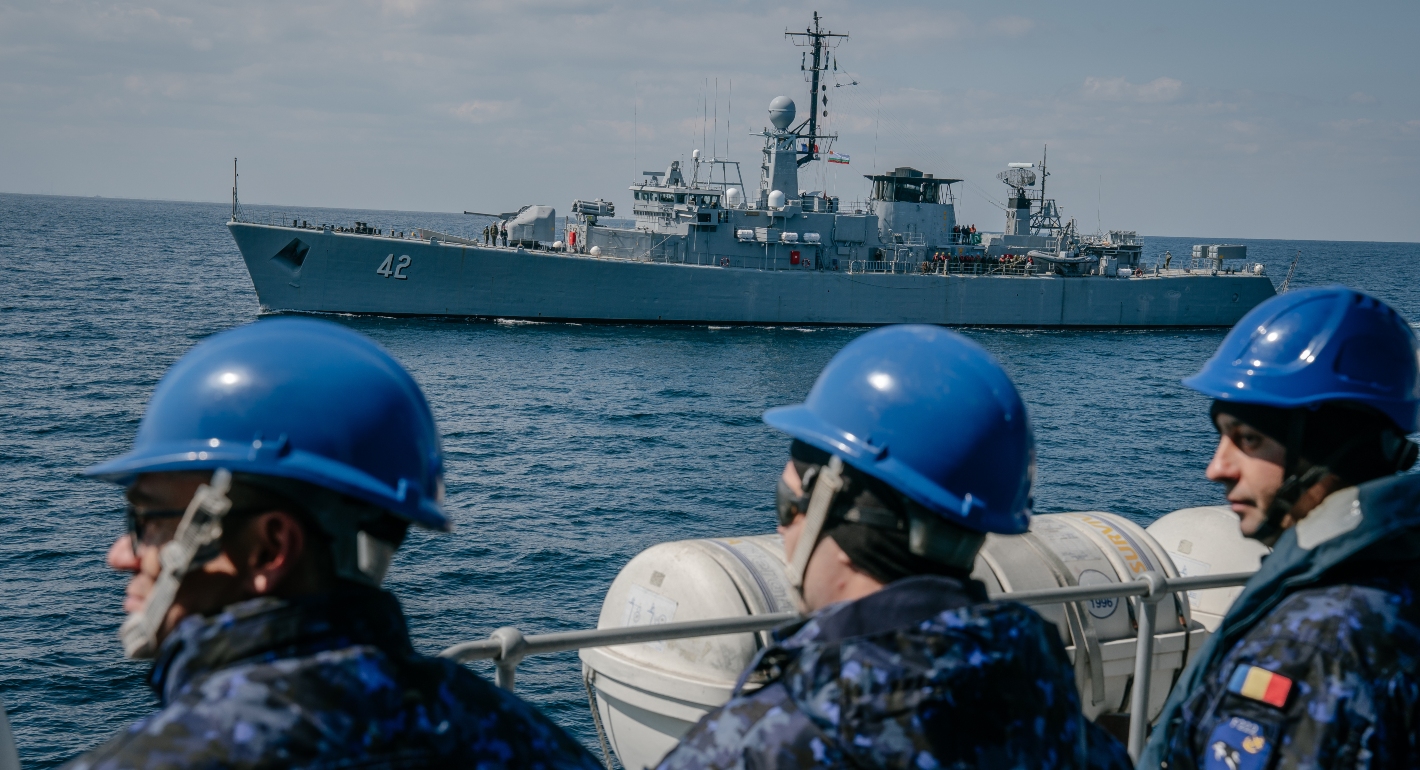
As Russia's war on Ukraine drags on, NATO is expanding its footprint in the Black Sea. Turkey, Romania, and Bulgaria are upgrading their fleets and deepening trilateral cooperation.

Dimitar Bechev
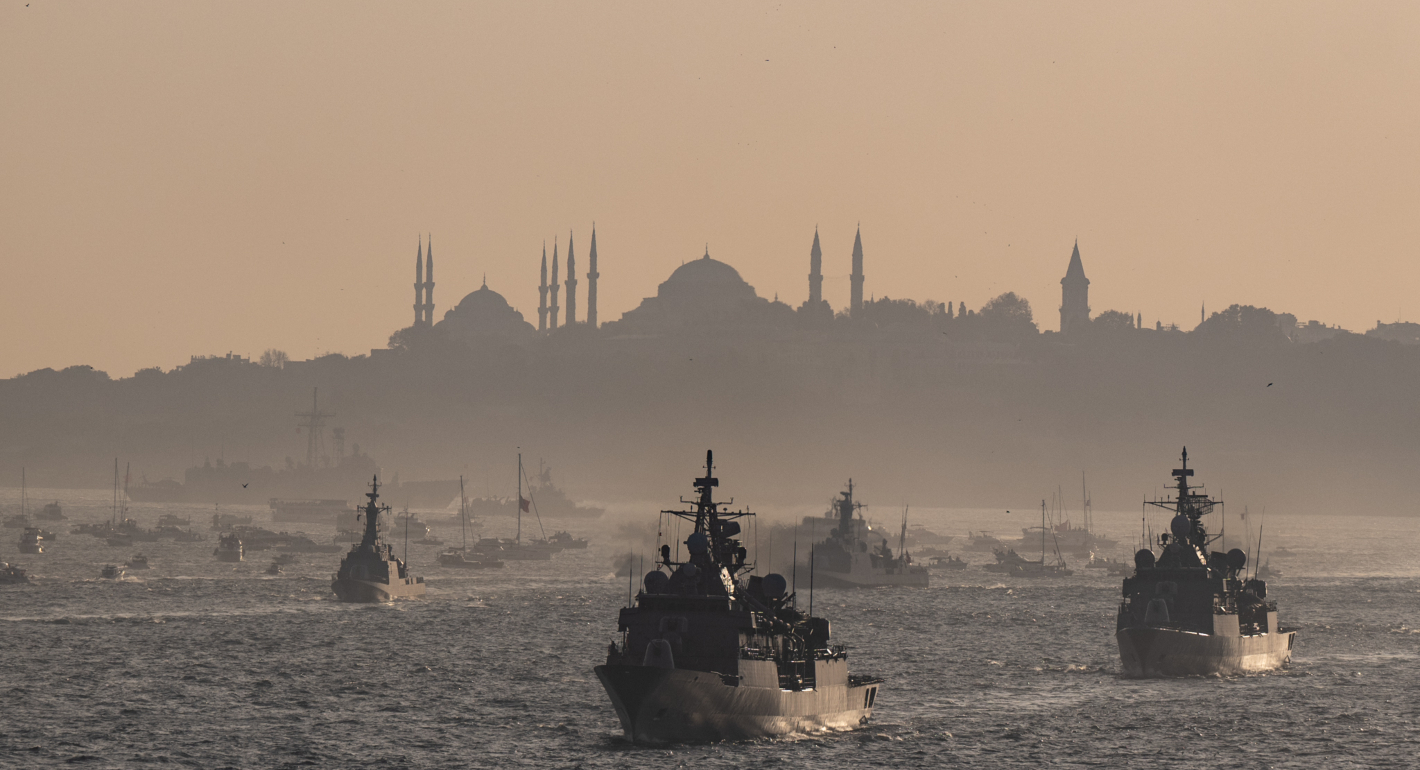
For ninety years, Turkey has been positioned as the principal gatekeeper of Black Sea security. As a result, European and NATO efforts to support Ukraine will require closer engagement with Ankara.

Thomas de Waal